New Gene Test Could Unlock Autism Answers for Families
Scientists at UC San Diego discovered hidden genetic causes of autism using advanced sequencing technology that reads DNA more thoroughly than ever before. The breakthrough could lead to better diagnoses and personalized treatments for families seeking answers.
Scientists just took a major step toward solving one of autism's biggest mysteries: why so many families still don't know the genetic cause behind their child's diagnosis.
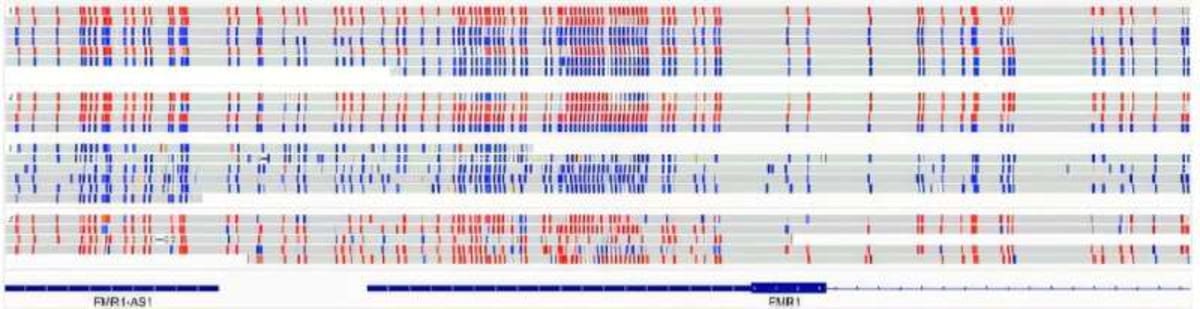
Researchers at the University of California San Diego used a powerful new technology called long-read genome sequencing to analyze DNA from 267 families affected by autism. Unlike traditional tests that read tiny snippets of genetic code, this approach reads huge sections at once, revealing patterns that were previously invisible.
The results were striking. The new method found 33% more gene-disrupting changes and 38% more repeated DNA sections compared to standard testing. These hidden mutations include complex gene rearrangements that can significantly impact brain development.
"Long-read technologies are game changers in terms of the diverse functional information we can get from a single genome sequence," said Dr. Jonathan Sebat, professor of psychiatry at UC San Diego School of Medicine. His team published their findings in the journal Cell Genomics.
The technology does something else remarkable too. It can simultaneously track DNA methylation, tiny chemical tags that control how active genes are. This means doctors could someday not just identify autism-related mutations, but understand exactly how those mutations affect brain function.
For families, this matters deeply. Currently, many undergo genetic testing only to receive inconclusive results, a frustrating outcome researchers call the "missing heritability" problem. Traditional tests simply can't see certain types of genetic changes.
The Bright Side
Dr. Sebat believes this approach could eventually double the number of autism cases where doctors can pinpoint a genetic cause. That means more families getting clear answers instead of uncertainty.
The breakthrough also opens doors for targeted therapies. When scientists understand the specific genetic mechanisms causing autism in individual patients, they can potentially develop treatments tailored to those exact problems rather than one-size-fits-all approaches.
While this study represents the largest use of long-read sequencing for autism research to date, the team emphasizes that even bigger studies are needed to fully measure the technology's impact. Still, the early results offer genuine hope for progress.
For the estimated one in 36 children diagnosed with autism spectrum disorder in the United States, better genetic testing could transform the journey from diagnosis to treatment, replacing guesswork with precision.
More Images


Based on reporting by Medical Xpress
This story was written by BrightWire based on verified news reports.
Spread the positivity!
Share this good news with someone who needs it