New Heart Bypass Tech Ends 60 Years of Hand-Sewn Surgery
Dutch researchers have replaced the trickiest part of bypass surgery with a titanium clip and laser, keeping hearts beating throughout the procedure. After 71 patients, the results match the best hand-sewn outcomes while opening doors to faster, less invasive heart surgery for millions.
For the first time since the 1960s, surgeons have fundamentally changed how they reconnect blood vessels during heart bypass surgery, and early results suggest it could transform care for heart disease patients worldwide.
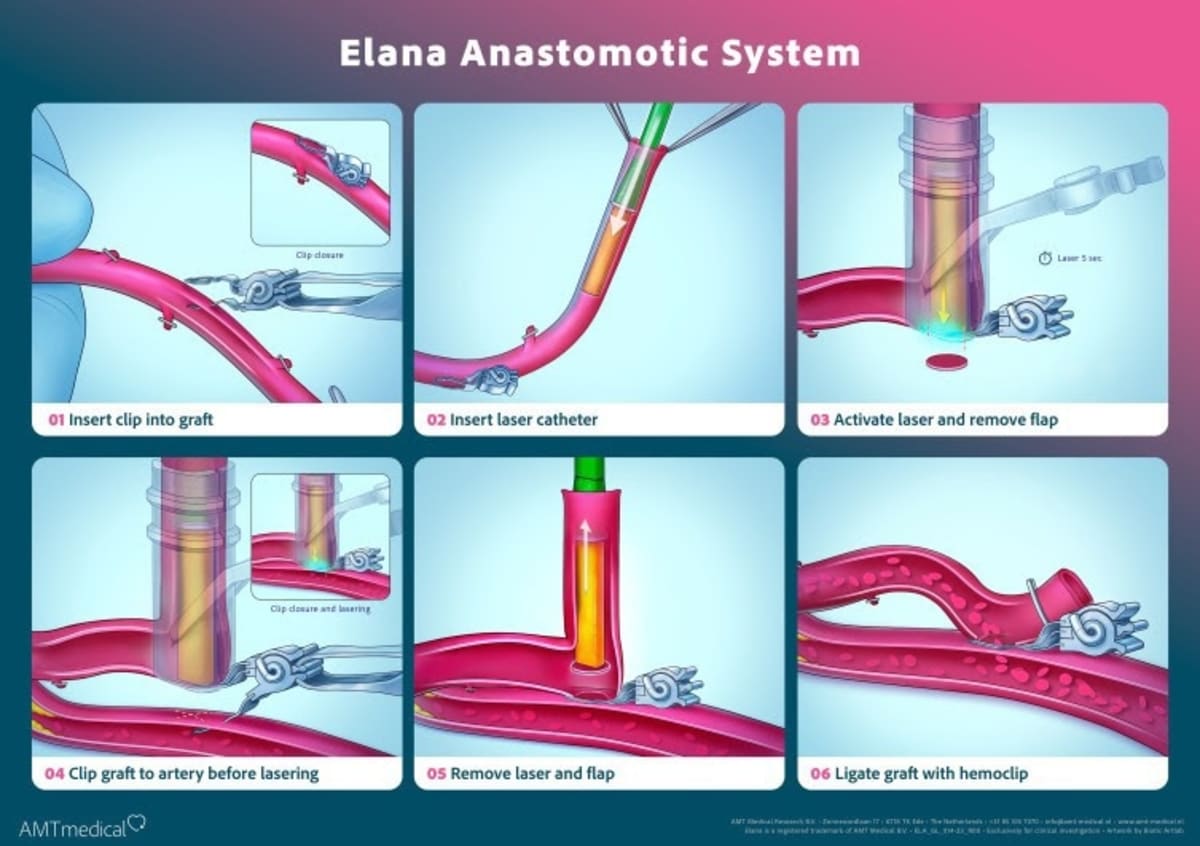
The ELANA Anastomotic System, developed by Dutch company AMT Medical, uses a tiny titanium clip and a precisely controlled laser pulse to connect bypass grafts to coronary arteries. The breakthrough eliminates the most difficult step of coronary artery bypass grafting: hand-sewing delicate vessels with 8 to 12 individual stitches per connection.
The real game-changer is what happens during the procedure. Traditional bypass surgery requires temporarily clamping the coronary artery, stopping blood flow while surgeons carefully stitch the connection. The new system creates the connection before opening the artery, so blood keeps flowing to the heart muscle throughout.
Results from the SAFE-CAB II trial, published in The Journal of Thoracic and Cardiovascular Surgery, tracked 71 patients for one year at St Antonius Hospital in the Netherlands. Device-related cardiac events occurred in just 2.9% of patients, meeting the study's safety goals. At six months, 92.5% of bypasses remained open and functioning, matching the best results from traditional hand-sewn surgery.
Dr. Bart van Putte, the study's lead investigator, called it "the technical breakthrough the field has been waiting for." The standardized, six-step mechanical procedure reduces variation between surgeons and makes minimally invasive and robotic bypass surgery more feasible.
The technology isn't entirely new. It was originally developed for brain bypass surgery in 2008 and has been used safely in over 1,000 patients. AMT Medical spent the past decade re-engineering the system specifically for coronary arteries, testing it extensively in lab studies and animal trials before moving to human patients.
The Ripple Effect
About one million coronary bypass procedures happen worldwide each year. The sutureless approach could enable smaller incisions, shorter hospital stays, and faster recovery times for patients who previously faced major open-chest surgery.
The economic impact could be substantial too. Internal assessments suggest hospital costs for bypass surgery could drop 35 to 50% at scale, as patients spend less time in intensive care and return home sooner. That freed-up capacity means hospitals could treat more patients without expanding facilities.
For working-age patients, faster recovery means returning to jobs and daily life weeks earlier than traditional surgery allows. The technology makes advanced heart surgery more accessible to patients who might not be candidates for lengthy open-chest procedures.
The average patient in the trial was 71 years old and received 3.5 bypass connections, showing the system works for complex cases. An independent safety board monitored the entire trial and identified no device-related safety concerns.
After six decades of essentially unchanged technique, heart surgeons finally have a new tool that could make life-saving surgery safer, faster, and available to far more people who need it.
Based on reporting by Google News - Health Breakthrough
This story was written by BrightWire based on verified news reports.
Spread the positivity!
Share this good news with someone who needs it