New Method Saves Lives by Predicting Landslides Better
Brazilian researchers developed a simpler way to predict deadly landslides that's more accurate than tools used for decades. The breakthrough could protect thousands living in vulnerable areas from future disasters.
A statistics-based approach is proving better at forecasting which hillsides will collapse during heavy rains, offering new hope for communities threatened by landslides.
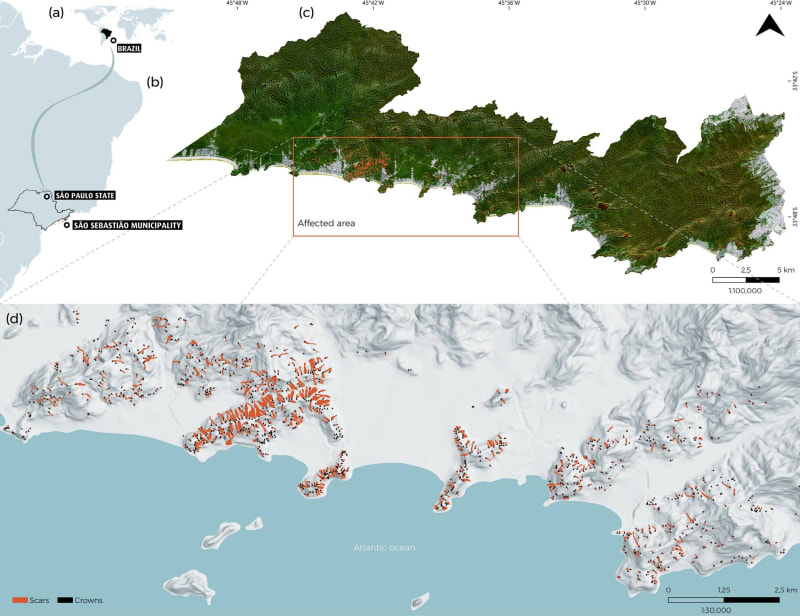
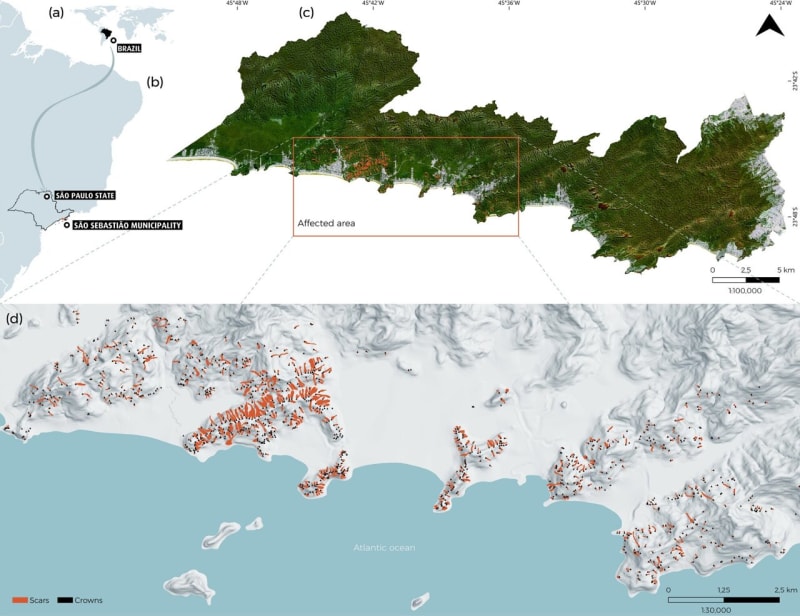
Researchers at the University of São Paulo and Brazil's National Institute for Space Research tested their method against real disaster data. In February 2023, the coastal town of São Sebastião received two months of rain in just 15 hours, triggering massive landslides that killed 65 people and destroyed hundreds of homes.
The team compared their new "Gaussian AHP" method against the traditional approach experts have relied on for years. Both systems analyze 16 factors like slope steepness, distance to rivers and roads, and vegetation cover to map risk zones.
The key difference? The old method depends heavily on expert opinions to weigh each factor's importance. The new approach uses statistical probability curves to assign those weights objectively, removing human guesswork from the equation.
When tested on São Sebastião's actual landslide data, the new method identified 26.31% of the region as very high risk, compared to the old method's 23.52% estimate. That extra accuracy means more homes and lives protected with early warnings.
"Although the gains are modest, the method reduces ambiguities and aligns better with how landslides actually behave," explains Rômulo Marques-Carvalho, who led the study published in Scientific Reports.
The research also revealed surprising insights about what triggers landslides. While traditional analysis emphasized slope angles, the new method found that surface relief patterns and proximity to roads and rivers matter most.
Roads through mountainous terrain require cutting into hillsides and building embankments, which destabilizes slopes even before rain arrives. Rivers gradually erode hillside bases, making them more vulnerable when storms hit.
The Ripple Effect
The simpler statistical approach could transform disaster prevention worldwide. Millions live in landslide-prone regions across Asia, Africa, and Latin America where extreme weather is becoming more common.
Better prediction models mean emergency managers can evacuate the right neighborhoods before storms arrive, saving both lives and resources. Communities can also make smarter decisions about where to build homes and infrastructure in the first place.
The method's simplicity is its greatest strength. It requires no specialized equipment beyond computers and satellite imagery that's already publicly available, making it accessible even to regions with limited resources.
São Sebastião now serves as a testing ground for protecting other vulnerable communities before disaster strikes.
More Images

Based on reporting by Phys.org
This story was written by BrightWire based on verified news reports.
Spread the positivity!
Share this good news with someone who needs it