New Monkey Species Found in Congo After 75 Years
Scientists in the Congo rainforest discovered a striking new monkey species with a black face and orange patches—only the fifth found in Africa in 75 years. The find reveals how much biodiversity still hides in one of Earth's last great frontiers.
📺 Watch the full story above
Deep in the Democratic Republic of Congo's rainforest, scientists have discovered something extraordinary: a monkey species that's been hiding in plain sight for millions of years.
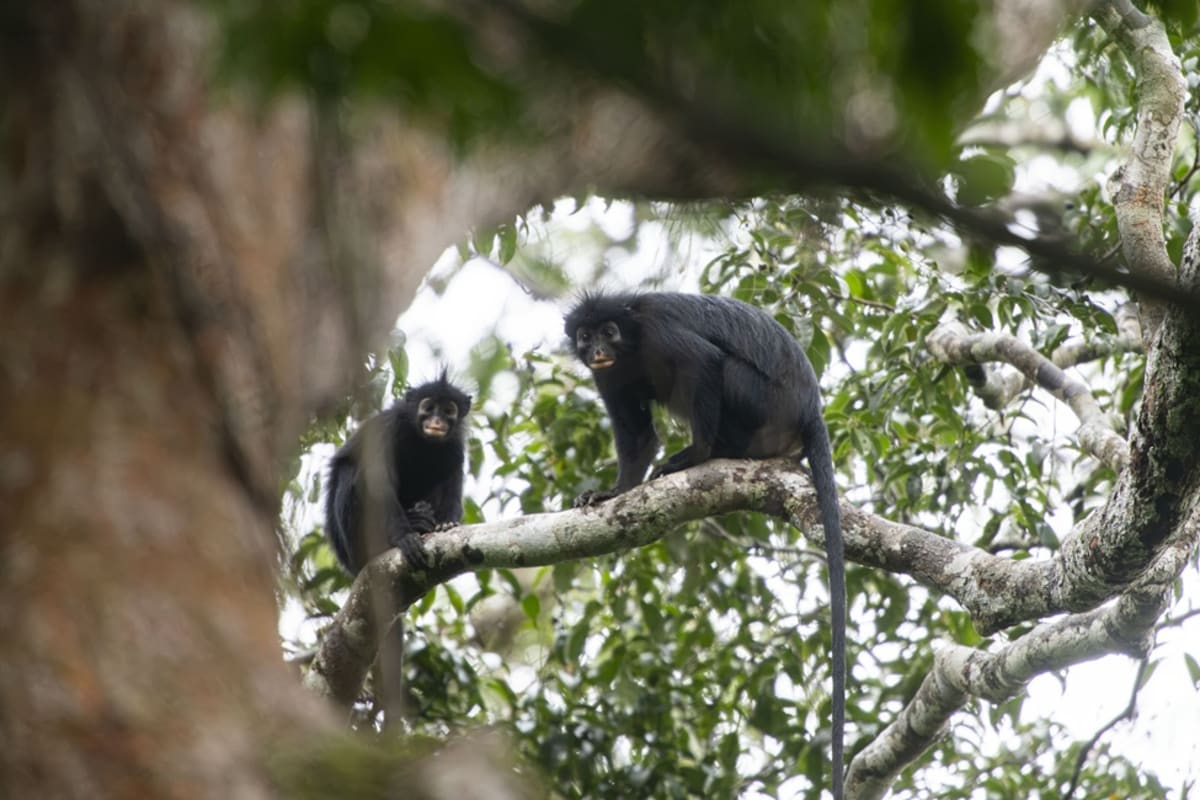
The monkey, named Colobus congoensis but called "Likweli" by locals, is only the fifth new monkey species found in Africa in the past 75 years. With glossy black fur and dramatic orange patches around its mouth and nose, the 15-pound primate looks unlike any other colobus monkey known to science.
The discovery story began with mystery. In 2008, researchers captured a blurry photograph of an unusual monkey in a remote region between the Lomami and Congo rivers. A decade passed before they could photograph the animal clearly and begin investigating what they'd found.
Junior Amboko, a PhD student at Florida Atlantic University and National Geographic Explorer, led the naming effort. "This discovery highlights the extraordinary biodiversity of my homeland and how much remains undocumented," he said. He believes this marks the first primate named after the Democratic Republic of Congo itself.
Genetic testing revealed the species split from its closest relative 4 to 5 million years ago. That relative, Colobus satanas, lives more than 750 miles away in west-central Africa, making their ancient connection a surprising puzzle piece in understanding primate evolution.
The team combined genetic analysis with detailed skull and pelt comparisons to confirm they'd found something truly new. Despite being much smaller than related species, the monkey shares unique dental and facial features with other Colobus monkeys that set the entire group apart.
The Ripple Effect
This discovery adds weight to conservation efforts in Lomami National Park and surrounding areas. The same research team previously discovered another new primate species, the Lesula, in this region in 2012.
The findings show the Congo Basin remains one of Earth's last great frontiers for scientific discovery. Even in areas scientists have explored for decades, entirely new species continue emerging from the forest.
The discovery carries urgency alongside excitement. Colobus congoensis lives in a small range of roughly 650 square miles and faces pressure from habitat loss and hunting. Researchers are recommending endangered status protection for the species.
The international team published their findings in PLOS One, documenting not just a new species but proof that Central Africa's forests still hold secrets waiting to reshape our understanding of life on Earth.
Based on reporting by Google: scientific discovery
This story was written by BrightWire based on verified news reports.
Spread the positivity!
Share this good news with someone who needs it