New Observatory Detects 800K Sky Events in One Night
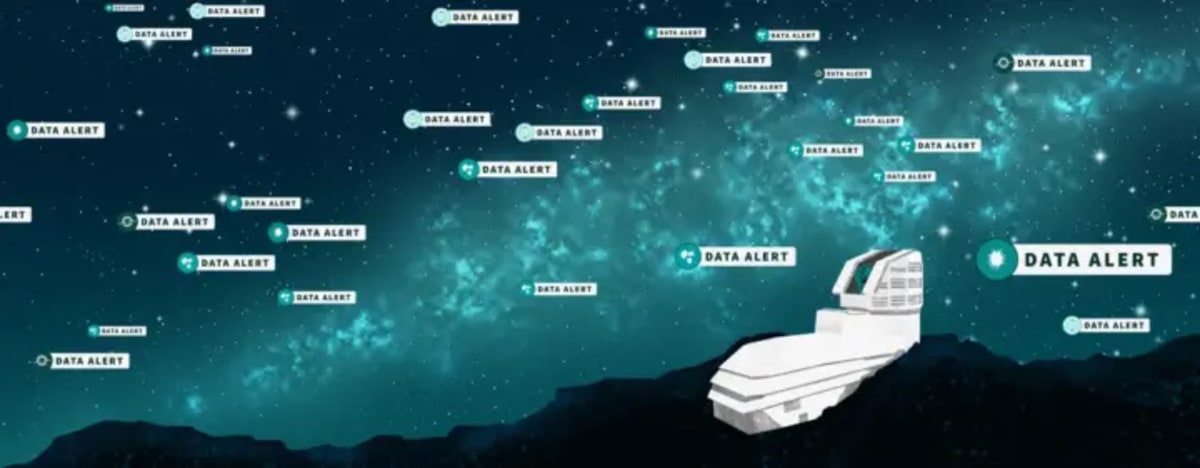
A powerful new telescope just sent out 800,000 alerts in a single night, spotting exploding stars, new asteroids, and cosmic changes as they happen. This marks the beginning of what scientists call a revolutionary way to watch the universe unfold in real time.
The Vera C. Rubin Observatory has launched the most ambitious night sky monitoring system ever created, issuing its first 800,000 alerts on February 24th. Within minutes of spotting changes in the heavens, the system notifies scientists around the world about new asteroids, supernovae, and other cosmic events.
The observatory, jointly funded by the National Science Foundation and Department of Energy, sits in the Southern Hemisphere equipped with the largest digital camera ever built. Every night, it scans the entire visible sky, comparing new images with previous ones to spot anything that has changed, moved, brightened, or appeared.
The system works like a cosmic motion detector. Software automatically compares each new image with a template made from earlier observations of the same spot. Any difference triggers an alert within just two minutes of capture.
Those first 800,000 alerts included supernovae caught in their earliest moments, variable stars pulsing with light, asteroids zipping through our solar system, and active galaxies blazing millions of light years away. By the time the full Legacy Survey of Space and Time begins later this year, the observatory will send up to 7 million alerts every single night for the next decade.
In its first year alone, Rubin Observatory will photograph more celestial objects than every other optical telescope in human history combined. Scientists will use this flood of information to track potentially hazardous asteroids approaching Earth, catch rare interstellar visitors passing through our solar system, and study the mysterious forces of dark matter and dark energy.
Why This Inspires
This observatory represents a fundamental shift in how we explore the universe. For centuries, astronomers studied a static sky, piecing together changes over years or decades. Now, scientists can watch cosmic events unfold in real time, catching fleeting phenomena that previous generations never had a chance to see.
The system democratizes discovery too. Instead of a few astronomers controlling telescope time, alerts go out to researchers worldwide simultaneously, giving everyone equal access to the changing cosmos.
Every alert represents something new under the sun, or rather, beyond it. Each night brings 800,000 chances to witness the universe doing something it has never done before, or at least something we have never caught it doing.
The universe has always been dynamic and restless. Now, finally, we have the tools to keep up with it.
More Images

Based on reporting by Google: scientific discovery
This story was written by BrightWire based on verified news reports.
Spread the positivity!
Share this good news with someone who needs it