Scientists Map Hidden Supercluster 3,000x Wider Than Milky Way
Astronomers have finally mapped a massive cosmic structure that's been hiding behind our own galaxy for billions of years. The Vela Supercluster spans 300 million light-years and contains the mass of 30 quadrillion suns.
Imagine discovering something 3,000 times wider than our entire galaxy that's been hiding in plain sight all along.
An international team of astronomers just finished mapping the Vela Supercluster, a colossal cosmic structure first spotted in 2016. Located 800 million light-years from Earth, this giant has been obscured by the Milky Way's dense clouds of dust, gas, and stars.
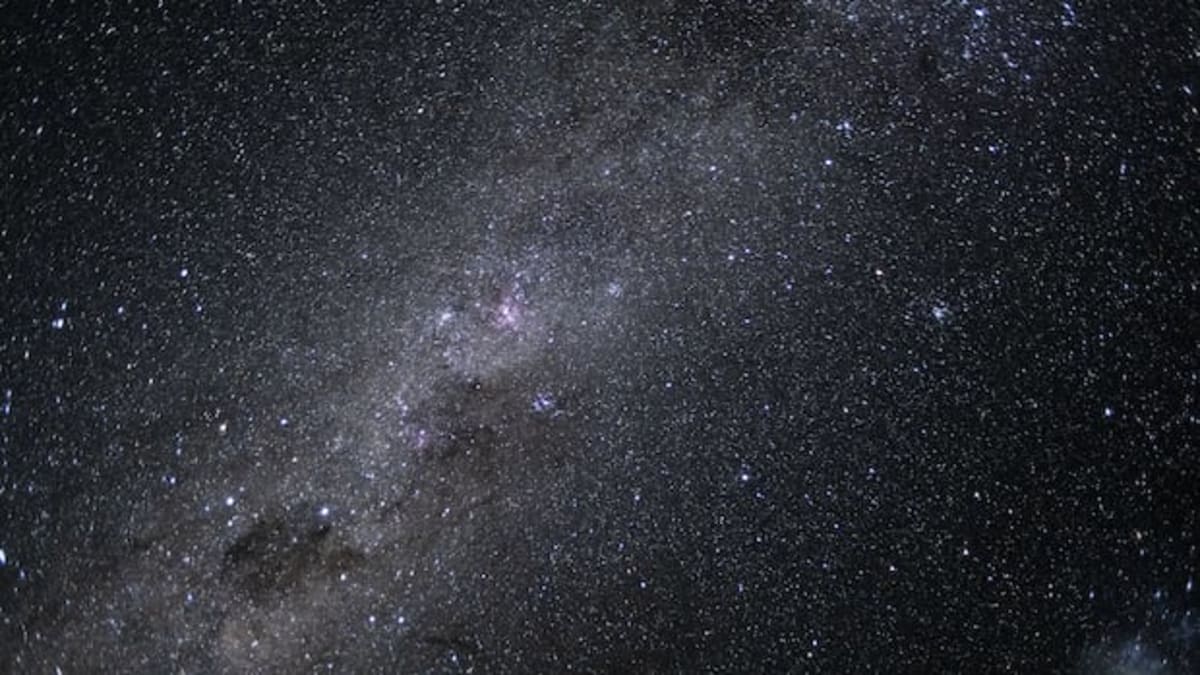
The challenge was massive. About 20 percent of our night sky sits in what scientists call the "Zone of Avoidance," a region so cluttered with our own galaxy's material that telescopes struggle to see through it. For years, astronomers knew something enormous was hiding there, but they couldn't make out its full shape.
Using two powerful telescopes in South Africa, researchers finally pierced through the cosmic fog. The MeerKAT radio telescope proved especially helpful because it can detect hydrogen gas at wavelengths that pass right through the Milky Way's dusty veil. The Southern African Large Telescope helped track galaxy movements at the supercluster's edges.
What they found exceeded expectations. The Vela Supercluster stretches 300 million light-years across and contains at least 20 galaxy clusters, each holding hundreds of thousands of individual galaxies. Its total mass equals 30 quadrillion of our suns.
Why This Inspires
This discovery reminds us how much we still have to learn about our universe. Despite living in an age of advanced telescopes and space exploration, enormous structures have been hiding right in our cosmic backyard.
The mapping of Vela fills a crucial gap in our understanding of the universe's largest structures. It fits neatly between the Laniākea supercluster (which contains our Milky Way) and the Hercules-Corona Borealis Great Wall, the largest known structure in existence.
These findings could help scientists refine their models of how the universe formed and evolved. Understanding superclusters like Vela helps researchers better estimate the universe's age and predict its future.
Astronomer Renee Kraan-Korteweg from the University of Cape Town explained that the supercluster represents a "coherent large-scale structure comparable in size and mass to some of the largest and well-known superclusters in the local universe." Her team's work proves that even the densest cosmic obstacles can't keep human curiosity at bay.
The researchers say even more powerful radio telescopes could reveal finer details about Vela's structure. Each new observation brings us closer to understanding the vast cosmic web that connects everything in our universe.
After hiding behind our galaxy's glow for billions of years, Vela finally has its moment in the spotlight.
More Images

Based on reporting by Futurism
This story was written by BrightWire based on verified news reports.
Spread the positivity!
Share this good news with someone who needs it