New Seahorse Species Named After Conservation Pioneer
Scientists discovered a spiny seahorse hiding in plain sight for over 100 years in India. They named it after Amanda Vincent, the "mother" of seahorse research who missed seeing it herself decades ago.
A tiny spiny seahorse has been hiding in plain sight at an Indian harbor for more than a century, and scientists just realized it was a brand new species all along.
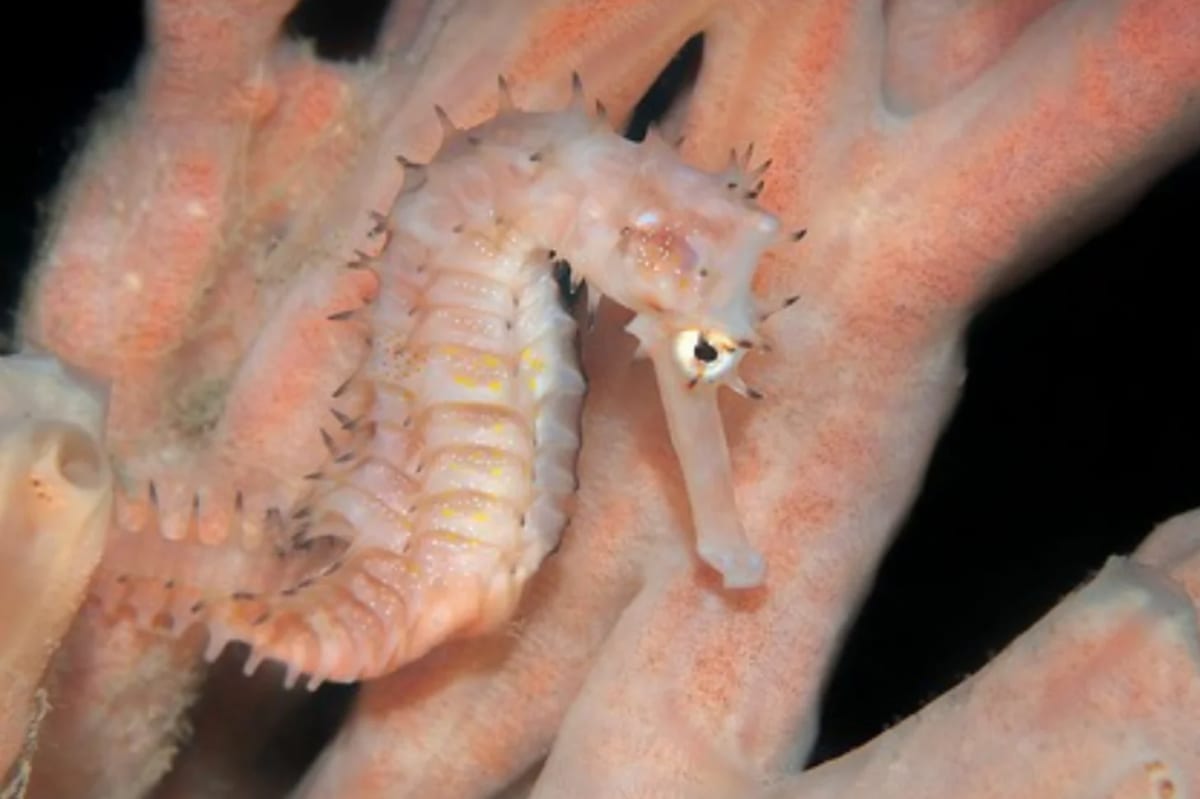
Researchers found the six-inch seahorse at Tuticorin harbour in southern India, tucked among catches that scientists had been examining since the 1800s. The little creature sports distinctive spines along its body and tail, plus five short spines on its head that form a crown-like shape.
For over 100 years, experts assumed these seahorses were just variations of known species. An international team published findings in the journal Zootaxa this August proving the seahorses are actually their own unique species.
The scientists named their discovery Hippocampus amandavincentae after Amanda Vincent, widely considered the mother of seahorse research and conservation. Vincent is the first biologist to study seahorses underwater and created the first seahorse field conservation program.
"This honor makes my heart glow," Vincent said in a press release. "It's amazing that such a wonderful creature was hiding in plain sight."
The timing carries special irony. Vincent surveyed the exact same harbor where the new species lives decades ago while studying fish caught by trawlers. She completely missed it back then.
Why This Inspires
Vincent turned her near miss into renewed motivation. She directs Project Seahorse at the University of British Columbia, which has created 35 marine protected areas and helped establish new conservation laws across multiple countries.
The discovery arrives just as Project Seahorse celebrates 30 years of achievements. The organization leads global seahorse conservation research and has completed critical assessments for threatened species worldwide.
Vincent hopes the naming honor shines a spotlight on ongoing conservation work. Bottom trawl fishing, which sweeps heavy nets across the seafloor, catches thousands of species every year and destroys entire marine habitats.
Project Seahorse researchers published a study in early 2026 examining over 9,000 records of fish caught in bottom trawls since 1895. The data reveals just how many species end up in these nets without scientists even knowing the impact on wild populations.
Sometimes the biggest discoveries come from looking closer at what we thought we already knew.
More Images

Based on reporting by Good Good Good
This story was written by BrightWire based on verified news reports.
Spread the positivity!
Share this good news with someone who needs it