New Solar Heat Pump Cuts Costs, Boosts Efficiency Year-Round
Scientists in China and Rwanda just cracked a major challenge in green home heating. Their breakthrough design combines solar panels with a heat pump in one simple unit that works beautifully in any season.
Imagine a home heating system that pulls warmth from both sunshine and air, generates its own electricity, and runs five times more efficiently than traditional heaters, all while taking up less space and costing less to install.
That's exactly what a research team from Southwest Jiaotong University in China and the University of Rwanda just created. Their innovative solar heat pump could be a game changer for cutting carbon emissions from buildings.
The secret lies in elegant simplicity. Most dual-source heat pumps need two separate units to collect heat from the sun and air. This new design combines both functions into a single compact panel.
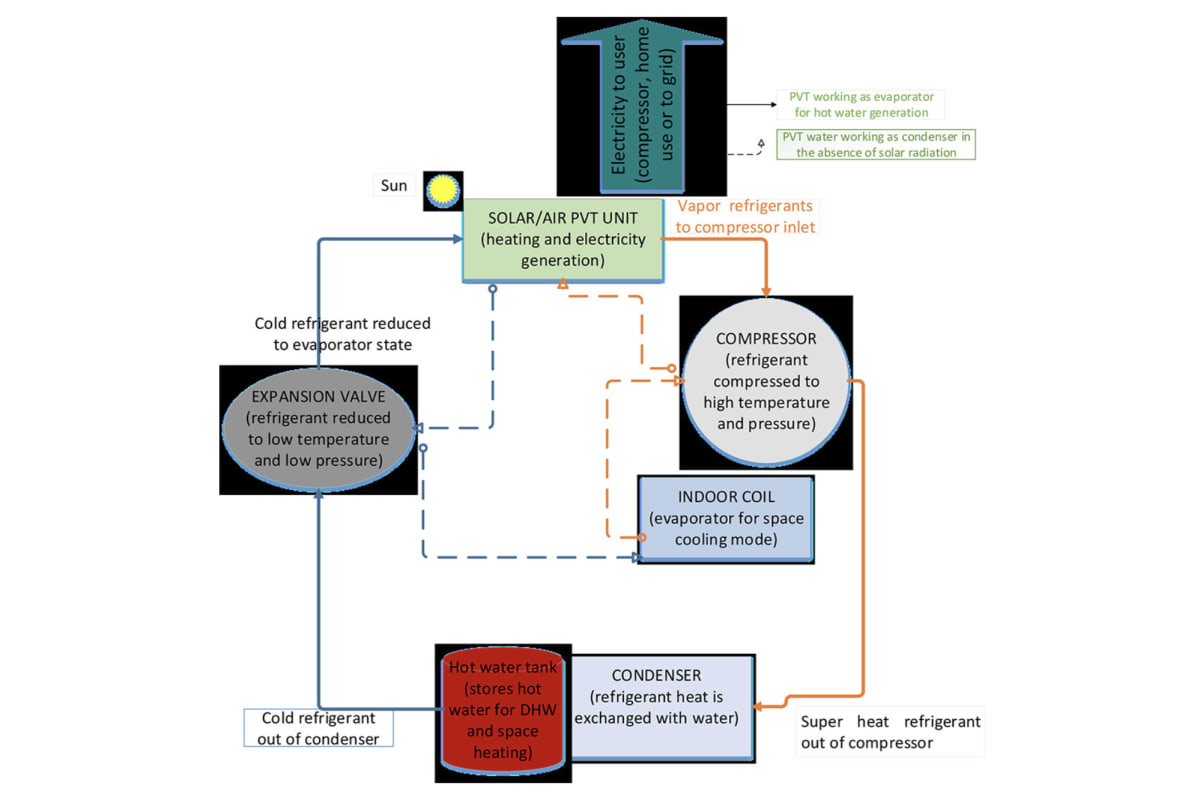
Lead researcher Emmanuel Bisengimana explains how they did it. The team removed the back insulation from a standard solar thermal panel and attached aluminum fins to the refrigerant tubes. Now the same unit soaks up heat from sunlight on top and ambient air from below.
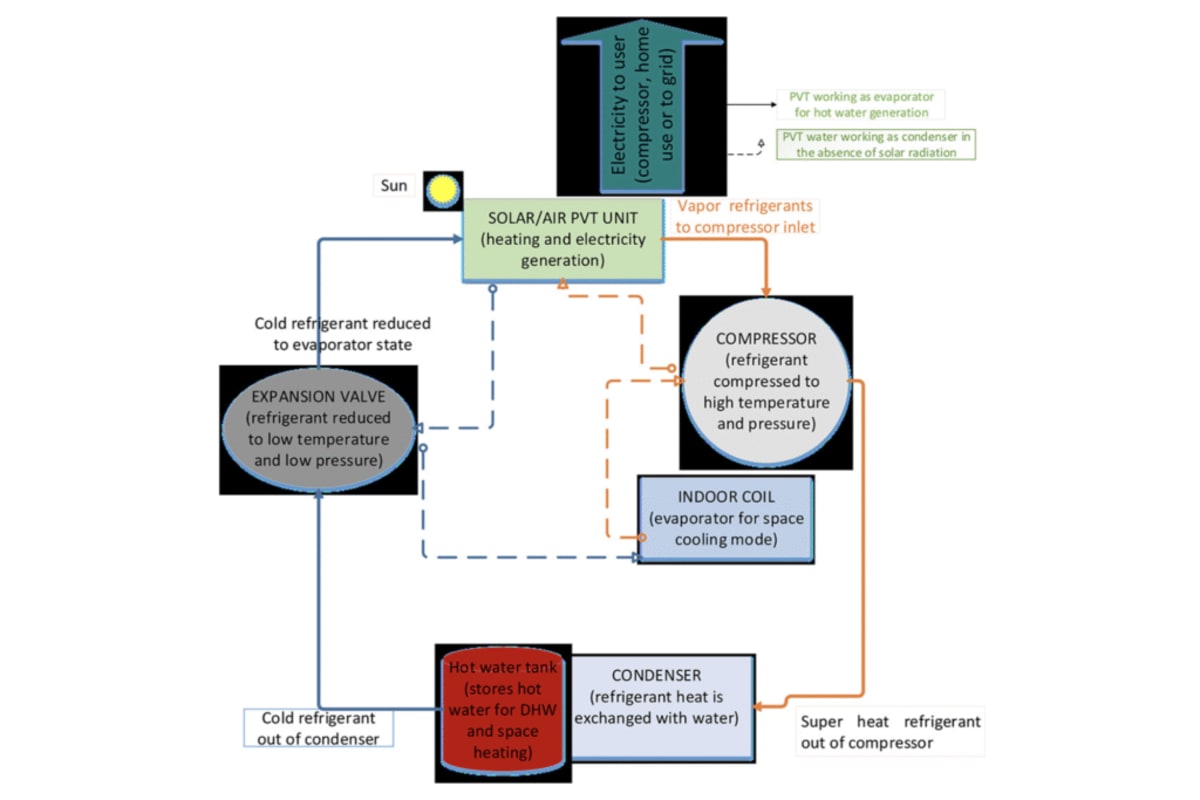
The system works like a super-efficient energy juggler. Solar cells generate electricity while the collector absorbs heat. That heat warms a refrigerant that gets compressed and transferred to a water tank for heating homes or providing hot water. The electricity flows to your home, battery storage, or the grid.
When the researchers tested their design through computer simulations in Yibin, China, the results were impressive. The system maintained steady performance through winter, spring, and summer. Its coefficient of performance, which measures efficiency, stayed between 5.2 and 5.38 throughout the year. That means for every unit of energy it uses, it produces more than five units of heating.
The team discovered an interesting twist. Winter conditions actually helped electrical efficiency despite lower sunlight. Cooler temperatures reduced heat-related losses, squeezing more electricity from each ray of sunshine.
Peak performance reached 230 watts of electrical power and 1,181 watts of heating power. The solar cells operated between 13.9% and 15.4% electrical efficiency, while thermal efficiency held steady at 55%.
The Ripple Effect
This breakthrough addresses one of the toughest challenges in fighting climate change. Buildings account for massive energy consumption, and traditional heating systems are major carbon emitters.
By simplifying the technology, the research team made green heating more accessible. Fewer parts mean lower costs, easier installation, and less that can break down. Homeowners get year-round efficiency without the complexity or price tag of conventional dual-source systems.
The researchers are now building a physical prototype to test in real-world conditions. They're also developing smart controls to automatically optimize between solar and air heat collection. Their long-term goal is analyzing how the system could help buildings reach net zero energy status.
Clean, affordable home heating just got a whole lot closer to reality.
More Images


Based on reporting by PV Magazine
This story was written by BrightWire based on verified news reports.
Spread the positivity!
Share this good news with someone who needs it