New Space Mission to Predict Solar Storms Before They Hit
A groundbreaking satellite just launched to capture the first-ever images of Earth's invisible magnetic shield, helping scientists predict dangerous solar storms before they knock out power grids and communications. After more than a decade of international teamwork, SMILE will show us what protects our planet from space weather.
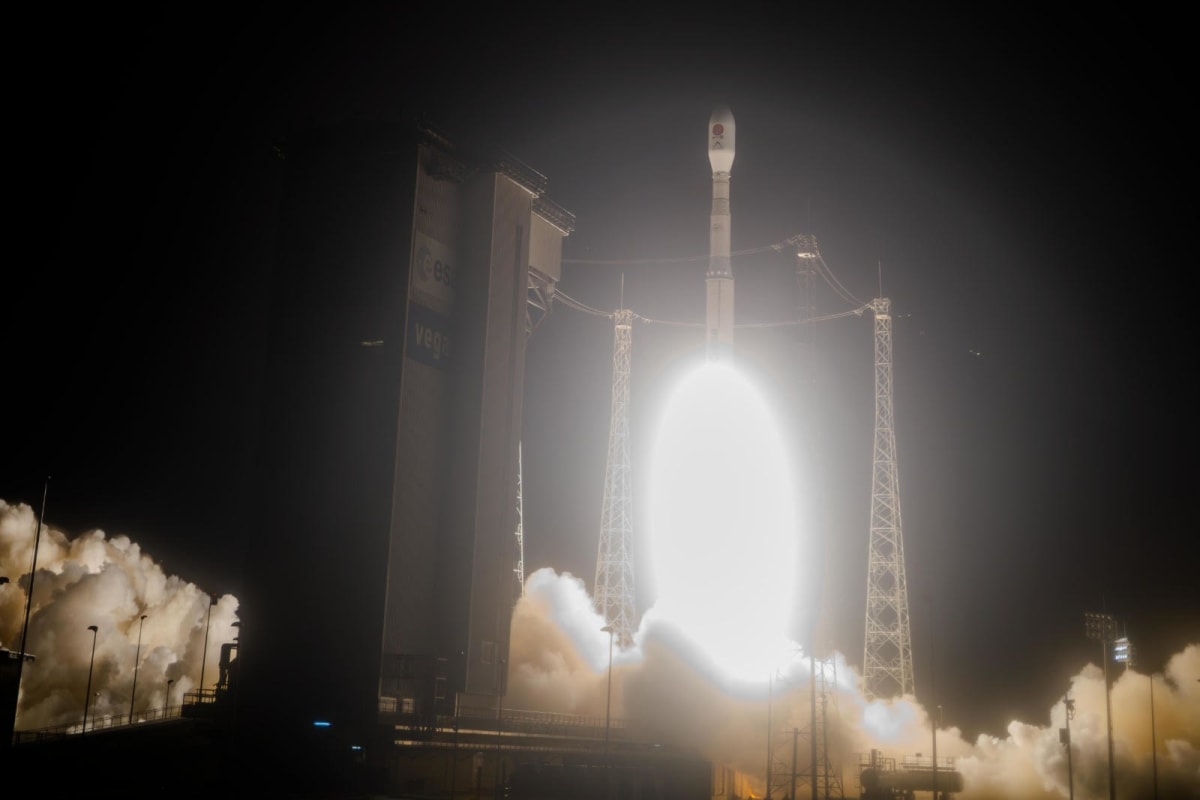
For the first time in history, scientists will see the shape of Earth's protective magnetic bubble, thanks to a satellite that launched from French Guiana on May 18.
The SMILE mission, developed together by Europe and China over 11 years, lifted off successfully and is now heading toward a special orbit that reaches 121,000 kilometers above the North Pole. From that vantage point, its cameras will photograph something we've never seen before: the full shape of Earth's magnetosphere as it shields us from solar storms.
This matters because geomagnetic storms have knocked out power grids and disrupted global communications in the past. The most intense storm on record, the Carrington Event in 1859, damaged telegraph networks worldwide. Scientists estimate a similar storm today could cause trillions of dollars in damage to our technology-dependent world.
Until now, space missions could only take local measurements of these dynamics, like trying to understand an elephant by touching one small part. SMILE's wide-angle cameras will capture the whole picture for the first time.
"We have a magnetic field, just like a shell for the Earth, but we have never known what shape this is," said Wang Chi, director general of China's National Space Science Center. As solar activity varies, SMILE will show scientists how mass and energy moves from the solar wind into Earth's magnetic field.
The 2,200-kilogram spacecraft will spend the next month using most of its fuel to reach its final orbit, which takes 51 hours to complete. During each orbit, SMILE will make 45 continuous hours of aurora observations, watching the beautiful light shows that result when solar particles interact with our atmosphere.
The Ripple Effect
Understanding cause and effect in space weather will protect the infrastructure modern life depends on. SMILE combines imaging cameras with instruments that measure particles in real time, allowing scientists to see the global response while simultaneously measuring what's driving it.
The mission required patience and collaboration across different engineering approaches and scientific methods. It faced years of delays, including changes after an export control review in 2020 and disruptions from the pandemic. Both European and Chinese teams celebrated learning from each other throughout the decade-long journey.
ESA science director Carole Mundell emphasized the importance beyond pure science: "Nowadays modern life depends very much on our space infrastructure."
With SMILE now safely in orbit and solar panels deployed, scientists are one step closer to predicting space weather the way meteorologists forecast rain, giving us time to protect our satellites, power systems, and communication networks before the next big storm arrives.
More Images


Based on reporting by SpaceNews
This story was written by BrightWire based on verified news reports.
Spread the positivity!
Share this good news with someone who needs it
%2Fhttps%3A%2F%2Ftf-cmsv2-smithsonianmag-media.s3.amazonaws.com%2Ffiler_public%2F58%2Fd2%2F58d29a3f-b50e-42b8-bb29-5258f3c5ec41%2F55459753868_5f52e4d42b_k.jpg)