Scientists May Have Solved 60-Year Cosmic Ray Mystery
Researchers think they've cracked one of space's biggest puzzles: where the most powerful particles in the universe come from. The answer could lie in ultraheavy atomic nuclei surviving epic journeys across the cosmos.
Scientists may have finally solved a mystery that's stumped them since 1961: what flings the most powerful particles in the universe at Earth?
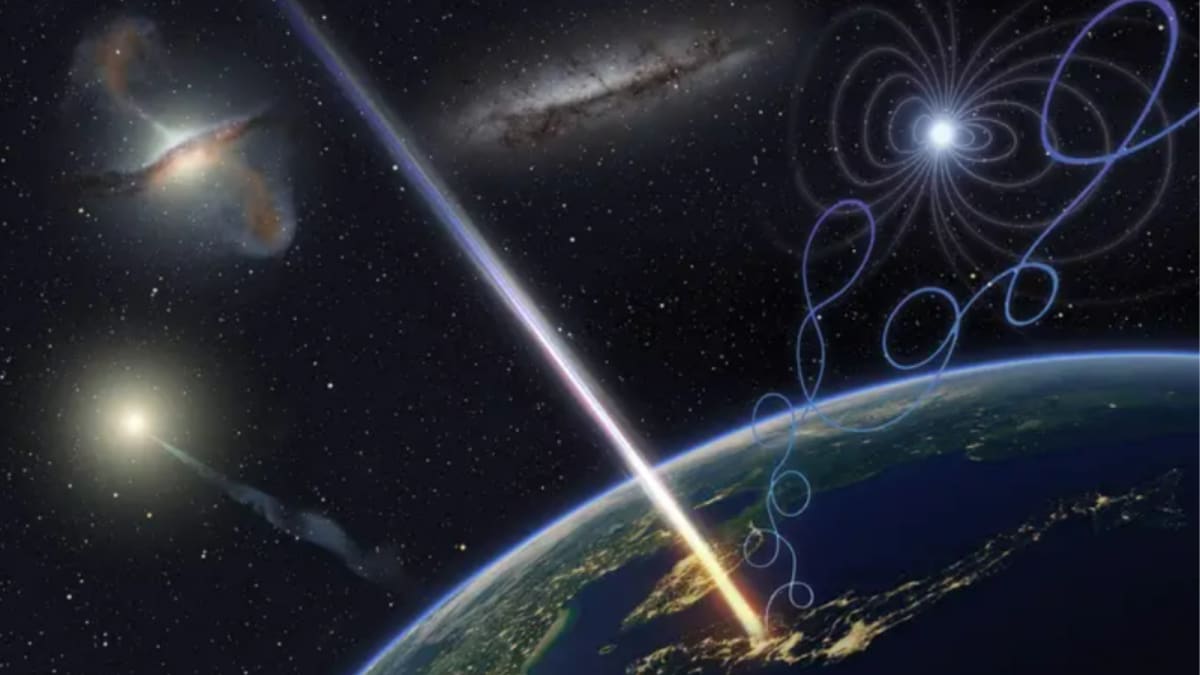
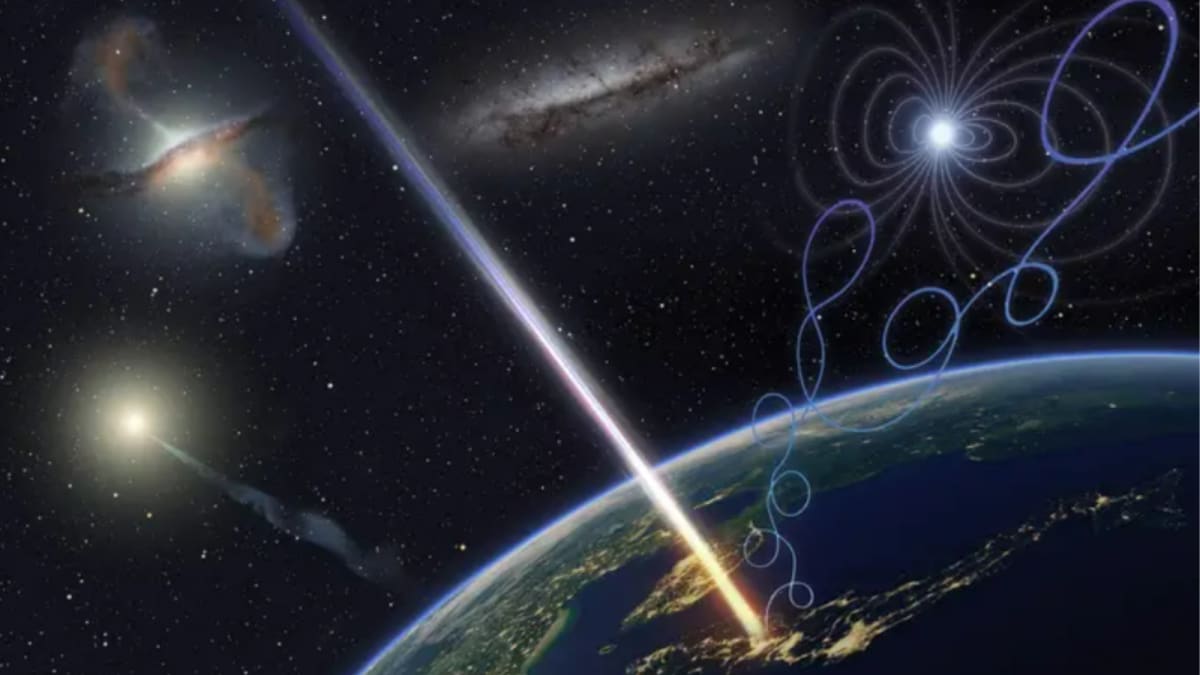
These cosmic rays pack mind-bending energy. The Amaterasu particle, which hit Earth in 2021, carried 40 million times more punch than anything the Large Hadron Collider can produce. That's the kinetic energy of a fast-moving tennis ball compressed into a single particle.
For decades, nobody could explain where these ultrahigh-energy cosmic rays came from or how they got so powerful. The Amaterasu particle made things even more puzzling because it seemed to come from an empty void in space with no obvious source.
Now a team led by Kohta Murase at Penn State thinks they've found the answer. Their research suggests these cosmic rays might be atomic nuclei of elements heavier than iron, and that could be the key to understanding their mysterious origins.
Here's why that matters: heavier nuclei lose energy much more slowly than lighter particles as they travel across vast cosmic distances. That means they can survive the journey to Earth while keeping their extreme energy intact.
The researchers ran simulations tracking how cosmic rays of different masses would behave crossing space. Their models showed that ultraheavy nuclei could reach Earth at extreme energies that lighter particles simply couldn't maintain.
Why This Inspires
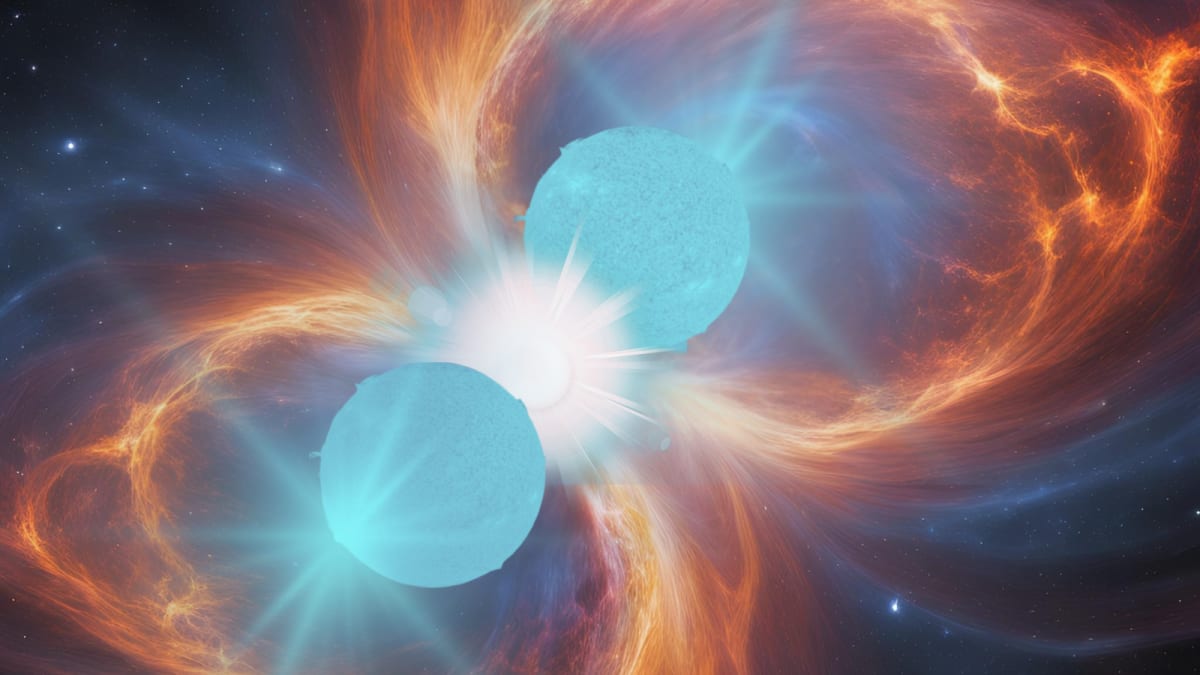
This breakthrough points to some of the most spectacular events in the universe as the source. We're talking about massive stars collapsing into black holes, strongly magnetized neutron stars forming, or two neutron stars colliding in explosions so powerful they create gravitational waves.
These aren't just theoretical events. Scientists have actually detected gravitational waves from neutron star mergers, confirming these cosmic violence factories are real. Each collision involves bodies so dense that a teaspoon of their matter would weigh 10 million tons.
The discovery could reshape how scientists search for cosmic ray sources going forward. If ultraheavy nuclei account for the highest-energy cosmic rays, researchers now know to focus on the universe's most violent stellar events.
Future cosmic ray detectors should be able to confirm whether these particles are indeed heavier than iron, giving scientists their first clear picture of where Earth's most powerful visitor particles begin their journey.
After 60 years of mystery, we're closer than ever to understanding the universe's most extreme particle accelerators.
More Images

Based on reporting by Space.com
This story was written by BrightWire based on verified news reports.
Spread the positivity!
Share this good news with someone who needs it
%2Fhttps%3A%2F%2Ftf-cmsv2-smithsonianmag-media.s3.amazonaws.com%2Ffiler_public%2F2b%2Ff8%2F2bf8fcd4-1756-46ef-927b-394ec4814573%2F1851_07_28_berkowski.jpg)