Search

Find uplifting stories about heroes, innovations, and solutions

195 results for "astrophysics"

Brooklyn Actress Discovers Astrophysics, Now Works at NASA
Community HeroesJun 15

Brooklyn Actress Discovers Astrophysics, Now Works at NASA

Erini Lambrides picked up "A Brief History of Time" as a joke at her performing arts high school. That moment launched a journey from Brooklyn theater dreams to studying galaxies at NASA's Goddard Space Flight Center.

Scientific American2 min read
PhD Grad Proves Wrong Turns Lead to Cosmic Discoveries
Community HeroesApr 29

PhD Grad Proves Wrong Turns Lead to Cosmic Discoveries

Skylar Grayson spent months going down wrong research paths during her astrophysics PhD, but her advisor taught her that detours are actually how science works. This May, she graduates with top honors from Arizona State University and heads to Canada to continue exploring the universe.

Google: scientific discovery3 min read
Israeli Team Detects Star-Birth Particles 400 Light-Years Away
InnovationFeb 6

Israeli Team Detects Star-Birth Particles 400 Light-Years Away

Scientists from Israel have measured invisible cosmic ray particles deep inside a distant dust cloud for the first time, opening a new window into understanding how stars are born. The breakthrough discovery using NASA's James Webb Space Telescope could transform modern astrophysics.

Google News - Israel Technology3 min read
Ancient Galaxy Crash Solves Cosmic Mystery
InnovationMar 19

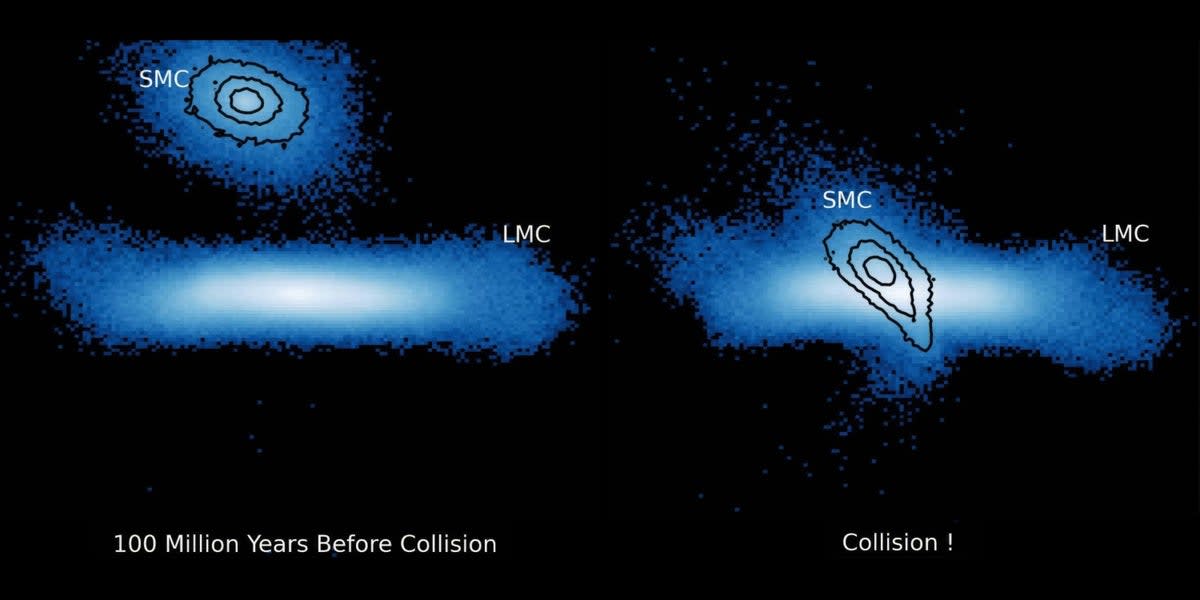
Ancient Galaxy Crash Solves Cosmic Mystery

Scientists finally figured out why a neighboring galaxy has been spinning strangely for decades. A catastrophic collision with its larger sister galaxy millions of years ago left it reeling in a cosmic twist.

Scientific American2 min read
Stars Survive Black Hole Attacks by Spinning Fast
InnovationAug 23

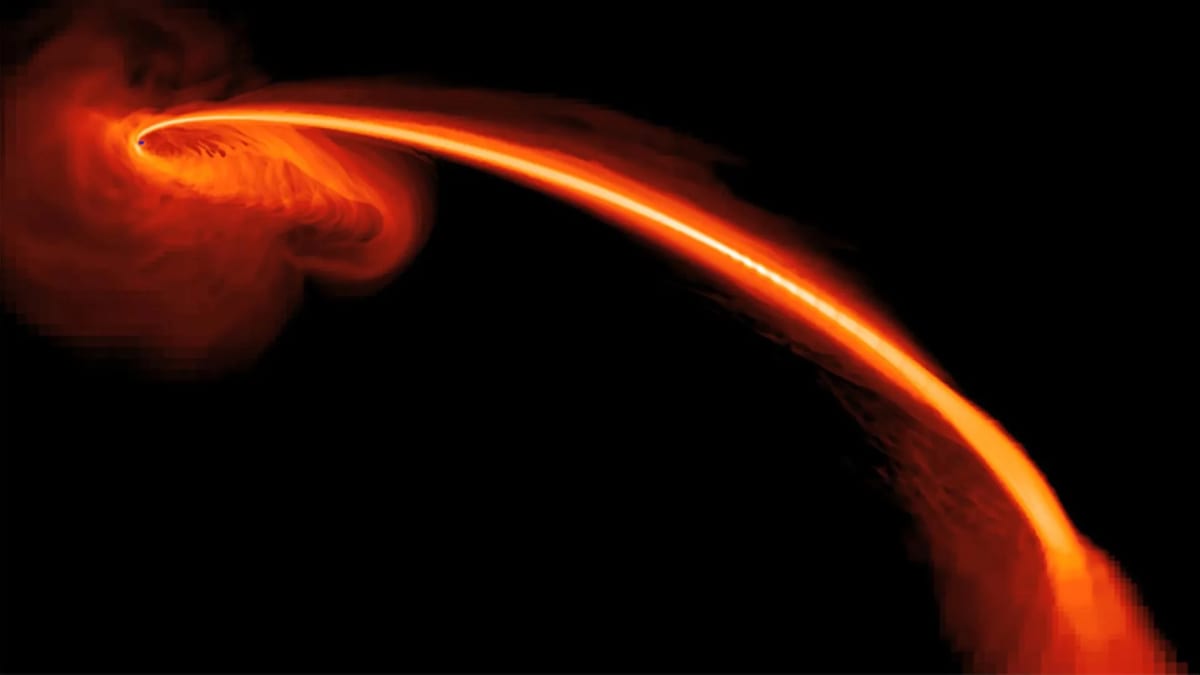
Stars Survive Black Hole Attacks by Spinning Fast

Scientists solved a cosmic mystery: some stars survive being ripped apart by supermassive black holes, returning for repeat encounters. The secret is how fast they were spinning before their first brush with destruction.

Science Daily2 min read
Yale Astrophysicist: Golden Age of Discovery Is Here
SolutionsJan 26

Yale Astrophysicist: Golden Age of Discovery Is Here

One of the world's leading astrophysicists says we're living through a golden age of cosmic discovery, thanks to powerful space telescopes and computing advances working together. Priyamvada Natarajan believes major breakthroughs in understanding black holes and dark matter are coming soon.

Indian Express3 min read
3 UC San Diego Professors Join Elite Science Academy
InnovationMay 6

3 UC San Diego Professors Join Elite Science Academy

Three UC San Diego researchers studying climate, nuclear physics, and human health just earned one of science's highest honors. Their work is already protecting communities and advancing our understanding of life itself.

Google: scientific discovery2 min read
Astrophysicist's Wonder: Chasing Black Holes Across Space
InnovationFeb 22

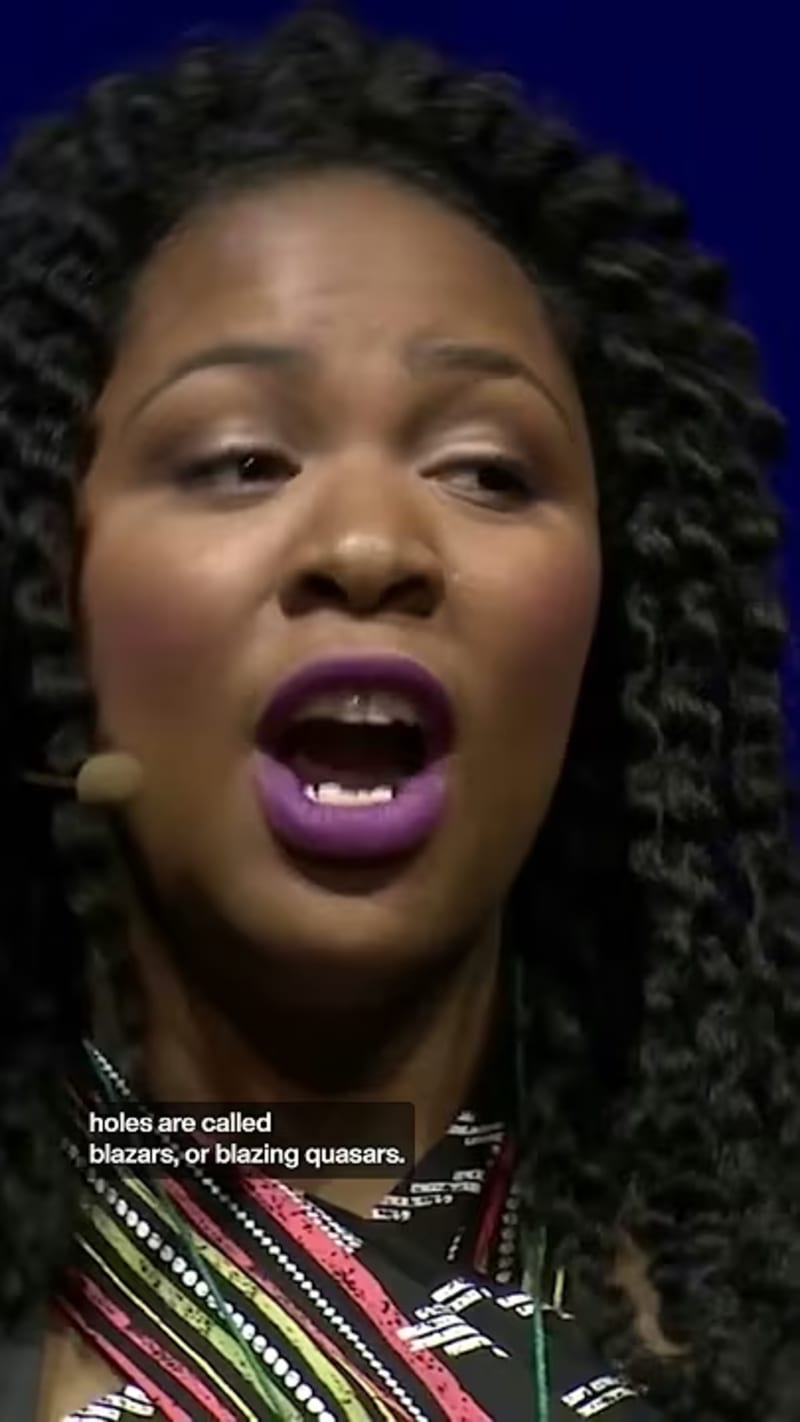
Astrophysicist's Wonder: Chasing Black Holes Across Space

A girl who fell in love with the night sky grew up to study supermassive black holes trillions of kilometers from Earth. Dr. Jedidah Isler now researches some of the universe's most powerful objects, proving childhood dreams can reach across galaxies.

TED2 min read
Ancient Black Hole Breaks Cosmic Speed Limit by 13x
InnovationFeb 23

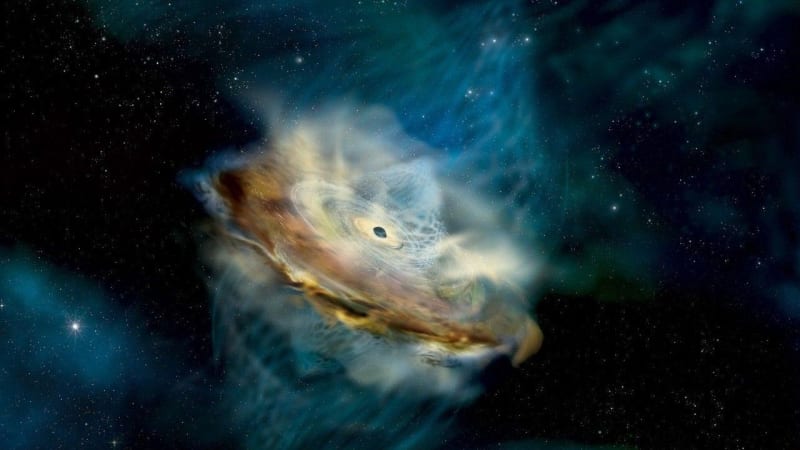
Ancient Black Hole Breaks Cosmic Speed Limit by 13x

Scientists discovered a supermassive black hole from the early universe growing 13 times faster than physics should allow, challenging our understanding of how these cosmic giants form. The breakthrough could solve a major mystery about how black holes grew so massive so quickly after the Big Bang. ##

Google News - Science3 min read
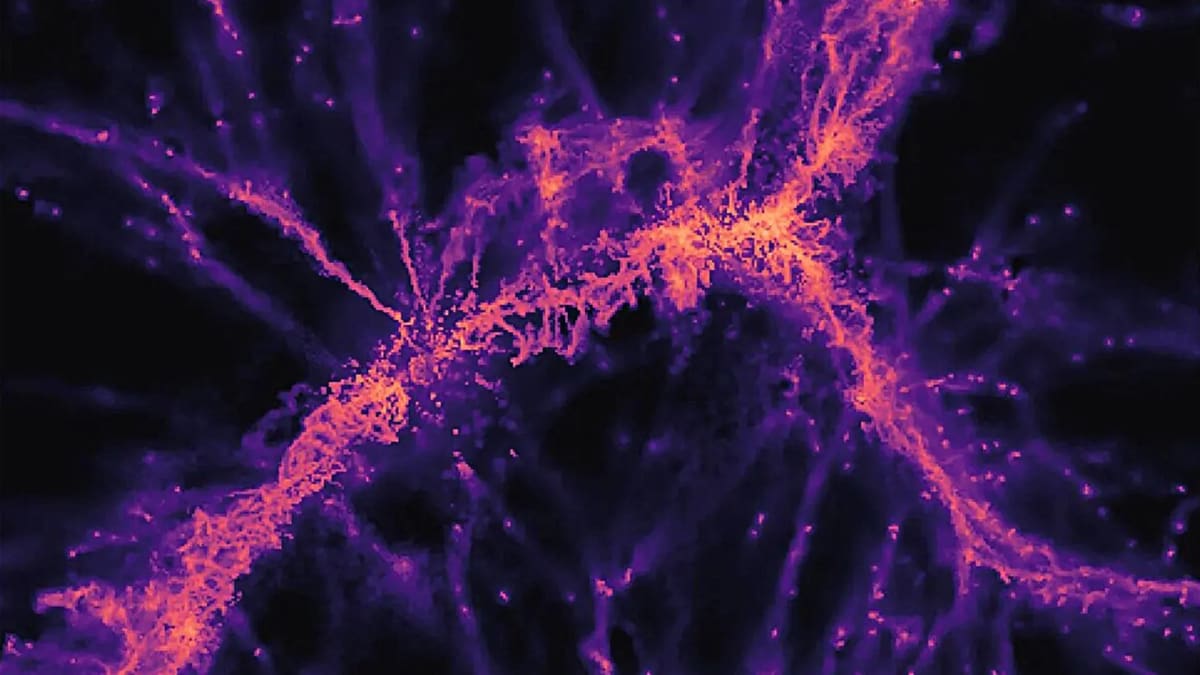
Scientists Capture First Clear Image of Universe's Web
InnovationMay 16

Scientists Capture First Clear Image of Universe's Web

Astronomers have photographed a glowing cosmic highway linking galaxies from 12 billion years ago, revealing the hidden structure that fuels star formation across the universe. The breakthrough helps explain how galaxies grow and evolve over cosmic time.

Science Daily3 min read
Milky Way Built by Epic Galaxy Crash 12 Billion Years Ago
InnovationAug 17

Milky Way Built by Epic Galaxy Crash 12 Billion Years Ago

Scientists just confirmed our home galaxy grew from a massive collision with another galaxy 12 billion years ago, revealing how the Milky Way became the cosmic neighborhood we know today. The discovery shows our galaxy has been growing by absorbing neighbors since nearly the beginning of time.

ABC Australia2 min read
Scientists Recreate Star Explosion Reaction for First Time
InnovationApr 14

Scientists Recreate Star Explosion Reaction for First Time

For the first time ever, researchers have recreated a rare cosmic reaction that forms one of the universe's rarest elements, bringing us closer to understanding where everything came from. The breakthrough cuts uncertainty in half but reveals we still have more to learn about exploding stars.

Science Daily3 min read
Scientists Crack How Universe Creates Massive Magnetic Fields
InnovationMay 26

Scientists Crack How Universe Creates Massive Magnetic Fields

A breakthrough supercomputer simulation has revealed how cosmic chaos creates the universe's vast, organized magnetic fields. The discovery could transform our understanding of everything from black holes to solar storms.

Science Daily3 min read
James Webb Finds Ancient Galaxy That Defies Physics
InnovationMay 10

James Webb Finds Ancient Galaxy That Defies Physics

The James Webb Space Telescope spotted a galaxy that shouldn't exist by current theories: a massive, ancient galaxy with no rotation, formed less than 2 billion years after the Big Bang. This discovery could rewrite what we know about how galaxies form and evolve.

Google: James Webb telescope2 min read
Scientists Edge Closer to First Primordial Black Hole Find
InnovationApr 1

Scientists Edge Closer to First Primordial Black Hole Find

Researchers may have detected the first primordial black hole, mysterious objects formed in the first second after the Big Bang. The discovery could solve one of the universe's oldest mysteries.

Google News - Breakthrough Discovery2 min read
Scientists Measure Black Hole Jets at Half Light Speed
InnovationApr 18

Scientists Measure Black Hole Jets at Half Light Speed

For the first time ever, astronomers have measured the real-time power of jets blasting from a black hole, and the numbers are staggering. The breakthrough reveals these cosmic fountains pack the energy of 10,000 suns while racing through space at 355 million mph.

Google News - Science2 min read
Scientists Confirm Star Explosions That Leave Nothing Behind
InnovationApr 4

Scientists Confirm Star Explosions That Leave Nothing Behind

For 60 years, scientists theorized that the universe's biggest stars could explode so powerfully they vanish completely. New research using gravitational waves just proved they were right.

Japan Times3 min read
Ghostly Star Ribbon Reveals Dark Matter's Hidden Secrets
InnovationAug 24

Ghostly Star Ribbon Reveals Dark Matter's Hidden Secrets

Astronomers discovered the first stellar stream outside our galaxy, offering a groundbreaking new tool to map the universe's invisible dark matter. The faint ribbon of ancient stars is helping scientists solve one of space's greatest mysteries.

Science Daily3 min read
Scientists Capture First Clear Image of Cosmic Web
InnovationMay 17

Scientists Capture First Clear Image of Cosmic Web

Astronomers have captured the sharpest image ever of a cosmic filament, revealing the massive hidden highways that connect galaxies across the universe. The glowing strand stretches 3 million light-years and offers new insights into how galaxies form and grow.

Google News - Science2 min read
Scientists Decode Black Hole Origins Using Spacetime Ripples
Daily MixMay 8

Scientists Decode Black Hole Origins Using Spacetime Ripples

Scientists discovered the universe's biggest black holes form through violent collisions in densely packed star clusters, not from dying stars alone. Gravitational wave detectors revealed two distinct black hole populations, solving a cosmic mystery about how these giants grow.

Space.com3 min read

Showing 20 of 195