Scientists Recreate Star Explosion Reaction for First Time
For the first time ever, researchers have recreated a rare cosmic reaction that forms one of the universe's rarest elements, bringing us closer to understanding where everything came from. The breakthrough cuts uncertainty in half but reveals we still have more to learn about exploding stars.
Scientists just solved part of a 60-year-old mystery about how the rarest elements in the universe are born.
For the first time, researchers at Michigan State University's Facility for Rare Isotope Beams recreated a crucial reaction that happens inside exploding stars. They successfully measured how arsenic-73 captures a proton to form selenium-74, one of the universe's rarest elements called p-nuclei.
The achievement represents a major milestone in understanding cosmic creation. Graduate student Artemis Tsantiri, now at the University of Regina, led a team of more than 45 scientists from 20 institutions to pull off the groundbreaking experiment.
Here's why this matters: most heavy elements form when atoms absorb neutrons over time. But p-nuclei are different because they're packed with more protons than neutrons, and scientists haven't been able to explain where they come from.
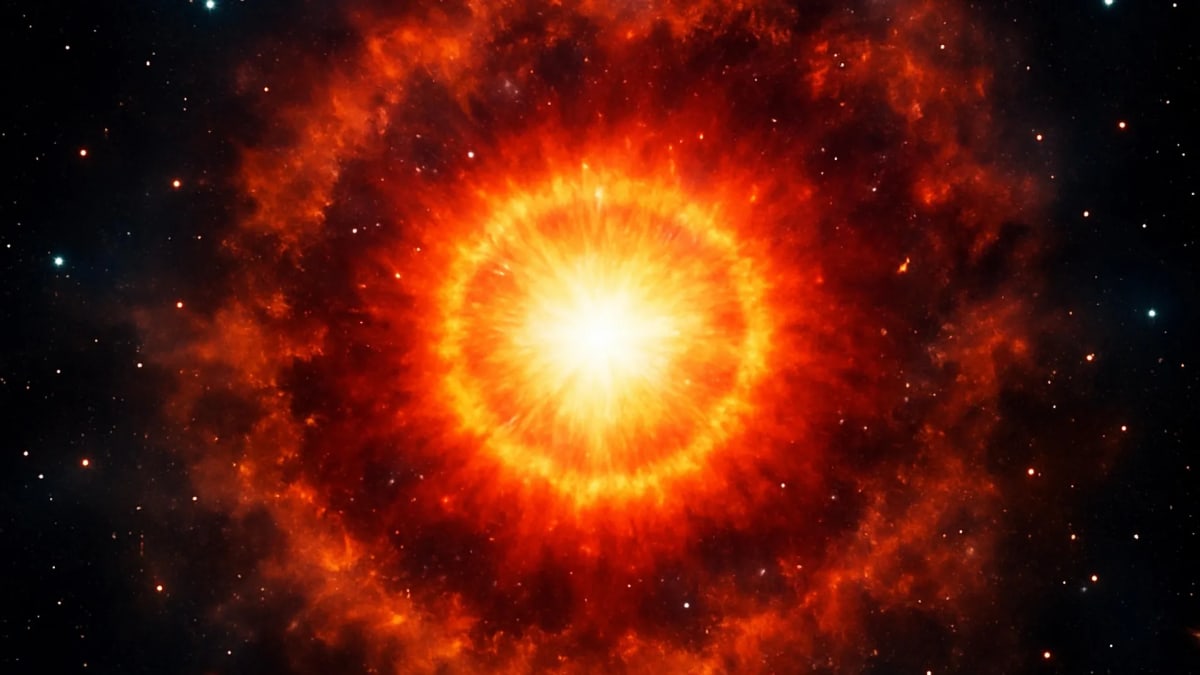
The leading theory involves something called the gamma process. During certain supernova explosions, intense heat creates gamma rays that strip neutrons from heavy nuclei, leaving behind proton-rich isotopes that eventually become p-nuclei.
The problem? These reactions involve short-lived isotopes that are incredibly difficult to create in a lab. Scientists have relied on theoretical models for decades because they couldn't measure the reactions directly.
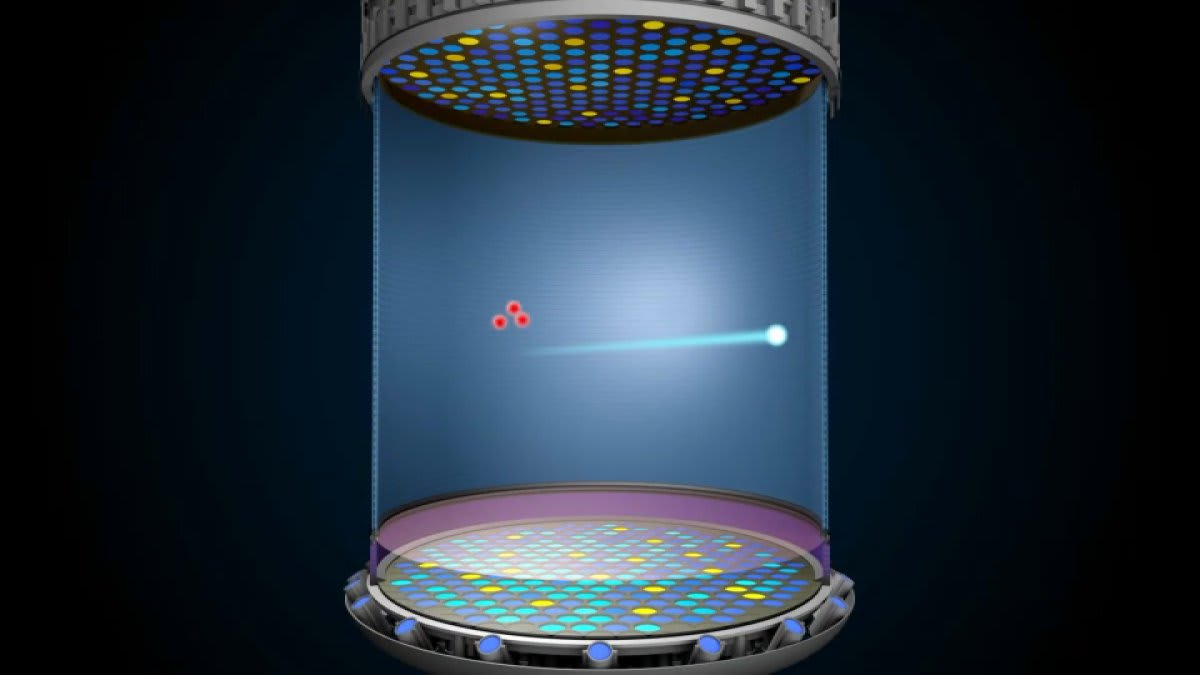
Until now. The team generated a beam of radioactive arsenic-73 and shot it into a chamber filled with hydrogen gas. When the arsenic absorbed protons from the hydrogen, it transformed into selenium-74, releasing gamma rays that the researchers could measure.
Why This Inspires
This experiment shows what becomes possible when scientists build the right tools and refuse to give up on hard questions. The work took years of preparation and required operating advanced equipment in new ways just to create the rare isotopes needed.
When the team plugged their measurements into astrophysical models, they cut the uncertainty about selenium-74's abundance in half. That's enormous progress on a problem that's stumped researchers since the 1960s.
The story doesn't end there, though. Even with better data, the models still don't perfectly match what scientists observe in nature. That gap hints at exciting possibilities: maybe the conditions inside supernova explosions are different than expected, or perhaps other cosmic processes are at play.
Professor Artemis Spyrou, who advised Tsantiri and designed the original experiment, celebrates the progress while acknowledging the journey continues. The findings appeared in Physical Review Letters and open new pathways for understanding cosmic creation.
These measurements were only possible because facilities like FRIB can now produce and study rare isotopes that exist for mere moments. As these tools improve, scientists will unlock more secrets about how stars forge the building blocks of our universe.
We're one giant step closer to understanding where everything, including us, ultimately came from.
Based on reporting by Science Daily
This story was written by BrightWire based on verified news reports.
Spread the positivity!
Share this good news with someone who needs it