Scientists Edge Closer to First Primordial Black Hole Find
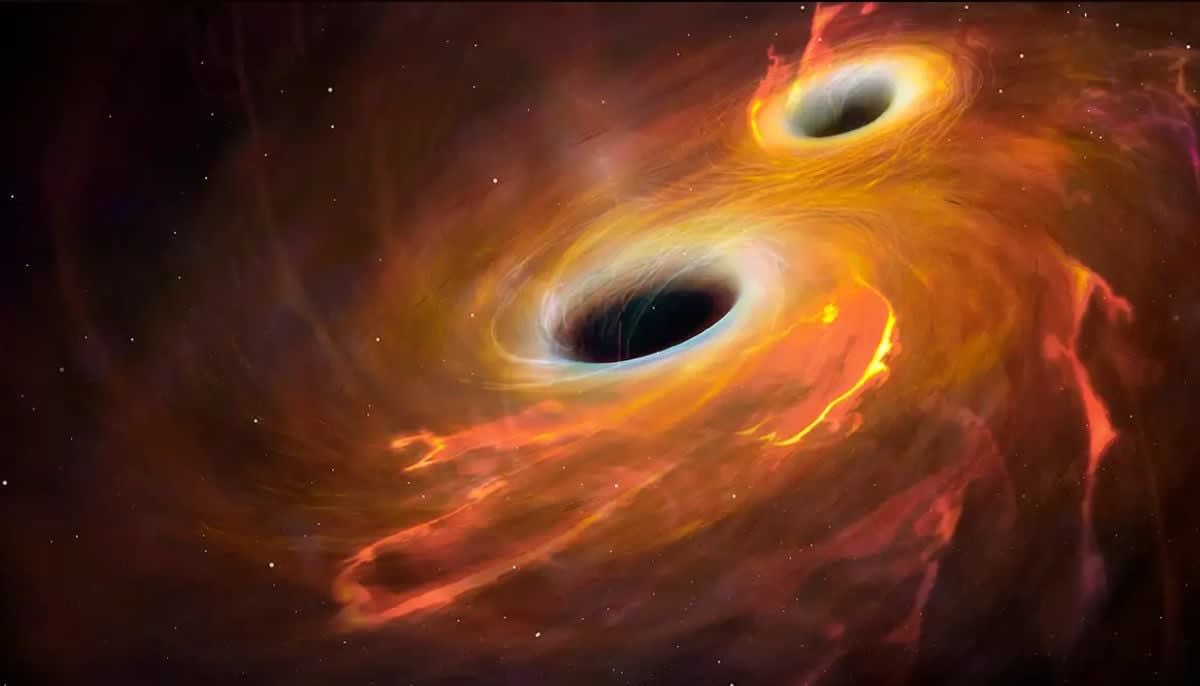
Researchers may have detected the first primordial black hole, mysterious objects formed in the first second after the Big Bang. The discovery could solve one of the universe's oldest mysteries.
Scientists at the University of Miami just moved closer to confirming something that's been purely theoretical for decades: primordial black holes might actually exist.
Unlike the black holes we know about, which form when massive stars explode, primordial black holes theoretically formed within the first second after the Big Bang from ultra-dense pockets of matter. Until now, they've been science fiction more than science fact.
Astrophysicists Alberto Magaraggia and Nico Cappelluti analyzed data from LIGO, the Laser Interferometer Gravitational-Wave Observatory that detects ripples in space-time. They found something extraordinary: a signal called S251112cm that showed two objects colliding, with one weighing less than our Sun.
That detail matters enormously. Regular black holes weigh at least a few times more than our Sun because they form from massive dying stars. This lightweight object could be the primordial black hole scientists have been searching for.
"The most common black holes form as the result of a supernova, the death of a massive star," Cappelluti explained. "We believe our study will aid in confirming that primordial black holes actually do exist."
The breakthrough doesn't stop there. Another landmark study in early 2026 by researcher Elio Quiroga explored something even wilder: exotic systems where a primordial black hole acts like an atomic nucleus, capturing a proton and electron around it. The James Webb Space Telescope could potentially spot these strange formations by their unique light signatures.
Why This Inspires
This discovery represents more than just confirming a theory. Primordial black holes could help explain dark matter, the mysterious substance that makes up most of the universe but remains invisible to our instruments. Finding them would unlock secrets about the very first moments of existence.
The research shows how human curiosity keeps pushing boundaries. These scientists spent years analyzing signals from detectors thousands of miles apart, searching for evidence of something formed 13.8 billion years ago in a fraction of a second.
More analysis is needed to confirm the findings, but the evidence keeps mounting that these ancient cosmic objects are real.
The universe just got a little less mysterious, and a lot more fascinating.
Based on reporting by Google News - Breakthrough Discovery
This story was written by BrightWire based on verified news reports.
Spread the positivity!
Share this good news with someone who needs it
%2Fhttps%3A%2F%2Ftf-cmsv2-smithsonianmag-media.s3.amazonaws.com%2Ffiler_public%2F3f%2F55%2F3f5579c8-c4a7-43a5-bb54-6498478792fd%2Fhelix1940__fitmaxwzk3mcw2ntbd.jpg)