Webb Telescope Maps Universe's Hidden Web in Detail
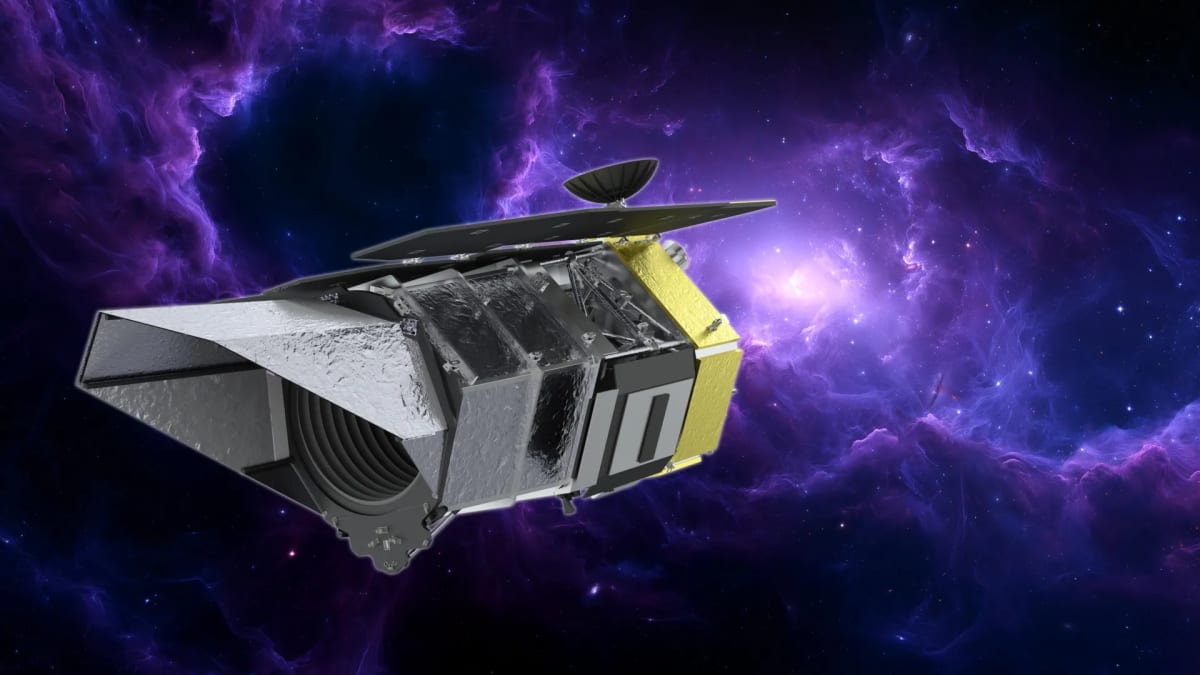
The James Webb Space Telescope created the most detailed map ever of the cosmic web, revealing how galaxies connect across 13.7 billion years. The breakthrough lets scientists see the universe's hidden architecture from when it was just a billion years old.
Scientists just revealed the most detailed picture ever of how the universe is woven together, and it's more intricate than anyone expected.
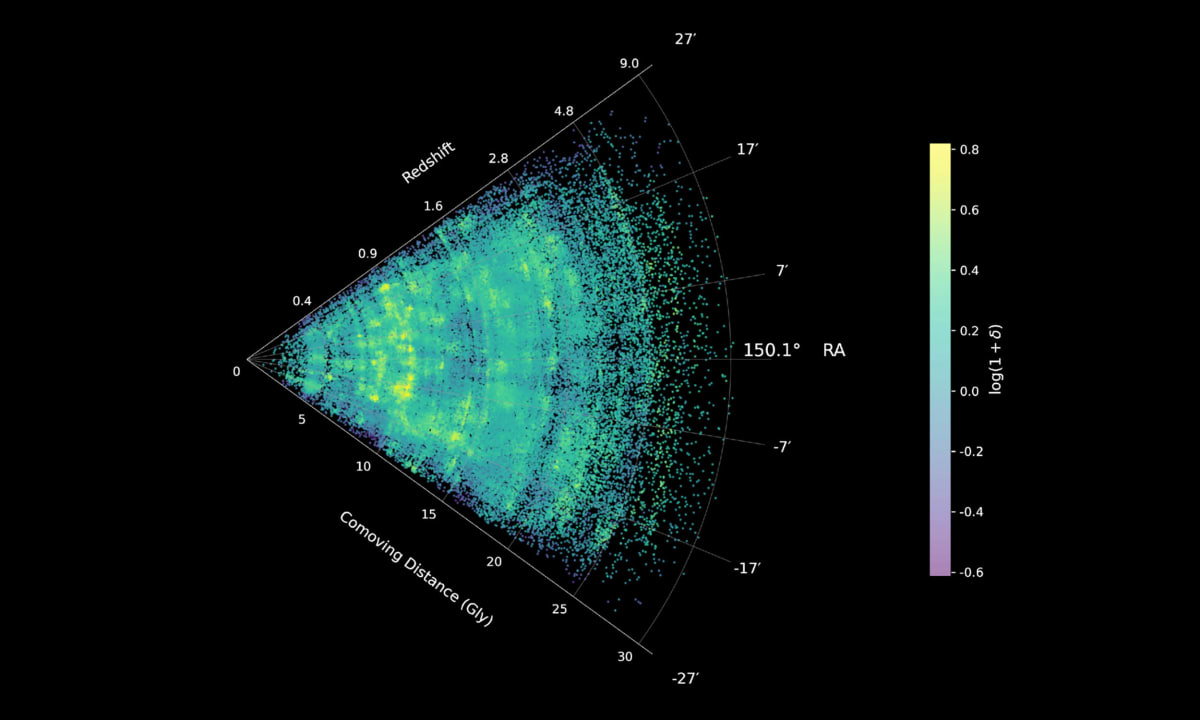
The James Webb Space Telescope completed its largest survey ever, mapping 164,000 galaxies across a patch of sky about three full moons wide. That survey, called COSMOS-Web, traces the cosmic web back 13.7 billion years to when the universe was barely a billion years old.
The cosmic web is the universe's skeleton. Invisible dark matter forms massive filaments and sheets that stretch across space, with enormous empty voids in between. Galaxies cluster along these threads like beads on a string, gathering where filaments cross and vanishing where they thin out.
Hossein Hatamnia, a graduate student at UC Riverside and Carnegie Observatories, led the team that built this three-dimensional map. "For the first time, we can study the evolution of galaxies in cluster and filamentary structures across cosmic time, all the way from when the universe was a billion years old up to the nearby universe," he said.
The Hubble Space Telescope had photographed this same region for years, but those maps were blurry around the edges. Webb's infrared vision picks up galaxies far too faint for Hubble to detect and pinpoints their distances with remarkable precision.
That precision turns a flat catalog of dots into a real map where each galaxy lands in its proper place and time. Structures that looked smeared together in earlier surveys now appear sharp and distinct. Single clumps split into several separate formations. Voids that seemed fuzzy now have clear boundaries.
Why This Inspires
This map does more than show what's out there. It gives scientists their first clear look at how a galaxy's neighborhood affects its growth across nearly the entire history of the universe.
Computer models that simulate how dark matter built cosmic structure now face their toughest test yet. The early universe appears more textured and complex than those simulations predicted, meaning scientists will need to refine their understanding of how everything formed.
The entire dataset is now public, including the pipeline used to create the map and a video showing the cosmic web evolving over billions of years. Dozens of researchers from four continents contributed, and now anyone can explore their findings.
What seemed permanently out of reach just a few years ago is now mapped in extraordinary detail, revealing an early universe more structured and beautiful than we imagined.
Based on reporting by Google: James Webb telescope
This story was written by BrightWire based on verified news reports.
Spread the positivity!
Share this good news with someone who needs it