5 Space Discoveries That Changed Science Since 2021
The last five years revolutionized our understanding of the universe, from finding water worlds to spotting galaxies born just after the Big Bang. These breakthroughs are rewriting astronomy textbooks and bringing us closer to answering humanity's biggest questions.
Scientists just wrapped up the most groundbreaking five-year stretch in modern astronomy, uncovering secrets about distant galaxies, hidden oceans, and potentially habitable worlds that were once impossible to observe.
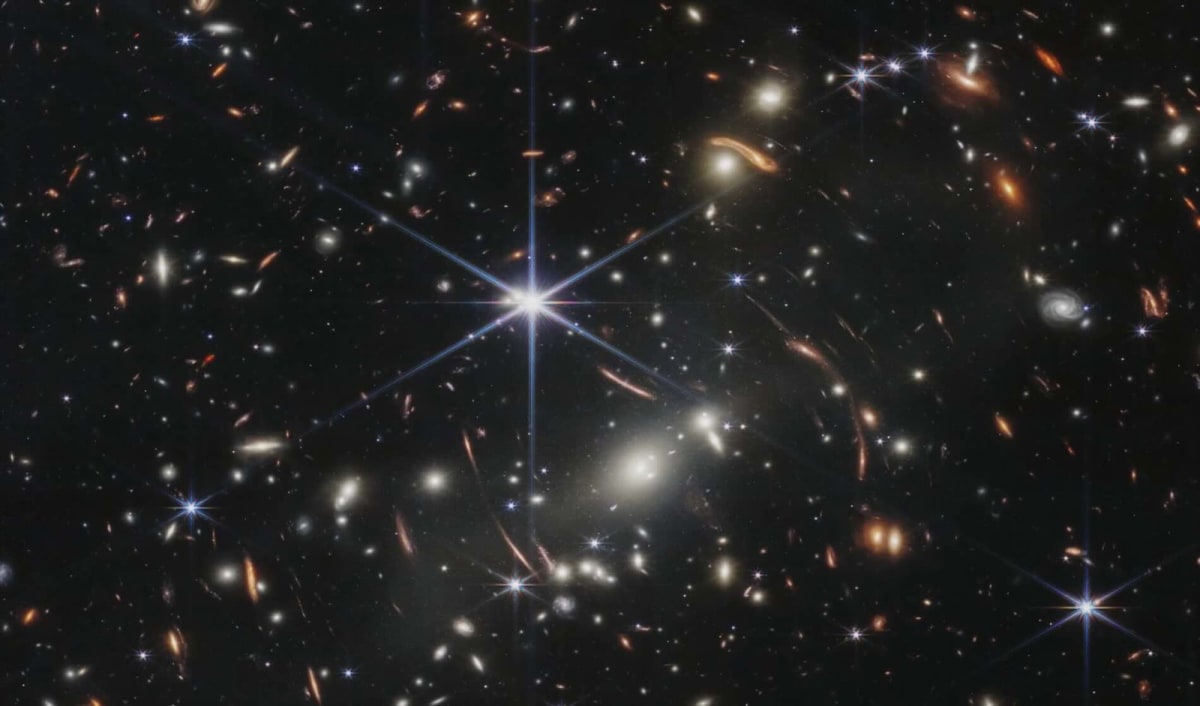
The James Webb Space Telescope launched this era in 2022 with its first deep field image, revealing thousands of galaxies from the early universe in stunning detail. Its infrared vision captured star birth and galaxy structures invisible to previous telescopes, showing that galaxies formed much faster after the Big Bang than anyone expected.
One of the most exciting finds came from K2-18b, a super-Earth planet where scientists detected strong evidence of water vapor and methane in the atmosphere. This distant world sits in its star's habitable zone, making it one of the most studied candidates for future life detection research.
Closer to home, researchers confirmed that Saturn's moon Enceladus hides a massive ocean beneath its icy shell. Analysis of Cassini mission data revealed organic compounds and active chemistry in water plumes shooting from the moon's south pole, making Enceladus a prime target for finding microbial life in our solar system.
Meanwhile, NASA's Perseverance rover discovered complex organic molecules in Mars rocks from Jezero Crater, an ancient lake bed that may have supported life billions of years ago. The samples collected there will play a starring role in future missions designed to search for signs of past Martian life.
The Webb telescope also gave us clearer views of GN-z11, one of the most distant galaxies ever spotted, existing just 400 million years after the Big Bang. The discovery revealed surprisingly advanced chemical activity in this baby galaxy, challenging theories about how quickly cosmic structures evolved.
Why This Inspires
These discoveries represent more than scientific achievement. They connect us to our cosmic origins and expand the possibility that life exists beyond Earth.
Modern space exploration now combines cutting-edge telescopes, planetary rovers, and international cooperation in ways previous generations could only dream about. Each new finding builds on the last, creating momentum that accelerates discovery.
Future missions like Europa Clipper and Dragonfly are already planned to explore icy moons and alien atmospheres, building directly on what we've learned these past five years. The next generation of space exploration is teaching us that the universe holds far more wonders than we imagined, and we're just getting started.
More Images



Based on reporting by Google: scientific discovery
This story was written by BrightWire based on verified news reports.
Spread the positivity!
Share this good news with someone who needs it