James Webb Reveals Dying Star's Stunning Lion Nebula
The James Webb Space Telescope has captured breathtaking new images of a dying star creating a cosmic lion in space. The stunning infrared views reveal how a white dwarf is sculpting glowing gas and dust into a majestic lion's face and mane.
A dying star 5,000 light years away is painting one of nature's most beautiful cosmic portraits, and the James Webb Space Telescope just captured it in stunning detail.
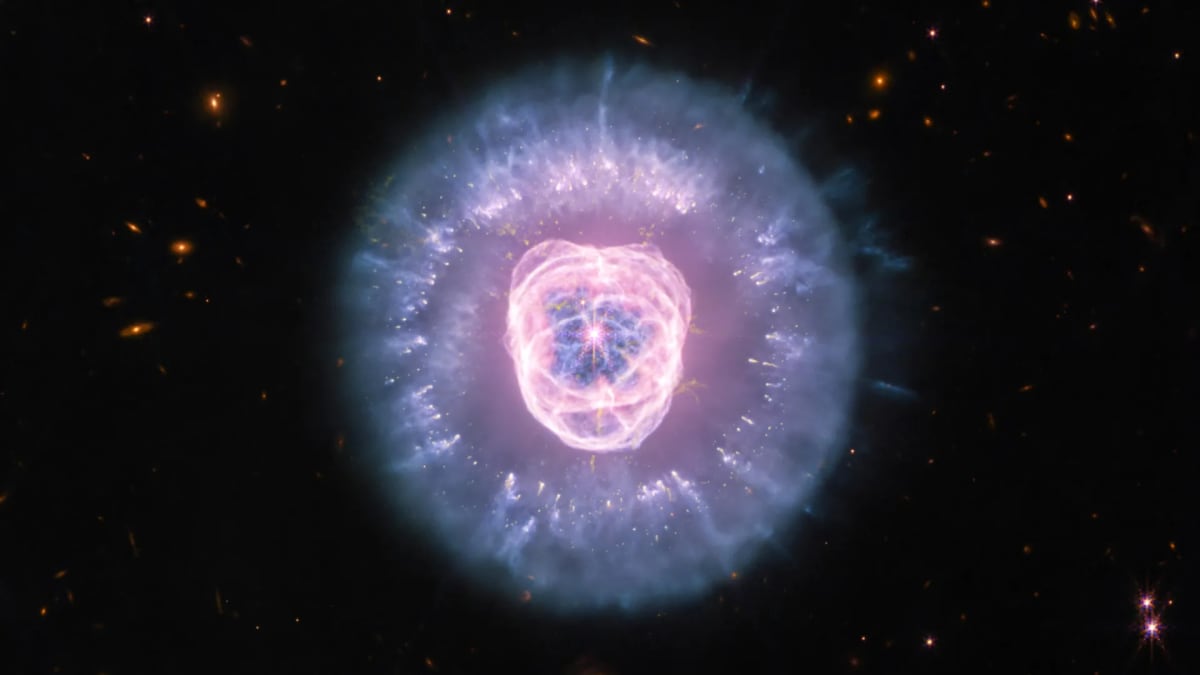
The Lion Nebula, officially known as NGC 2392, gets its nickname from an unmistakable resemblance to a lion's face surrounded by a flowing mane. At the center sits a tiny white dwarf, the scorching remnant of a once Sun-like star, acting like a cosmic sculptor as it blasts radiation into surrounding clouds of gas and dust.
The Hubble Space Telescope first photographed this celestial wonder back in 2000, but Webb's infrared vision reveals hidden secrets invisible to human eyes. Dense dust clumps and glowing ionized gas now appear in extraordinary detail, showing just how dynamic and active this stellar graveyard really is.
The lion's "face" is actually a massive bubble of ionized gas being pushed outward by the white dwarf's intense radiation. As this bubble expands, it sweeps away dust in its path like a cosmic snowplow, creating the smooth, rounded features that resemble a friendly feline face.
The spectacular "mane" tells an even more compelling story. Those flowing tufts that look like wild hair are actually dense clumps of dust tough enough to survive the white dwarf's radiation assault. Each clump shields the material behind it, creating comet-like tails that stretch away from the center like windswept fur.
This wasn't a violent supernova death. When lower-mass stars like our Sun run out of fuel, they gently pulsate and shed their outer layers into space over thousands of years. Those expelled shells become what astronomers call planetary nebulae, which create much of the universe's observable dust.
Why This Inspires
The Lion Nebula reminds us that even in death, stars create something extraordinary. What looks like cosmic destruction is actually cosmic creation, as the nebula spreads oxygen and other elements throughout space that will eventually become part of new stars, planets, and perhaps even life.
Scientists estimate the Lion Nebula will gradually disperse over the next 10,000 years. On human timescales that sounds like forever, but in cosmic terms, it's just a brief moment, a fleeting masterpiece painted across the canvas of space.
Webb's cameras have frozen this magnificent lion mid-roar, capturing one perfect moment in its slow transformation. The images prove that the universe still holds countless wonders waiting to be revealed, each one more beautiful than we imagined.
Based on reporting by Google: James Webb telescope
This story was written by BrightWire based on verified news reports.
Spread the positivity!
Share this good news with someone who needs it