Nigeria Building AI That Solves Real Problems First
Nigeria is shifting its AI strategy from flashy products to tools that actually improve lives in healthcare, education, and agriculture. The Gates Foundation is backing this practical approach with $1 billion to ensure technology closes gaps instead of widening them.
Nigeria is choosing a different path for artificial intelligence, one that measures success by lives improved rather than products launched.
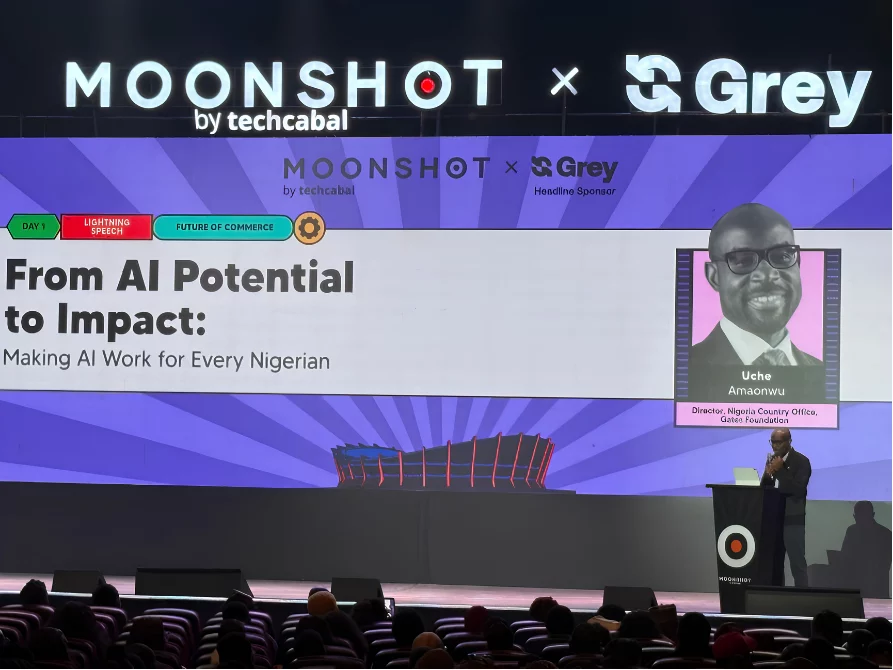
Uche Amaonwu, Director of the Gates Foundation Nigeria Country Office, shared this vision at Moonshot conference in Lagos on Wednesday. He believes Nigeria's AI future should focus on practical solutions in healthcare, education, agriculture, and public services that reach people historically left behind by technology.
"We need to be clear-eyed between promise and impact," Amaonwu said. "The real test is whether people are going to be able to use these AI solutions and tools, whether there is an institution that can sustain those tools over time, and whether we actually see better outcomes."
The potential is enormous. McKinsey estimates that AI could unlock between $61 billion and $103 billion in economic value across Africa.
Amaonwu outlined four key ingredients for success. First, Nigeria needs strong infrastructure like reliable internet, trusted data systems, and platforms that work together. He pointed to fintech's growth, which happened because Nigeria built the right foundation with payment systems, regulations, and institutions ready to adopt new technology.
Second, Nigeria must build AI around its own realities. Most advanced AI models are developed outside Africa and trained on data that doesn't reflect the continent's languages or experiences. That limits how useful they can be for African problems.
Trust matters too. When AI systems handle sensitive health or financial information, people need strong data protection and accountability built in from the start.
Nigerian innovators are already creating digital health tools, agricultural advisors, and language capabilities designed for African contexts. However, Amaonwu stressed that a working product is just the beginning. The harder questions come after: Can institutions sustain these tools? Will they reach the people who need them most?
The Ripple Effect
The Gates Foundation is putting this thinking into action. In September, it committed $1 billion over two years to expand access to AI-enabled solutions, specifically aiming to help poorer communities instead of widening inequality. The foundation supports the Nigeria AI Building Hub at Lagos Business School, connecting Nigerian ecosystem partners to build together.
This approach could reshape how developing nations adopt AI. Instead of chasing trends from Silicon Valley, Nigeria is defining what success looks like based on its own needs. That means an AI healthcare tool that helps rural clinics matters more than a chatbot that impresses at conferences.
Amaonwu urged everyone involved to collaborate rather than build independently. "AI gives us an opportunity to deliver outcomes," he said. "It allows us to get there more effectively, more affordably, and at a greater scale."
Nigeria is proving that the most innovative AI strategy might be the most human one: start with real problems, build for the people who need help most, and measure success by the lives you change.
Based on reporting by TechCabal
This story was written by BrightWire based on verified news reports.
Building Something New? Try the BrightWire Tech Stack Advisor
Compare modern frameworks, cloud hosting, and AI tools tailored to your project budget and scale.
Spread the positivity!
Share this good news with someone who needs it