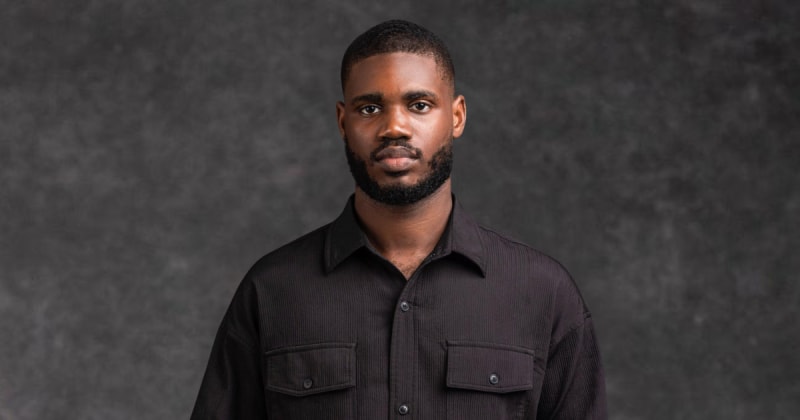
Nigerian Coder Writes Programs by Hand, Now Engineers in Europe
When power outages killed his phone, Iniubong Obonguko wrote code by hand in notebooks and ran it in his mind. That grit launched a career from Nigeria to senior engineering roles in Germany.
A teenager in Nigeria spent years writing computer code on paper because he couldn't afford consistent electricity or a working computer.
Iniubong Obonguko grew up in Uyo, Nigeria, where his father taught computer science. While other kids played games, young Iniubong snuck into his dad's wardrobe to read books about web development and operating systems he was too young to understand.
When his family's desktop broke during secondary school, most students would have given up on programming. Instead, Obonguko turned his mobile phone into a makeshift computer, typing code whenever the battery had juice.
Nigeria's notoriously unreliable power grid meant frequent blackouts. Rather than wait for electricity, he grabbed a notebook and started writing code by hand, visualizing how each line would execute without a compiler to check his work.
"I would have to practice what I had learned on paper because I didn't have a computer at the time," Obonguko explains. When power returned, he'd carefully type his handwritten code into his phone to test whether his mental predictions were correct.
This forced him to build what developers call a "mental compiler," understanding code so deeply he could predict outcomes without running it. That skill set him apart from peers who learned with constant access to technology.
Years later, while studying Electronics Engineering at the University of Nigeria, Nsukka, he faced a new obstacle. Classes were frequently cancelled, strikes stretched four-year degrees into six-year ordeals, and the curriculum lagged decades behind industry standards.
In his third year, Obonguko made a bold choice: he dropped out to focus on real-world projects people were actually using. But he didn't abandon education entirely—today, while working as a senior engineer, he's completing a computer science degree through distance learning at a German university.
His first break came at Hoshis Tech in Nigeria, where he joined as a founding engineer building an event ticketing platform. When a more senior engineer left, Obonguko suddenly carried the entire frontend on his shoulders with only a year of experience.
The Ripple Effect
That pressure-cooker moment prepared him for international opportunities. He moved to Papershift in Germany, working on HR management tools, before landing his current role as Senior Frontend Engineer at heyrise.
Now he's looking deeper, learning Rust programming to build tools that help other developers work faster. The kid who once coded in notebooks wants to create software that makes life easier for the next generation of engineers facing their own obstacles.
His journey proves that resourcefulness beats resources every time.
Based on reporting by Techpoint Africa
This story was written by BrightWire based on verified news reports.
Spread the positivity!
Share this good news with someone who needs it