Nigerian Town Glows at Night After Solar Grid Installation
For the first time in its history, the rural Nigerian town of Ajuye has reliable electricity after a solar mini-grid brought light to homes and businesses in January 2025. Welders work into the night, health clinics run vaccine refrigerators continuously, and children study under electric lights instead of torchlights.
For generations, the farming town of Ajuye in central Nigeria disappeared after sunset. Once darkness fell, businesses closed early, generators sputtered out, and families retreated indoors with battery lamps and torchlights.
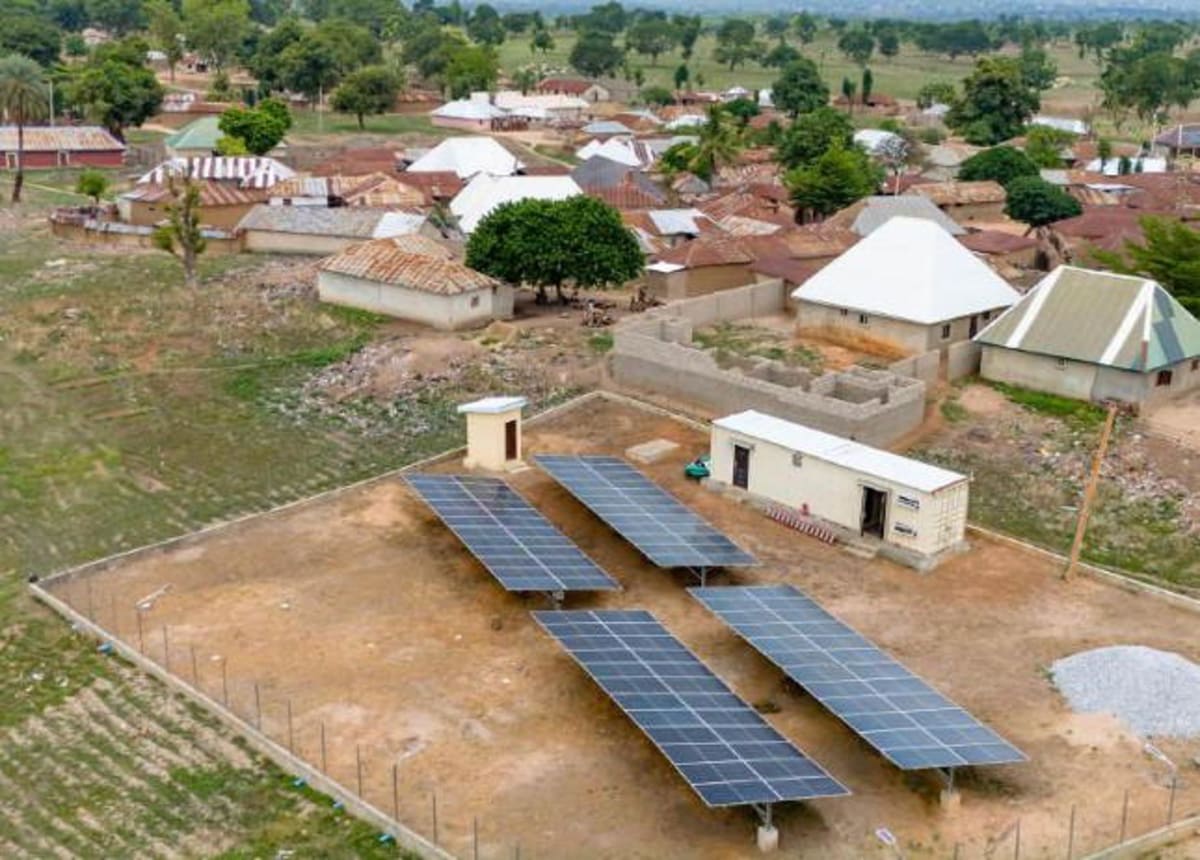
Today, visitors approaching from Abuja can see the village shining brightly from miles away. The transformation came in January 2025 when a 120-kilowatt solar hybrid mini-grid went online, bringing stable electricity to the community for the first time in its history.
The changes show up in countless small ways across daily life. Cold drinks stay frozen well past midnight. Welding machines run late into the evening. Mothers preserve food in home refrigerators instead of buying daily from markets.
Bulus Yusuf, a local welder, used to spend up to 70,000 naira monthly on generator fuel, eating up most of his profits. Now his electricity bill runs between 10,000 and 20,000 naira while his working hours have doubled. He recently added two machines to his workshop and plans to hire an apprentice.
At Kyuni Clinic, the shift has been life-changing for emergency care. Anthony Sakuya Abednego, a community health worker, remembers handling labor deliveries and accident emergencies under dim improvised lighting. The facility now runs a vaccine refrigerator around the clock and handles nighttime procedures under consistent electric light without worrying about power failures.
Phone charging businesses that once depended entirely on noisy petrol generators now operate 24 hours a day. Abdulazeez Zakaria, who manages a charging hub, serves customers from Ajuye and surrounding villages that still lack electricity. His business runs continuously without the constant worry about fuel costs or generator breakdowns.
The changes extend beyond economics into how the town feels after dark. More people gather outside in the evenings. Shops stay open later. Streets feel safer with consistent lighting.
The Ripple Effect
Families report sleeping more comfortably under ceiling fans instead of paper hand paddles in the heat. Children can study at night under proper lighting. The central mosque now holds evening religious lessons under electric lights and fans.
Fatima Abdullahi, a mother of four, says the electricity has reduced heat-related stress in her home and made daily routines easier during hot nights. Her husband plans to buy a television, something that wasn't practical without reliable power.
The solar project was developed through Nigeria's Rural Electrification Agency and the World Bank-supported renewable energy initiative, part of a growing movement bringing power to rural communities across the country. But for Ajuye residents, the transformation is measured less in policy language and more in the ordinary routines that suddenly became possible.
The town that once disappeared after sunset now glows through the night.
Based on reporting by Vanguard Nigeria
This story was written by BrightWire based on verified news reports.
Spread the positivity!
Share this good news with someone who needs it