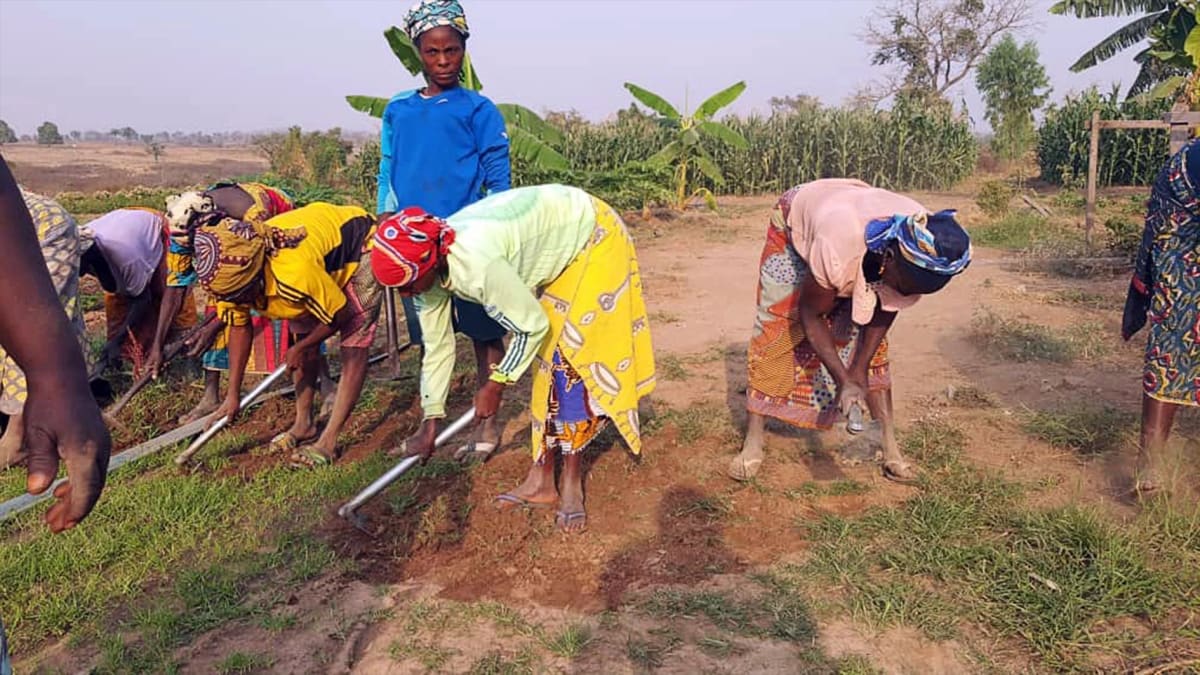
Nigerian Women Farmers Fight Hunger With Solar, Cold Storage
While Nigeria braces for 4.1 million more people facing acute hunger this year, women farmers are building solar freezers, cold storage, and electric mills that double incomes and save food from spoilage. Their quiet revolution is feeding communities when the country needs it most.
In a market in Ekiti State, a young fish trader used to lose nearly half her catch to spoilage. Today, she keeps her fish frozen on solar power, sells when prices are best, and earns twice what she made last year.
It's a small victory in a year when Nigeria faces its largest projected increase in food insecurity globally. Between June and August, an additional 4.1 million people are expected to experience acute hunger, driven by conflict, inflation, and supply chain breakdowns.
But while headlines focus on what's failing, a quieter transformation is happening in markets and villages across the country. Women are responding to the crisis with the tools they have, building businesses that produce measurable results: more income, more food reaching market, more households staying steady.
In Enugu State, a vegetable farmer who once watched her tomatoes rot in the sun now walks her crop into a cold room run by her 28-year-old neighbor, who built the business from scratch. In Kaduna State, a young woman who learned milling from her mother runs an electric mill serving three villages, earning steady income for the first time.
These women aren't waiting for aid or policy changes. They're solving problems now, business by business, in the parts of Nigeria where the system has long underserved them.
The timing matters. The United Nations declared 2026 the International Year of the Woman Farmer, spotlighting how women produce, process, and trade food that sustains families and economies while facing persistent barriers to land access, financing, and decision making power.
The Ripple Effect
According to the Food and Agriculture Organisation, women account for 41 percent of the global agrifood workforce. In sub-Saharan Africa and South Asia, the majority of working women are engaged in agrifood systems, yet much of their work remains undercounted and undervalued.
Agribusiness expert Michael George explains why this matters beyond individual success stories. These women sit at the intersection of every major challenge Nigeria faces right now: food security, cost of living, youth employment, women's economic participation, and energy transition.
"This is happening now, on the ground, in identifiable states," George said. "It's not a forecast or a policy proposal. It's the kind of resilience the country will need to lean on through the lean season."
The FAO notes that empowered women are key agents of change in transforming food systems. Closing gender gaps in access to land, finance, technology, and education boosts productivity, strengthens climate resilience, and drives progress toward sustainable development goals.
As Nigeria enters its projected lean season this June, these women and their businesses represent something rare: agency in action, measured in food saved, income earned, and communities fed.
More Images


Based on reporting by Guardian Nigeria
This story was written by BrightWire based on verified news reports.
Spread the positivity!
Share this good news with someone who needs it