Nobel Winner Uses AI to Design Never-Before-Seen Molecules
A Nobel Prize-winning scientist is using artificial intelligence to create proteins that nature never made, opening doors to breakthrough cancer treatments and plastic-eating enzymes. The AI BioDesign project could transform medicine and solve environmental crises in ways evolution never explored.
Scientists are no longer waiting for nature to provide solutions. They're designing molecules that have never existed before, and the results could reshape medicine and save our planet.
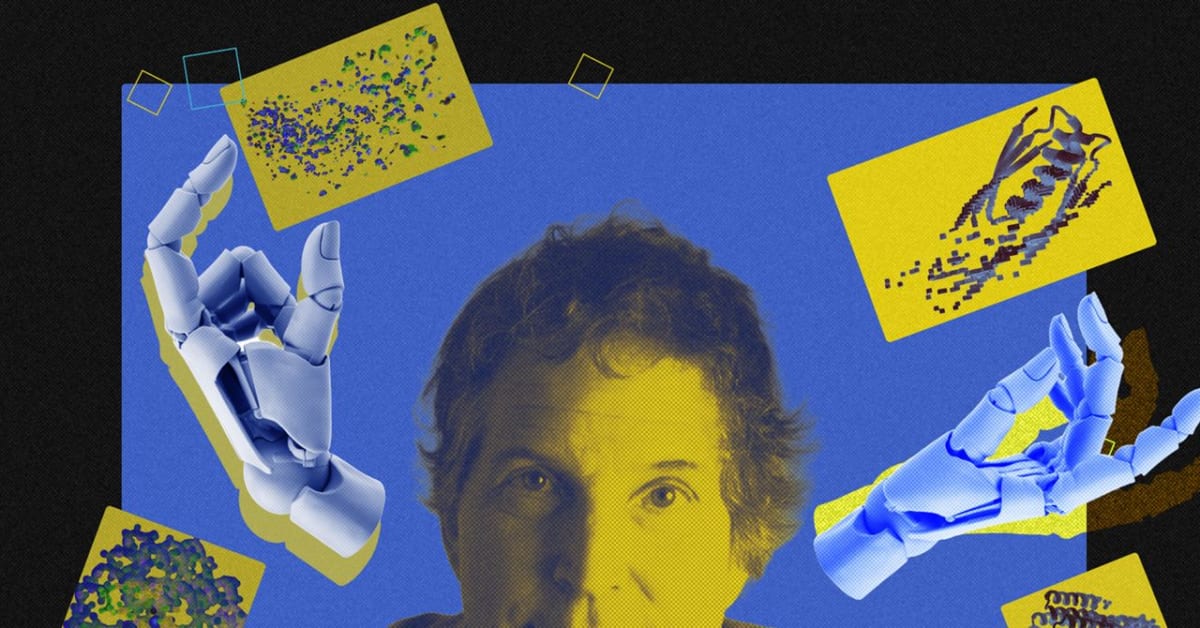
David Baker, who won the 2024 Nobel Prize in Chemistry, now leads AI BioDesign, a groundbreaking project that combines artificial intelligence with laboratory experiments to create new proteins. These aren't slight variations on what nature already made. They're entirely new molecular machines with capabilities evolution never produced.
The Allen Institute in Seattle is spearheading the initiative alongside the University of Washington and Fred Hutchinson Cancer Center. Their goal is ambitious: build databases and tools that become the foundation for tomorrow's treatments and technologies.
Baker's team envisions cancer drugs that work faster and more precisely than anything available today. They're designing enzymes that could break down ocean plastics, cleaning up pollution that currently takes centuries to decompose. The possibilities extend to crops that survive droughts and machines that extract valuable minerals from waste.
The approach flips traditional biology on its head. For generations, scientists studied what billions of years of evolution created. Now they're asking: what else is chemically possible that nature simply never tried?
AI acts as the first testing ground. Researchers can screen new protein designs computationally before synthesizing a single molecule in the lab. This means they can spot potential risks or flaws before anything enters the physical world.
Baker compares the potential impact to industrialization, electrification, and the digital revolution. Proteins are the molecular machines that created all organic life on Earth. Learning to design them from scratch unlocks capabilities we can barely imagine today.
Why This Inspires
The team's vision extends beyond abstract science. Baker wants a world where cures for new diseases take weeks instead of decades to develop. He imagines clean air, water, and soil because scientists designed molecules that remove pollutants at their source.
The work represents hope grounded in real progress. Baker's lab has already demonstrated that AI-designed proteins work in laboratory settings. Each successful test brings the bigger goals closer to reality.
This isn't science fiction speculation. It's Nobel Prize-winning research backed by major institutions and validated through rigorous testing. The molecules being created today could become the medicines and environmental solutions of tomorrow.
The frontier of what's biologically possible just expanded dramatically, and scientists are mapping it one designed protein at a time.
More Images



Based on reporting by Wired
This story was written by BrightWire based on verified news reports.
Spread the positivity!
Share this good news with someone who needs it