NYC's New Electric Ferry Cuts 600 Tons of Emissions Yearly
New York's first hybrid-electric ferry is transforming the commute to Governors Island while slashing carbon emissions. Cities from San Francisco to Stockholm are proving that clean, quiet waterways are finally within reach.
A sleek new ferry is gliding across New York Harbor this summer, and it's doing something remarkable: cutting 600 tons of carbon dioxide from the air each year while getting passengers to their destination 66 percent faster than before.
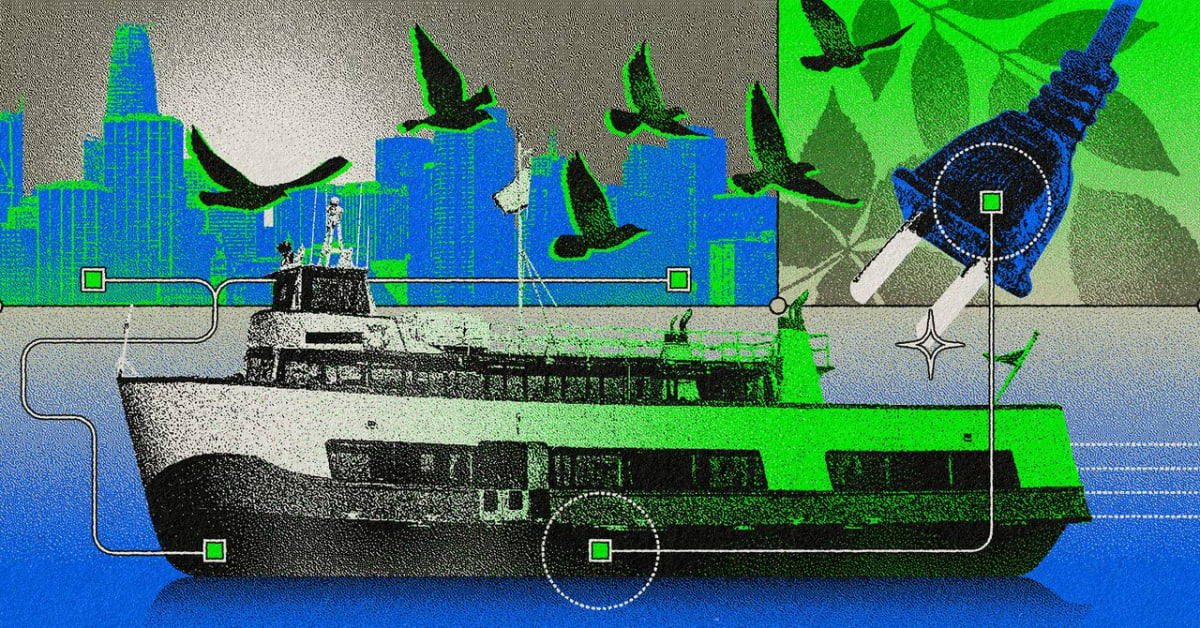
The Harbor Charger just completed its first season carrying visitors to Governors Island, replacing a nearly 70-year-old diesel ferry that guzzled 420 gallons of fuel daily. The $33 million vessel runs on 22 lithium-ion battery packs that can power the boat for 90 minutes before backup diesel generators kick in.
The speed boost means the trip now takes just 10 minutes instead of 16. But the real win goes deeper than convenience.
"The boat ride itself is part of your Governors Island experience," says Clare Newman, who leads the Trust for Governors Island. The quiet electric motors let passengers actually hear the water and hold conversations without shouting over engine roar.
The savings add up quickly. The ferry is already cutting fuel costs by $200,000 annually. Once dockside rapid-charging stations get installed, it will ditch diesel completely and eliminate another 800 tons of carbon dioxide every year.
Maritime transport has long been one of the toughest sectors to clean up. Moving heavy hulls through water takes enormous energy, and boat operators had to overcome what some call "ferrynoia" - the worry that battery glitches could strand passengers who depend on ferries for medical appointments, groceries, and getting kids to school.
But the technology is proving itself reliable. San Francisco Bay Ferry is launching America's first fully battery-electric high-speed passenger ferry in early 2027, powered by specialized charging floats at terminals. The 150-passenger vessel will zip between downtown's Ferry Building and Treasure Island in just eight minutes.
San Francisco's betting big on clean water transport, backed by a $55 million federal grant to build five electric ferries connecting downtown with emerging waterfront neighborhoods. The agency aims for a completely zero-emission fleet by 2035.
The innovation is spreading globally. Denmark's e-ferry Ellen holds the world record for electric passenger ferries, sailing 22 nautical miles on a single charge using wind-generated power and eliminating 2,250 tons of carbon dioxide annually.
Stockholm is taking an even more futuristic approach. Swedish manufacturer Candela's P-12 ferry uses computer-controlled underwater wings that lift the carbon-fiber hull completely out of the water at high speeds, cutting energy use by 80 percent while producing no wake.
The Ripple Effect
Cities worldwide are discovering that electric ferries solve multiple problems at once. They're faster, quieter, cheaper to maintain, and easier on the environment. Operators save money while passengers enjoy more pleasant commutes.
Newman has already heard from other cities interested in following New York's lead. What started as one experimental ferry could spark a transformation in how millions of people move across water in their daily lives.
The quiet revolution happening on the world's waterways shows that even the hardest-to-clean sectors can change when the right technology meets determined leadership.
More Images




Based on reporting by Wired
This story was written by BrightWire based on verified news reports.
Spread the positivity!
Share this good news with someone who needs it