NYU Leads 3 AI Projects to Speed Scientific Discovery
NYU faculty won three major projects in a fiercely competitive federal program that's using AI to supercharge how fast scientists can make breakthroughs. Out of 5,000 applications nationwide, only 278 were chosen.
Scientists at New York University just landed three spots in a groundbreaking federal program designed to make scientific discovery faster than ever before.
The US Department of Energy's Genesis Mission selected NYU researchers for three projects after reviewing more than 5,000 applications from across the country. Only 278 projects made the cut, and NYU's trio of innovations shows how artificial intelligence can transform the way we unlock scientific mysteries.
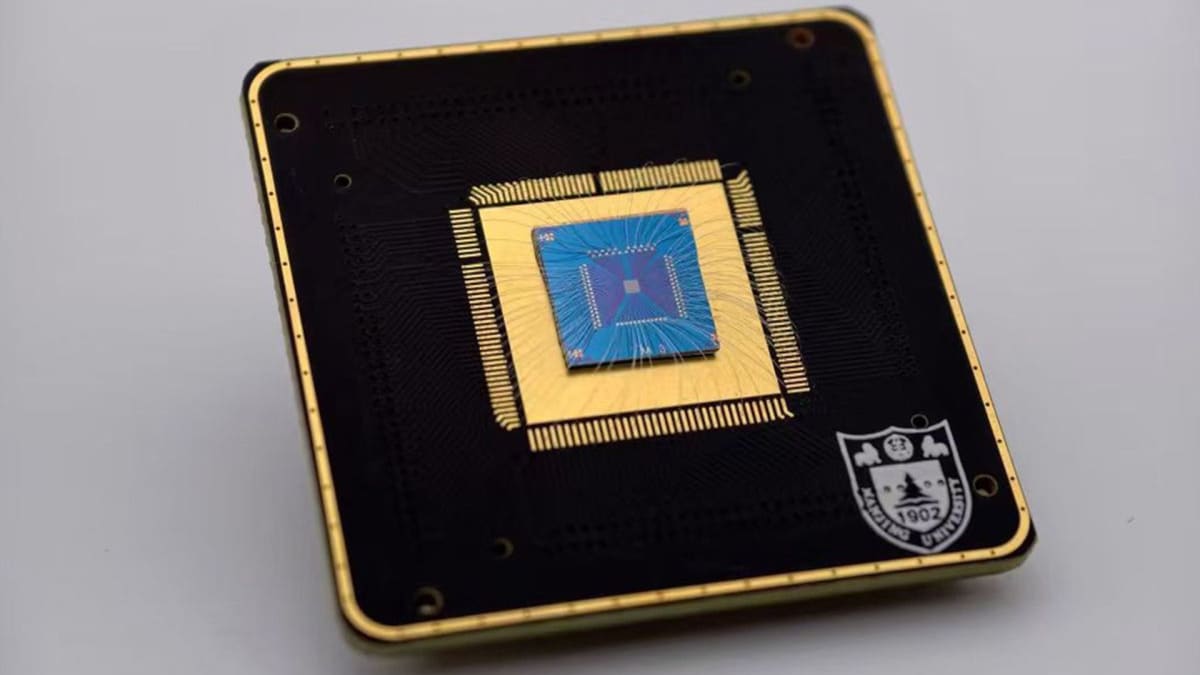
The first project tackles a major headache in quantum computing. Physicists Andrei Vrajitoarea and Norah Hoffman are developing AI that can control quantum computers directly, skipping a slow translation step that currently introduces errors and wastes precious computing time. Think of it like teaching someone to drive by letting them feel the road instead of reading a manual first.
The second project, called MARS, brings together scientists from Brookhaven National Laboratory, Carnegie Mellon, NYU, and Microsoft. Computer science professor Mengye Ren is helping build teams of AI agents that work like scientific assistants, helping researchers generate better, evidence-based hypotheses more efficiently. The initial focus includes spotting problems in circuit designs and interpreting material structures from X-ray data.
The third project, DAISY, creates a network of AI agents that divvy up tasks, share knowledge, and collaborate to speed up discoveries. NYU professors Chinmay Hegde and Juliana Freire are leading development of the platform's core tools, with early applications in materials science, crop breeding for bioenergy, and improving the power grid.
The Ripple Effect
These aren't just academic exercises. Faster scientific discovery means quicker solutions to real-world problems, from developing better materials for clean energy to breeding crops that fight climate change.
The competitive selection process underscores something important: American universities and national labs are racing to harness AI not for hype, but for tangible scientific progress. By combining advanced computing power with human expertise, researchers can explore questions that would take decades using traditional methods.
Juan de Pablo, NYU's executive vice president for global science and technology, captured the moment perfectly: "Science is entering an era where discovery itself can be accelerated by the tools we build to pursue it."
The collaboration spans multiple NYU schools including Arts and Science, the Courant Institute, and Tandon School of Engineering, proving that the biggest breakthroughs happen when different disciplines work together.
As AI continues to evolve, projects like these show its most promising role isn't replacing human scientists but amplifying their ability to ask better questions and find answers faster than ever imagined.
Based on reporting by Google: scientific discovery
This story was written by BrightWire based on verified news reports.
Spread the positivity!
Share this good news with someone who needs it