Old Solar Panels Now Making Medicine Ingredients in Italy
Italian scientists turned recycled solar panel silicon into a catalyst that helps make medicine, giving old panels new life. The innovation could solve two problems at once: electronic waste and sustainable drug production.
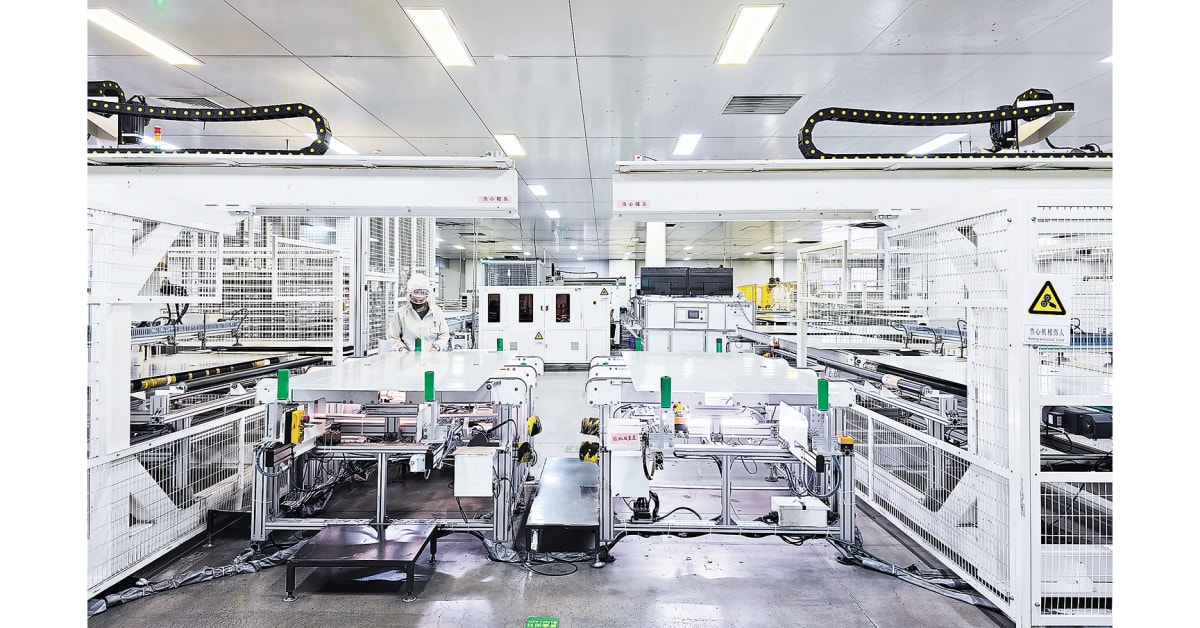
Scientists in Italy just found a brilliant second job for retired solar panels: helping make medicine.
Instead of letting old solar panel silicon end up in landfills, researchers at four Italian universities transformed it into a key ingredient for producing pharmaceuticals and agricultural chemicals. The silicon becomes a foundation for microscopic palladium particles that speed up chemical reactions needed to create drugs.
The team tested their recycled material on reactions that make biaryl compounds. These molecules form the backbone of blood pressure medications called sartans and fungicides like boscalid. Think of it like using yesterday's technology to build tomorrow's healthcare.
The process works surprisingly well. The researchers created 24 different medicine building blocks using their recycled silicon catalyst. When they scaled up production to test real world viability, they achieved a 97% success rate making a compound called 4-formylbiphenyl.
Even better, the catalyst keeps working. The team used the same recycled silicon six times before performance started dropping. Between runs, they detected only trace amounts of palladium leaching out, ranging from 0.6 to 0.1 parts per million for the first five cycles.
The scientists compared their recycled silicon to brand new silicon and activated carbon. Their waste material performed just as well while solving the growing problem of what to do with millions of aging solar panels.
The Ripple Effect
This breakthrough addresses two environmental challenges simultaneously. As the first wave of solar panels installed in the early 2000s reaches retirement age, the world faces a mounting pile of electronic waste. At the same time, pharmaceutical companies need more sustainable ways to manufacture drugs.
By 2050, the International Renewable Energy Agency estimates we'll have 78 million metric tons of solar panel waste globally. Finding valuable uses for these materials transforms a disposal problem into a resource opportunity.
The research team from the University of Perugia, Mediterranea University of Reggio Calabria, the Italian National Research Council, and the University of Florence published their findings in Sustainable Chemistry and Pharmacy. They titled their paper "From waste to wealth," capturing exactly what they achieved.
The catalyst also works faster than traditional methods. Using microwave heating instead of conventional heating cut reaction times to just 40 minutes while preventing uneven heating that can ruin chemical reactions.
One day, the solar panels powering your home could retire into a second career making the medicine in your cabinet.
More Images

Based on reporting by PV Magazine
This story was written by BrightWire based on verified news reports.
Spread the positivity!
Share this good news with someone who needs it