Old Wind Turbine Blades Now Form Bridges Across US
Massive fiberglass wind turbine blades that once faced landfills are getting a second life as pedestrian bridges in US parks. A solution born in Ireland five years ago is turning wind energy's biggest waste problem into working infrastructure.
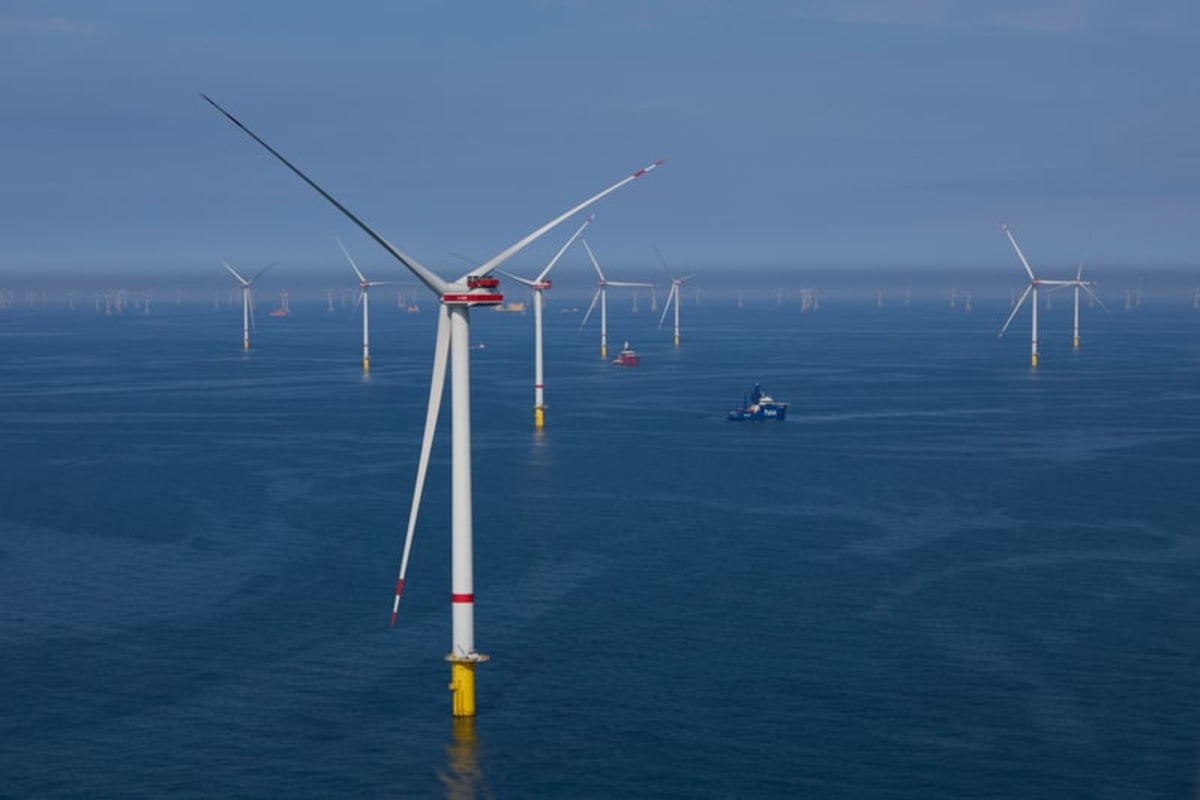
Wind turbines spin cleanly for 20 years, then leave behind a stubborn problem: blades so tough they won't break down.
About 90% of a wind turbine can be recycled when it retires. The blades, built from reinforced fiberglass, resist every normal recycling process and end up in landfills instead. For years, this waste gave critics an easy target when arguing against wind energy.
Now those same blades are holding up bridges. The idea started in Cork, Ireland in 2019 when researchers realized the blades were already shaped like girders. They tested one blade's strength, ran computer models to confirm it could bear weight safely, and built the first bridge in 2022.
The concept grew into the Re-Wind Network, a research group that includes Georgia Tech, University College Cork, Queen's University Belfast, and City University of New York. In 2025, they brought the first blade bridge to America.
A turbine blade decommissioned in Colorado now spans a tricky creek near Atlanta. It opened up a previously unreachable section of park land, swapping steel construction for repurposed fiberglass. The team calls it reuse rather than recycling since the blade keeps its original form and function as a structural support.
The timing couldn't be better. The US expects 2 million tons of blade waste by 2050. Europe faces an even bigger challenge with 7.6 million tons projected and over 80,000 turbines needing decommissioning by 2040.
Each blade bridge saves landfill space and cuts the need for new steel production. The blades get buried tip-first underground for stability, creating safe crossings that can last decades more.
The Ripple Effect
This solution addresses one of the loudest complaints about renewable energy while creating useful public infrastructure. Each bridge proves that waste from clean energy doesn't have to become an environmental burden. The idea scales too—with tens of thousands of turbines retiring in coming years, communities gain access to free, strong building materials for parks, trails, and public spaces.
What started as a waste problem in one industry is becoming a resource for another, one bridge at a time.
More Images



Based on reporting by Google News - Wind Energy
This story was written by BrightWire based on verified news reports.
Spread the positivity!
Share this good news with someone who needs it