One Day of Rain Equals a Year for Outback Cattle Stations
Former Tropical Cyclone Luana delivered nearly an entire year's worth of rain in just 24 hours to remote Australian cattle stations, ending months of anxiety and giving herds room to roam again. The deluge also brought an unexpected benefit: drawing destructive feral camels back into the desert.
After months of scorching temperatures and dwindling water supplies, cattle stations in Western Australia's remote interior just caught a massive break from an unlikely source.
Ex-Tropical Cyclone Luana dumped up to 90 millimeters of rain in a single day on properties like Prenti Downs and Carnegie Station, both located more than 1,200 kilometers northeast of Perth. That's nearly matching what these stations recorded for the entire year of 2025.
Tim Carmody, who runs Prenti Downs 600 kilometers north of Kalgoorlie, had been watching temperatures climb to 48°C while his water points struggled to keep up with thirsty cattle. Then the clouds rolled in.
"We won't see cattle around the water points now for three or four weeks," Carmody said. The rain means his herds can finally graze in eastern pastures they haven't reached in months.
At Carnegie Station to the north, Dave and Naomi McCooke measured 76mm in their rain gauges. The station had only recorded 120mm for all of 2025, making feed increasingly scarce.
The Bright Side
Beyond quenching the land, the rain solved another pressing problem: feral camels. Desperate for water during the dry spell, these wild descendants of 1840s transport animals had been congregating in mobs of up to 100 near station water points, causing infrastructure damage and creating animal welfare concerns.
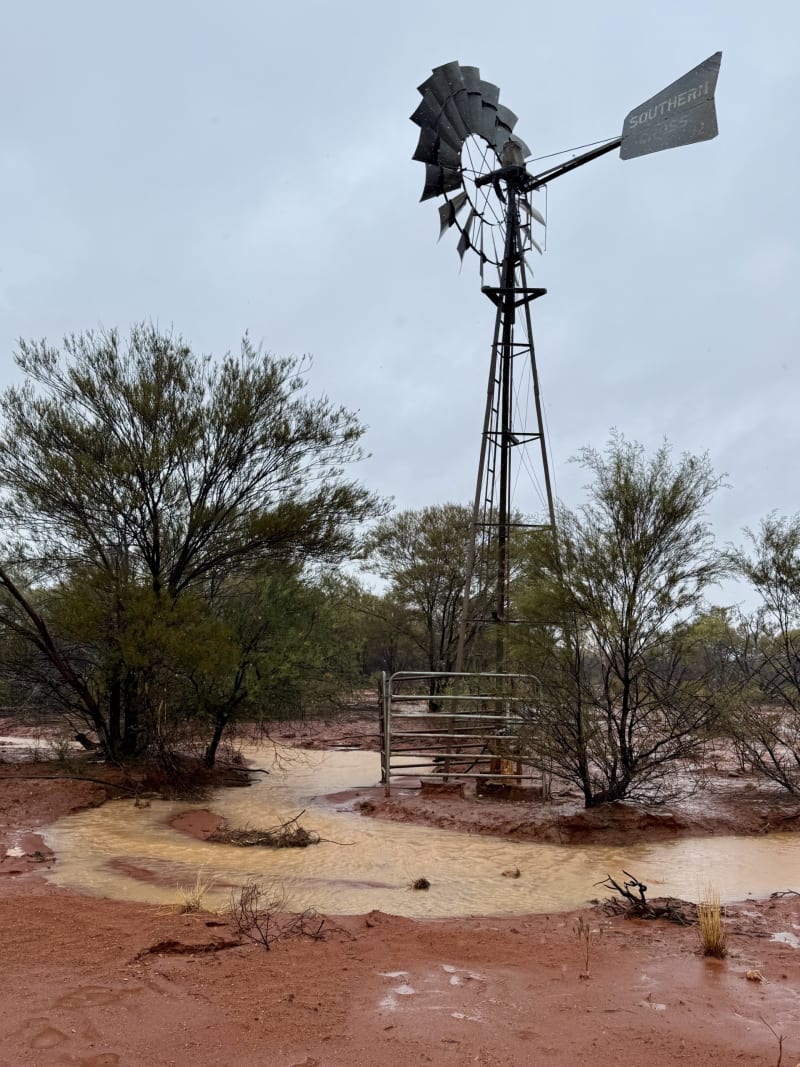
The rainfall created pools and puddles across the desert, drawing the camels away from pastoral properties and back to their natural habitat. Carmody spotted 50 camels at one water point just before the rain arrived, but expects them to head east now that free water is available in the open desert.
Australia's estimated 300,000 wild camels cause millions in annual damage to infrastructure, the environment, and Indigenous cultural sites. While government control programs exist, pastoralists spend thousands of dollars yearly managing the problem.
Carmody noted the rain offers only temporary relief from camel pressure. With abundant desert water, populations will likely grow again, though he hopes future solutions might include utilizing wild camels as a protein source for economic benefit.
The steady rainfall soaked into parched red dirt, transforming the landscape from dust to puddles. If another rain follows in coming weeks, it could generate valuable green pasture heading into autumn, giving both cattle and pastoralists reason to breathe easier after a brutal year.
More Images



Based on reporting by ABC Australia
This story was written by BrightWire based on verified news reports.
Spread the positivity!
Share this good news with someone who needs it