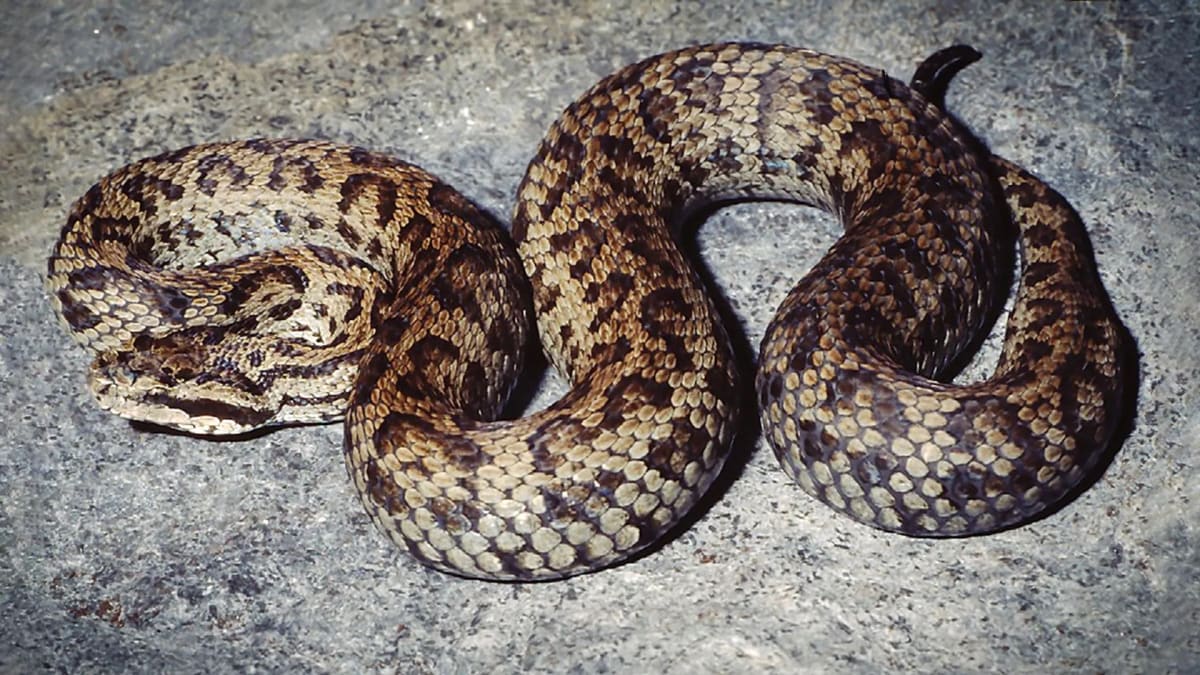
One Himalayan Snake Was Actually 5 Hidden Species
Scientists just discovered that a venomous snake studied for 160 years is actually five separate species, with three brand new to science. The breakthrough came from combining cutting-edge DNA analysis with century-old museum specimens that had been sitting unnoticed on shelves.
Hidden in the towering peaks of the Himalayas, one of Asia's most mysterious venomous snakes has been keeping an extraordinary secret since 1864.
Scientists have just discovered that what we've been calling the Himalayan pit viper isn't one species at all. It's actually five distinct species, including three completely new to science.
An international research team combined modern genetic testing with studies of physical traits and skeletal features to crack the case. Their findings, published in the journal ZooKeys, reveal that these mountain snakes represent deeply separate evolutionary branches that split apart long ago.
The breakthrough relied on an unexpected resource: dusty museum drawers. Researchers extracted DNA from specimens collected by explorers in the 19th and early 20th centuries, including the original Himalayan pit viper specimen from 1864.
"Some of the key evidence had been sitting in museum collections for more than a hundred years," says Sylvia Hofmann from the Museum Koenig, who has spent 20 years researching the Himalayan region. "We just didn't have the tools to recognize it."
Daniel Jablonski of Comenius University Bratislava, who has conducted extensive fieldwork in Pakistan and Afghanistan, notes that these mountain systems still harbor overlooked wildlife. "By combining modern field sampling with data from historical museum specimens, we uncovered evolutionary lineages that had remained hidden for more than a century," he says.
The newly recognized species come from different regions across Pakistan and Nepal. Each shows not just genetic differences but also distinct physical and skeletal characteristics that scientists can now identify.
Why This Inspires
This discovery shows how scientific tools we're developing today can unlock secrets hiding in plain sight. Museums aren't just storage facilities for the past. They're treasure troves waiting to reveal new understanding about our world.
The findings also matter for conservation. Each newly identified species occupies a relatively small range in fragile mountain environments, which means they need protection tailored to their specific needs.
Rafaqat Masroor, one of Pakistan's leading snake experts, points out that the country's high mountains remain full of biological surprises. Decades of limited access to these remote regions mean scientists are still discovering what lives there.
The research highlights how much we still don't know about Earth's most rugged and remote places. Every new species discovered helps scientists better understand how life adapts to extreme mountain conditions and how these ecosystems function.
Frank Tillack, who has worked in Nepal for 35 years studying reptiles and amphibians, says the work lays groundwork for future studies on this ecologically and medically important group of snakes.
These findings prove that even well-studied creatures can surprise us when we look closer with better tools.
Based on reporting by Science Daily
This story was written by BrightWire based on verified news reports.
Spread the positivity!
Share this good news with someone who needs it


%2Fhttps%3A%2F%2Ftf-cmsv2-smithsonianmag-media.s3.amazonaws.com%2Ffiler_public%2F5d%2F4d%2F5d4d74c8-ad77-4fbc-8eba-a7ae619b9a4c%2F1779215358-blue_octopus_cdf.webp)