One Indian Tree Makes Rotis, Sweets, and Cooking Oil
The Mahua tree of central India provides flowers for sweets, seeds for oil, and ingredients for everyday meals. Indigenous communities are now turning this forest treasure into jams, biscuits, and laddoos that bring income to tribal villages.
Imagine a single tree that could stock your entire pantry with flour, sugar, and cooking oil. For communities across central, eastern, and western India, the Mahua tree has done exactly that for generations.
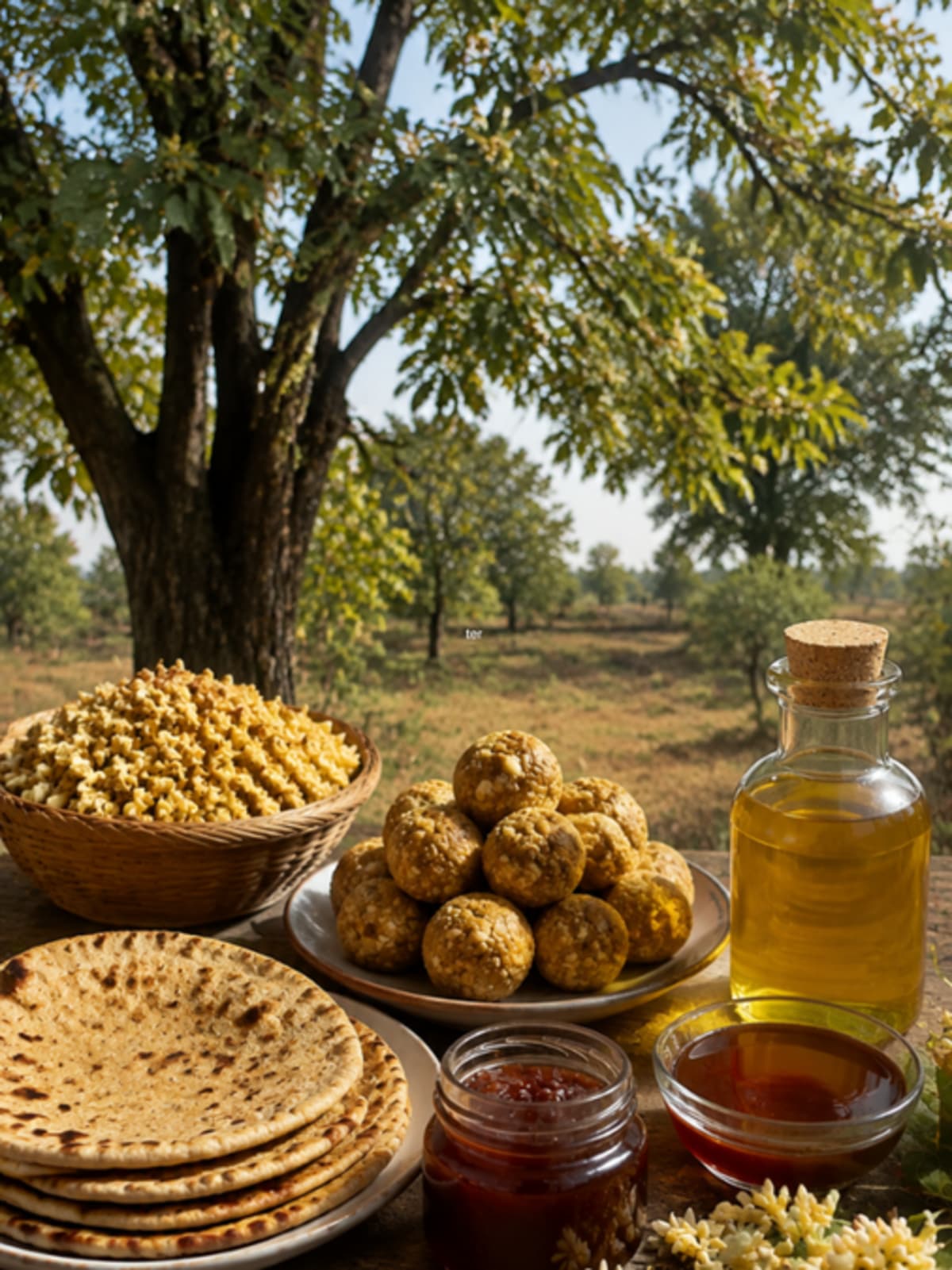
The Mahua tree produces fragrant flowers packed with natural sweetness. When dried and ground into powder, these flowers blend seamlessly with wheat, rice, or jowar flour to create nutritious rotis that families have enjoyed for centuries.
In Telangana and Andhra Pradesh, cooks prepare Ippa roti alongside steamed Mahua cakes and crispy fried flower snacks. The flowers transform into traditional sweets too, ground up and shaped into laddoos that celebrate the tree's natural sugar content.
But tribal women in Odisha's Kandhamal district saw even more potential. Connected through Van Dhan Vikas Kendras, these women's groups began experimenting beyond dried flowers.
Today they produce Mahua jam, jelly, biscuits, pakodas, and sharbat. These value-added products fetch better prices than raw dried flowers ever could, putting more money directly into village economies.
The tree keeps giving. Mahua seeds contain rich oil that families have extracted for cooking throughout India's history. This same oil also makes its way into soaps and candles, extending the tree's usefulness beyond the kitchen.
Even the naturally fermentable sugars in Mahua flowers have traditional uses in beverages. Every part of the tree serves a purpose, from flowers and fruit to seeds and wood.
The Ripple Effect
What makes Mahua truly special is how it supports entire forest ecosystems of human activity. It provides food security when other crops fail. It offers income opportunities that keep traditional knowledge alive and relevant.
The women of Kandhamal prove that ancient food sources can fuel modern enterprise. Their Mahua products reach new markets while honoring generations of forest wisdom. They're not just preserving a tradition but evolving it, showing younger generations that their heritage holds economic power.
This matters because forest communities often struggle to monetize their traditional knowledge. Mahua demonstrates how indigenous food systems can compete in contemporary markets when given processing support and market access.
One tree, countless possibilities, and proof that nature's pantry still has lessons to teach us about abundance.
Based on reporting by The Better India
This story was written by BrightWire based on verified news reports.
Spread the positivity!
Share this good news with someone who needs it