One-Third of World's Coral Reefs May Survive Climate Change
New research reveals that 165,922 square miles of coral reefs across 71 countries could withstand climate change impacts through 2050. The study using AI and 45,000 field observations offers hope for ecosystems that feed 25% of all marine species.
Scientists just discovered something remarkable hiding beneath our warming oceans: nearly one-third of the world's coral reefs might be tough enough to survive climate change.
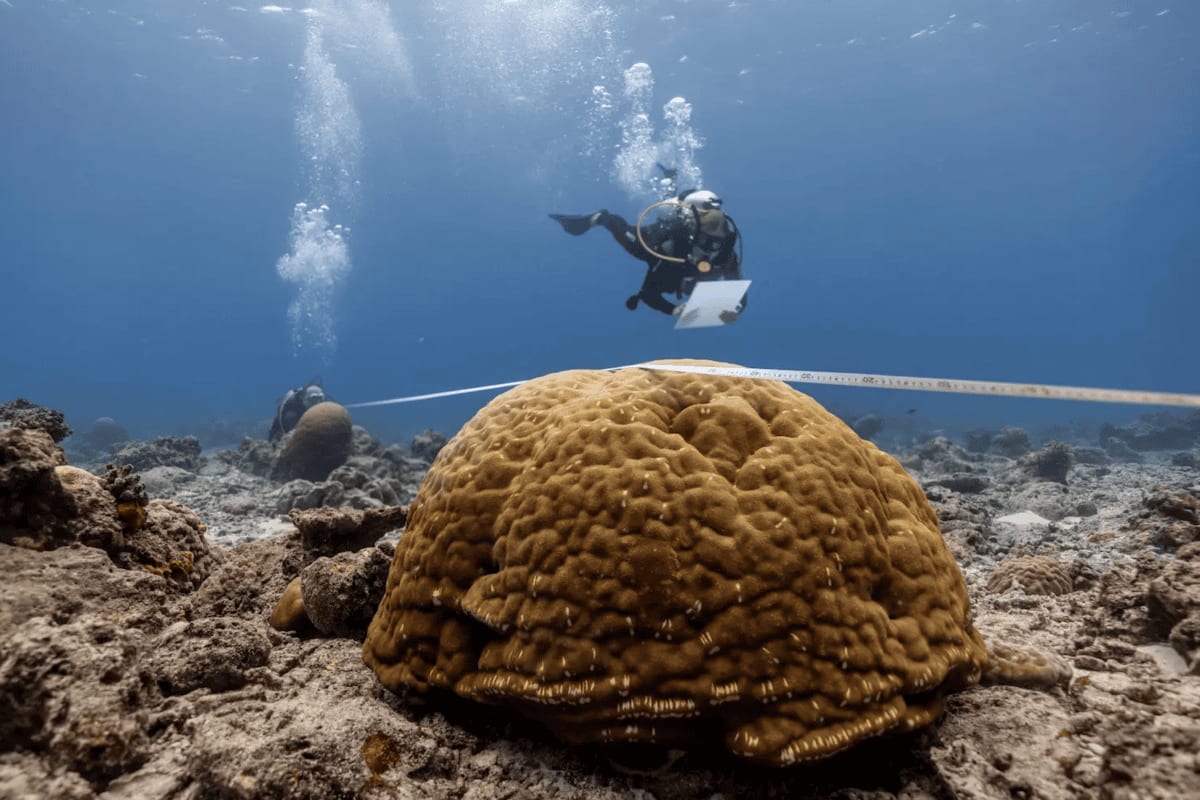
Researchers from Wildlife Conservation Society and Macquarie University in Australia trained an artificial intelligence model on 45,000 coral reef observations spanning six decades. They wanted to know which reefs could still thrive by 2050, even if greenhouse gas emissions remain high.
The AI mapped over 213,000 square miles of coral reefs worldwide. The result surprised everyone: approximately 64,000 square miles of reefs across 71 countries appear resilient enough to maintain healthy coral communities despite rising ocean temperatures and heat stress.
More than half of these climate-tough reefs exist in just five countries. The Bahamas, Cuba, Australia, Indonesia, and the Philippines host the largest concentrations of resilient coral. African nations like Kenya, Mozambique, and Tanzania also shelter significant portions of these hardy ecosystems.
"This study proves that there is hope," said Joseph Maina, an associate professor at Macquarie University who contributed to the research. The findings were presented at the Our Ocean Conference in Mombasa, Kenya.
The stakes couldn't be higher. Coral reefs provide habitat or food for an estimated 25% of all marine species, making them one of Earth's most productive ecosystems. Their loss would devastate not just ocean biodiversity but millions of coastal people who depend on reef fish for daily meals and income.
The Bright Side
This discovery gives conservationists a powerful new tool: a map of where to focus protection efforts. Instead of watching helplessly as all reefs decline, countries can now direct resources toward preserving the toughest coral ecosystems with the best survival odds.
The research comes at a critical moment. Marine heatwaves in 2023 and 2024 triggered one of the most extensive coral bleaching events ever recorded. Reefs from Mauritius to Kenya are still recovering from the damage.
Communities along Africa's coasts depend heavily on coral reefs for food security. Families fish these waters to put meals on the table. Protecting resilient reefs means protecting these communities' futures too.
The study does have limitations. West Africa lacked sufficient baseline data for the AI to make predictions, meaning more resilient reefs might exist in unmapped regions.
The research offers something precious in climate science: a roadmap for what we can still save, and where to fight hardest to save it.
More Images



Based on reporting by Mongabay
This story was written by BrightWire based on verified news reports.
Spread the positivity!
Share this good news with someone who needs it