Orangutan Crosses Road Bridge After 2-Year Wait in Indonesia
After two years of careful observation, a critically endangered Sumatran orangutan became the first of its species to cross an artificial canopy bridge over a busy Indonesian road. The crossing reconnects 350 orangutans split between two forest habitats.
A critically endangered Sumatran orangutan just made history by becoming the first to cross a rope bridge built especially for its species. The moment came on April 27, after two years of patient waiting by conservationists.
A busy road in Pakpak Bharat, Indonesia splits the natural habitat of roughly 350 Sumatran orangutans into two separate areas. As the road expanded over time, the forest canopy gap became too wide for tree-dwelling animals to cross safely.
Conservationists from the United Kingdom's Sumatran Orangutan Society partnered with Indonesian group TaHuKah to build an artificial canopy bridge in 2024. The bridge reconnects the Siranggas Wildlife Reserve with the Sikulaping Protection Forest.
"Development was necessary for people," said Erwin Alamsyah Siregar, executive director of TaHuKah. "But without intervention, it would have left orangutans trapped on either side."
For two years, camera traps recorded smaller animals using the bridge. Squirrels, langur monkeys, macaques, and gibbons all made the crossing, but no orangutans.
Then the 100-pound primates started appearing near the bridge. They built nests nearby and tested the ropes with their hands.
"They observe," Siregar explained. "They don't rush. They watch, they try, they retreat. Only when they're certain it's safe do they move."
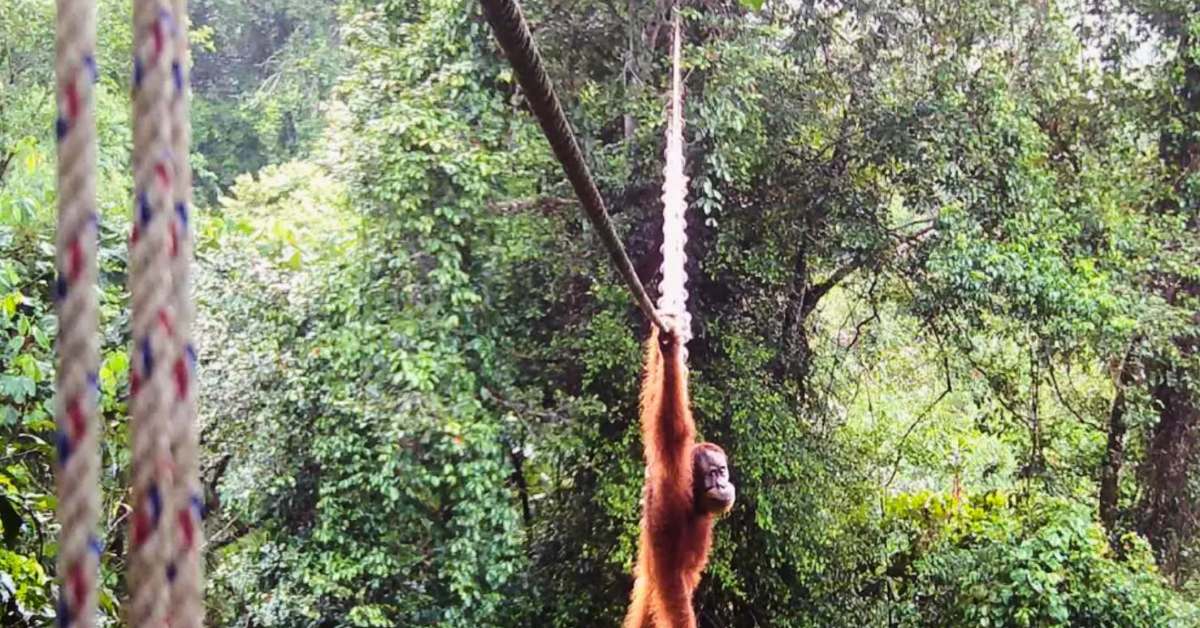
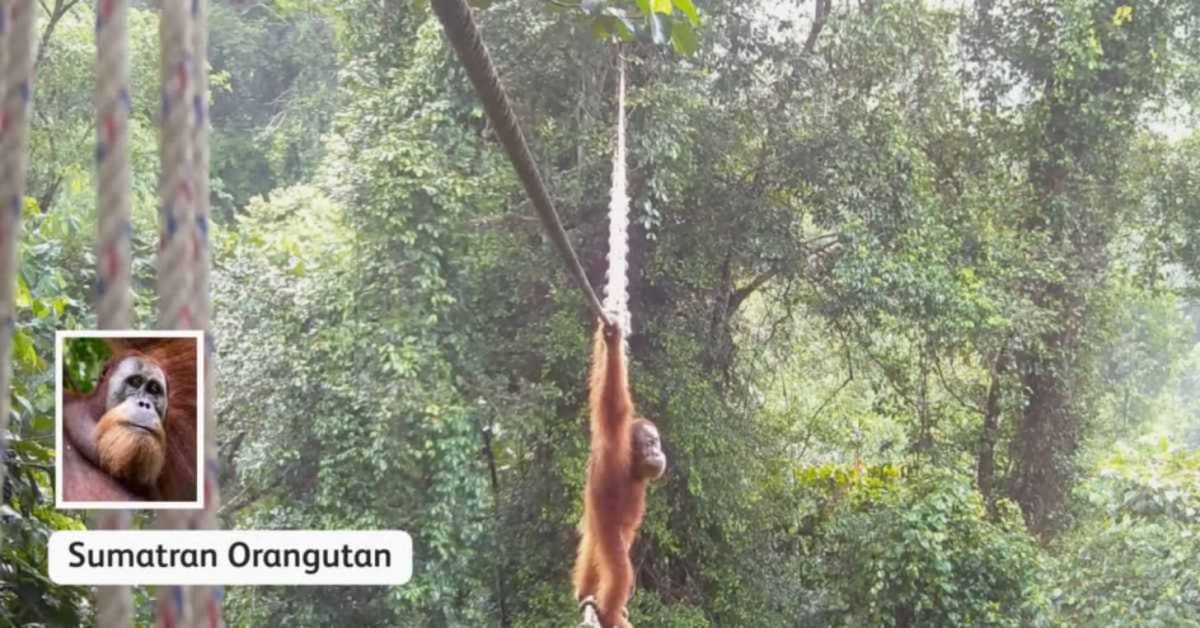
The patience paid off. On April 27, cameras captured the first orangutan swinging across the bridge over the busy roadway below.
The Ripple Effect
This single crossing represents hope for an entire species. When roads split animal habitats, populations become isolated and genetic diversity shrinks.
The canopy bridge gives orangutans freedom to move between forests and mix with other groups. That mixing keeps the gene pool healthy and reduces inbreeding risks.
"These bridges allow orangutans to move, to mix, to maintain healthy populations," Siregar said. "It reduces the risk of extinction."
The success in Indonesia mirrors similar wildlife crossing projects worldwide, including California's animal overpasses that protect both drivers and animals. As human development expands, these creative solutions prove we can make room for both progress and nature.
Now that one orangutan has made the leap, others are likely to follow.
More Images

Based on reporting by Good Good Good
This story was written by BrightWire based on verified news reports.
Spread the positivity!
Share this good news with someone who needs it