Orcas Smash Giant Fish in Spectacular Teaching Display
Marine biologists captured orcas exploding giant sunfish in the Gulf of California, revealing how these intelligent whales teach hunting skills to younger generations. The jaw-dropping footage shows sophisticated behavior that proves orcas actively adapt their hunting strategies.
Marine biologist Kathryn Ayres thought she'd seen it all during her years studying orcas. Then she watched one blast a fish into smithereens right before her eyes.
In July 2024, Ayres was diving in the Gulf of California when her crew spotted a pod of orcas. She slipped into the water with her camera, keeping a respectful distance from the whales.
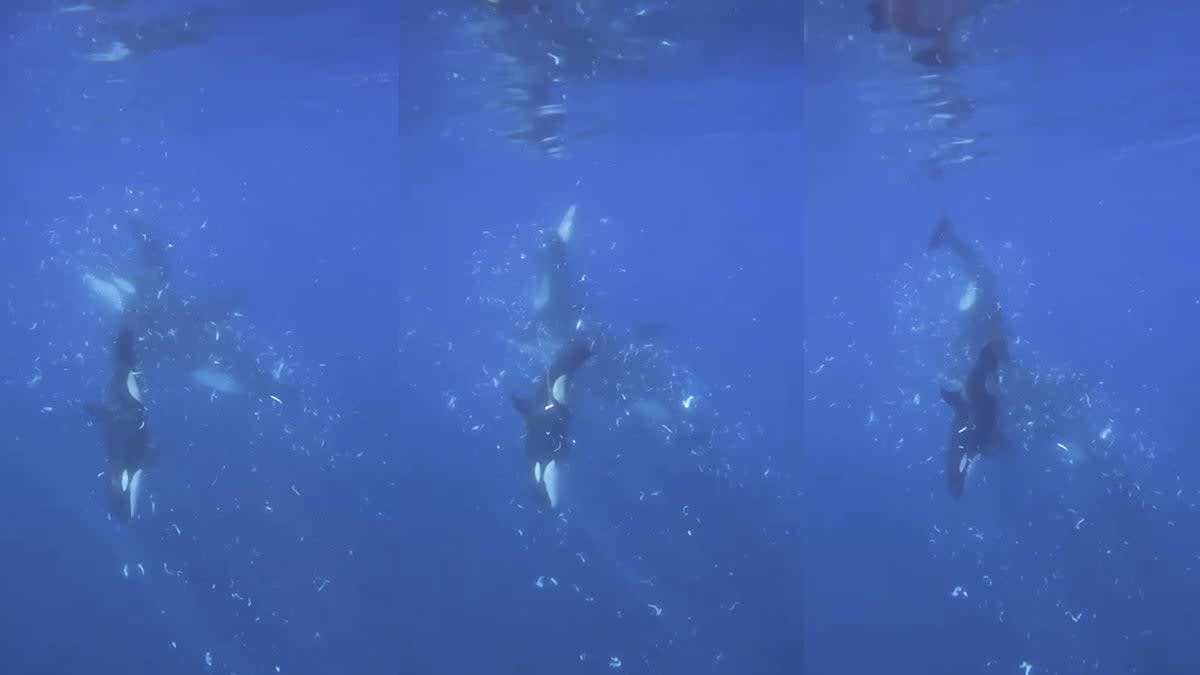
What happened next left her speechless. An adult female orca held a dead sharptail sunfish in her mouth, one of the ocean's largest bony fish with its internal organs already hollowed out. Suddenly, a male orca appeared belly up and smashed his head straight into the carcass.
The fish exploded in a massive plume of debris. "Oh, my god, oh, my god, oh, my god," Ayres can be heard saying on the recording. "I'd seen them hunt sunfish before, but I had never, ever seen a sunfish explode."
The footage captured something scientists call "high-impact ramming," a behavior marine biologists knew existed but had never documented in detail. Erick Higuera, a cinematographer and marine biologist at nonprofit Orcas México, joined Ayres to study the phenomenon after they witnessed a second explosion involving three female orcas and a calf about a year later.
Their research, published in the journal Frontiers in Ethology, offers fascinating insights into why orcas use this dramatic technique. The most likely explanation? They're teaching younger whales to hunt.
In Ayres' video, a juvenile orca immediately swoops in to gobble up the exploded bits floating in the water. The sunfish's gelatinous layer under its skin provides water and nutrients, making it valuable prey worth learning to catch.
Why This Inspires
Orcas are famous for playing with their food, passing dying prey around like an ocean game of catch. While it might look brutal, this behavior represents something beautiful: education across generations.
"It proves that their hunting strategies are not rigid," Higuera explains. Orcas actively modify their hunting techniques depending on what they're chasing. Scientists have watched them corral schools of rays, create waves to knock penguins off ice blocks, and extract livers from white sharks.
This adaptability showcases an incredible intelligence. Rather than relying on instinct alone, orcas demonstrate cultural learning. They develop different hunting styles in different regions, passing down specialized knowledge from parents to calves.
For sunfish, this news isn't great. But for scientists, it's pure gold.
Understanding these behaviors helps researchers define distinct orca cultures and ecotypes, which is critical for conservation efforts. Every new discovery about how orcas learn and adapt helps protect these remarkable animals and their ocean home.
The explosion that shocked Ayres turns out to be a window into one of nature's most sophisticated classrooms, where massive predators teach their young through spectacular displays of skill and intelligence.
More Images



Based on reporting by Scientific American
This story was written by BrightWire based on verified news reports.
Spread the positivity!
Share this good news with someone who needs it


