Organic Battery Breakthrough Could Power Data Centers for Days
A Massachusetts startup has cracked the code on affordable, safe batteries that can store energy for days, not just hours. Their plant-based technology is now catching the attention of the booming data center industry.
📺 Watch the full story above
The next generation of energy storage might not come from rare metals, but from the same molecules found in plants and fruits.
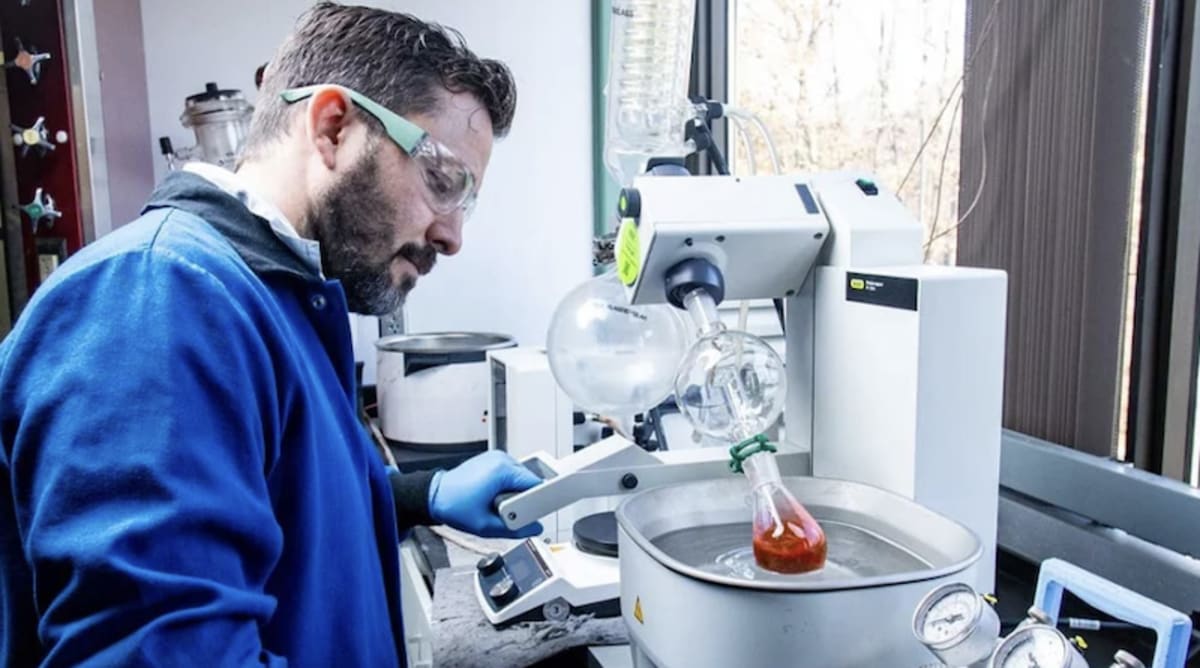
XL Batteries, a Massachusetts company born from Columbia University research in 2019, has developed an organic flow battery that solves one of clean energy's biggest puzzles. While lithium-ion batteries power our phones and electric cars beautifully, they run out of juice after just a few hours. Wind and solar farms need something that can store energy for days at a time.
The company's solution uses quinones, naturally occurring organic molecules, suspended in water. No toxic chemicals. No flammable materials. Just tanks, pumps, and chemistry that American workers already know how to handle.
The price tag tells the real story. XL Batteries projects costs under five cents per kilowatt-hour, with batteries lasting over 20 years. That beats lithium-ion technology hands down for storage lasting 10 hours or longer.
This May, the company commissioned a commercial pilot project in Houston, Texas. The data proved what they'd been promising: multi-day energy storage at costs that actually make sense for large-scale deployment.
The timing couldn't be better. Data centers are multiplying faster than ever, desperate for reliable power that doesn't stress aging electrical grids. In June, XL Batteries won "Most Inspiring Startup" at the Data Center World Innovation Challenge, beating competitors from around the globe.
Prometheus Hyperscale, a data center startup, is already planning three projects with XL Batteries. The first demonstration begins next year at 333 kilowatts, followed by two massive installations in 2028 and 2029.
The Ripple Effect shows how one innovation unlocks others. Data centers can now consider remote locations with abundant solar and wind power, knowing they can store enough energy to run for days during cloudy or calm weather. Rural communities could host these facilities, bringing jobs and tax revenue. Electric grids get breathing room as data centers draw less power during peak hours.
XL Batteries joins a growing wave of American innovators reviving century-old flow battery concepts with modern materials. While a New Jersey inventor named John Doyle patented the first zinc-bromine flow battery back in 1890, today's organic versions make the technology safer, cheaper, and more sustainable than ever.
The company holds patents in both the United States and Japan, protecting chemistry that could reshape how we think about storing renewable energy. Their pH-neutral, non-corrosive formula addresses safety concerns that have held back other battery technologies.
BloombergNEF also selected XL Batteries for its "Flattening the Duck Curve Challenge" in April, recognizing how the technology smooths out daily electricity demand. The "duck curve" shows how solar power floods the grid during sunny afternoons but disappears right when people come home and flip on air conditioners.
The breakthrough matters beyond data centers. Hospitals, military bases, island communities, and entire cities could run on renewable energy around the clock, even when the sun sets and wind stops blowing.
One Massachusetts startup just turned plants into power banks that last for decades.
More Images
Based on reporting by CleanTechnica
This story was written by BrightWire based on verified news reports.
Spread the positivity!
Share this good news with someone who needs it