Pakistan Students Lead Clean Energy Storage Breakthrough
A Pakistani physics graduate is pioneering hydrogen storage research that could transform the country's energy future. Her work proves Pakistan's universities can compete globally in clean energy innovation.
While Pakistan debates electricity prices and power shortages, a quiet revolution is happening inside its university computer labs.
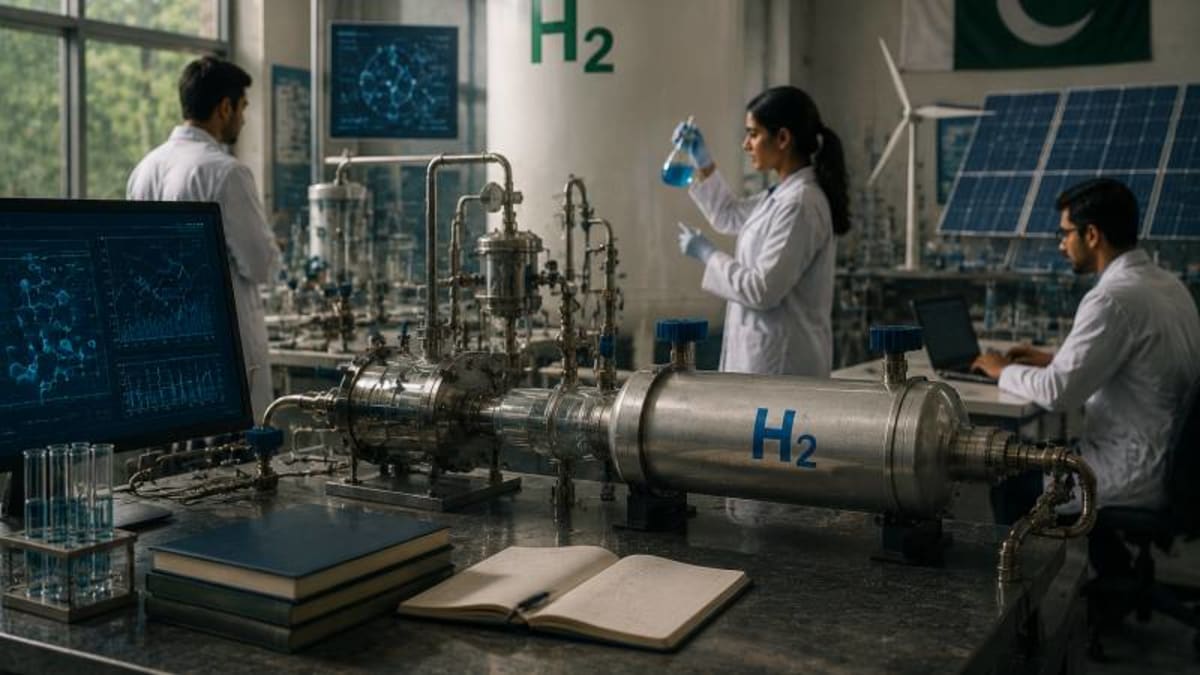
Fiza Raffique, a physics graduate and science communicator, is tackling one of clean energy's biggest puzzles: how to store hydrogen fuel efficiently. Hydrogen could power vehicles, factories, and cities while producing only water as waste. But storing this incredibly light gas has stumped scientists worldwide for decades.
The breakthrough isn't happening in expensive laboratories. Raffique uses computational materials science, running quantum mechanical calculations on computers to test thousands of potential storage materials virtually before any physical experiments begin.
Her journey started with a simple question about whether a specific material could hold hydrogen effectively. But first, she had to verify the material's basic structure and electronic properties. Then came months of analyzing data, running simulations, and transforming numerical results into graphs that revealed how hydrogen molecules interact with the material at the atomic level.
The work requires patience, precision, and access to powerful computing resources. It's not glamorous, but it's exactly the kind of research that drives global energy transitions.
Countries leading the clean energy revolution invested heavily in this type of university research decades ago. They built computational resources, funded undergraduate researchers, and connected academic work to real-world applications.
Pakistan has thousands of students capable of similar contributions. Many face limited research funding, inadequate computing power, and few opportunities to participate in internationally competitive science. Promising ideas remain trapped in classrooms instead of becoming innovations that serve millions.
The Ripple Effect
Computational materials science offers a powerful advantage for developing countries. Meaningful discoveries depend more on intellectual capacity than billion-dollar equipment. Pakistan's universities could expand access to high-performance computing, create mentorship programs, and fund young researchers without massive infrastructure investments.
The impact extends beyond energy. When universities prioritize research, they build problem-solving capacity across every sector. Students learn to ask probing questions, validate results through evidence, and contribute to global scientific knowledge.
Science communication multiplies this effect. When researchers explain their work in accessible language, they build public trust in science and inspire future generations. Scientific progress shouldn't hide behind academic journals. It belongs in national conversations about Pakistan's future.
Hydrogen storage alone won't solve Pakistan's energy crisis. But the process of developing better storage solutions demonstrates how scientific curiosity tackles problems affecting millions of lives. The clean energy transition is already underway globally.
Pakistan faces a choice: import expensive technologies developed elsewhere, or invest in the minds capable of creating, improving, and advancing solutions at home.
The research happening in Pakistan's universities today could power the country's energy independence tomorrow.
Based on reporting by Google News - Renewable Energy Breakthrough
This story was written by BrightWire based on verified news reports.
Spread the positivity!
Share this good news with someone who needs it

%2Ffile%2Fattachments%2Forphans%2FBMDangoteoilIPO_833156.jpg)