Pakistan's Solar Boom Now Powers 27% of the Country
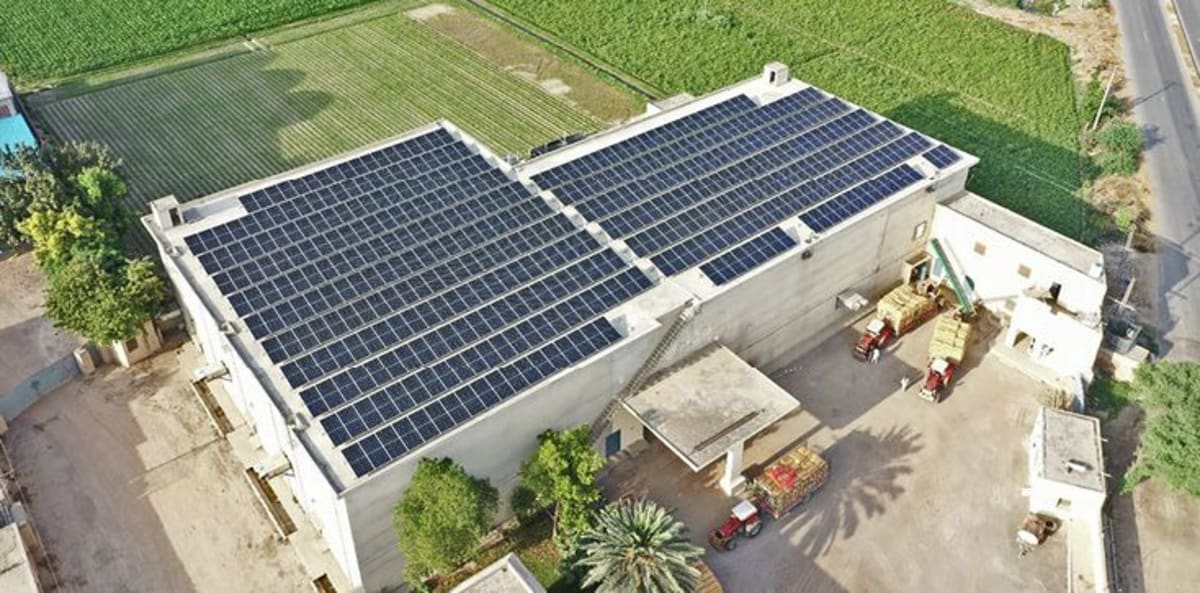
Millions of Pakistani families installed rooftop solar panels so quickly that the government lost track of the energy revolution happening on their rooftops. New analysis reveals these invisible solar systems generated enough electricity in 2025 to power the equivalent of 51 million homes.
Pakistan just pulled off one of the fastest energy transformations in history, and it happened so quickly that official records missed most of it.
The Pakistan Solar Association discovered that distributed solar panels on homes and businesses supplied 27% of the country's electricity in 2025. That's roughly 51 terawatt-hours of clean energy that never showed up in government data because it was generated and used right where families live and work.
The clues were hiding in plain sight. When researchers analyzed demand patterns from Lahore Electric Supply Company, they noticed something remarkable. Daytime electricity demand from the grid plummeted from 2.2 gigawatts in 2024 to just 765 megawatts in 2026 during peak sunlight hours. Meanwhile, evening demand now surges by over 1.1 gigawatts as the sun sets and solar panels stop producing.
What drove millions of Pakistanis to install solar panels wasn't just environmental concern. It was necessity mixed with opportunity. Electricity prices had soared due to expensive payments to power companies, while Chinese solar panel prices dropped dramatically. Chronic power outages left families in the dark, pushing them to take energy independence into their own hands.
The solar revolution happened so fast that Pakistan's true electricity generation jumped from about 135 terawatt-hours to 186 terawatt-hours once all the rooftop systems were counted. The government's energy planning couldn't keep pace with citizens who decided to solve the problem themselves.
The Ripple Effect
This consumer-led transformation is already inspiring better planning for the future. The Pakistan Solar Association is calling for the country to adopt frameworks similar to Australia's Integrated System Plan and the United Kingdom's approach to managing distributed energy. These models show how to embrace millions of small power sources instead of just a few large plants.
The speed of change also revealed another hidden trend. Electric two-wheelers and three-wheelers, the vehicles dominating Pakistan's streets, are being charged by all this new solar power in numbers that official statistics haven't captured either.
Pakistan's experience offers a blueprint for other developing nations facing similar energy challenges. When governments can't provide reliable affordable power fast enough, citizens with the right incentives will build their own clean energy future one rooftop at a time.
More Images


Based on reporting by PV Magazine
This story was written by BrightWire based on verified news reports.
Spread the positivity!
Share this good news with someone who needs it