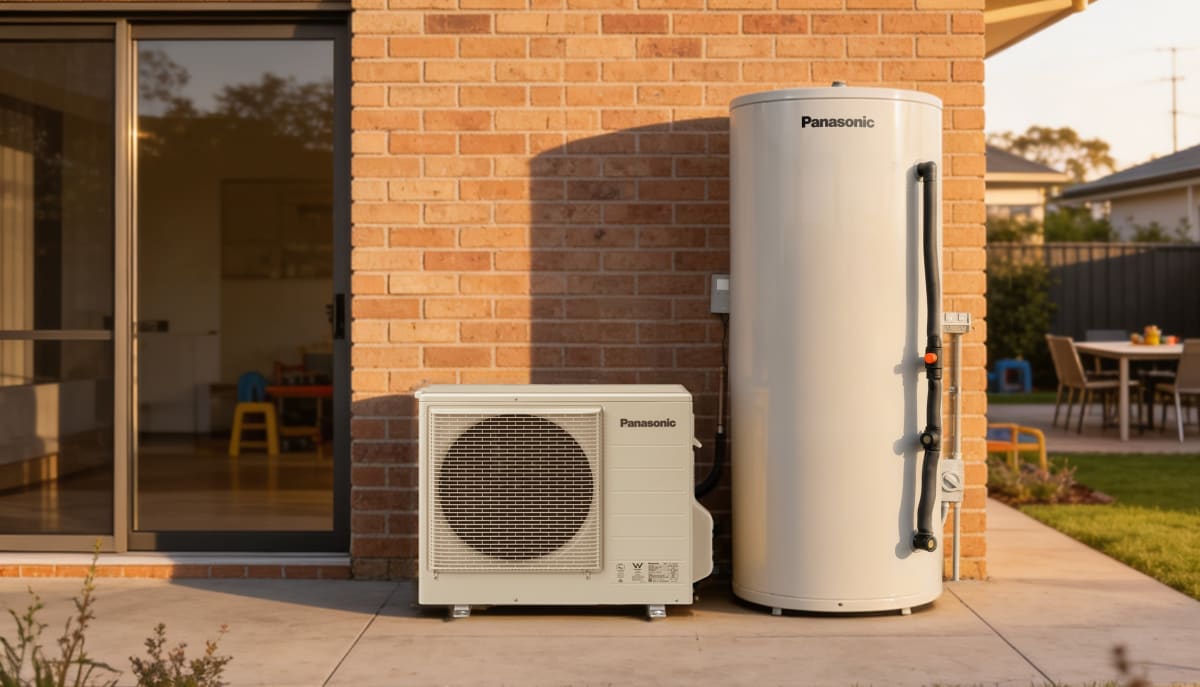
Panasonic Heat Pump Hits 6.1 Efficiency, Uses Only CO₂
A new home heat pump from Panasonic delivers hot water using just carbon dioxide as a refrigerant while achieving record-breaking energy efficiency. The system works in freezing temperatures and pairs with solar panels to slash energy bills.
Heating water just got six times more efficient thanks to a breakthrough from Panasonic that swaps chemical refrigerants for simple CO₂.
The Japanese electronics giant just launched a residential heat pump that achieves a coefficient of performance of 6.1. That means for every unit of electricity it uses, it produces 6.1 units of heating energy.
Unlike traditional water heaters that rely on synthetic refrigerants with high global warming potential, this system uses carbon dioxide (R744) as its working fluid. CO₂ is a natural refrigerant that won't damage the ozone layer or contribute significantly to climate change if it leaks.
The technology shines in cold weather. The largest 6.0 kW model can still produce piping hot water at 59°C even when outdoor temperatures plummet to -10°C. That's a game changer for regions with harsh winters where traditional heat pumps struggle.
Australian homeowners can now choose from 16 different configurations. Each system pairs an outdoor unit (either 4.0 kW or 6.0 kW) with storage tanks ranging from 250 to 400 liters in either vitreous enamel or stainless steel.
The real magic happens when these heat pumps team up with rooftop solar panels. Homeowners can program the system to heat water using solar power during sunny midday hours, then coast on stored hot water through the evening. That flexibility means minimal grid electricity and maximum savings.
Smart controls let users set heating schedules twice daily, activate holiday mode to save energy while traveling, or trigger a boost function for extra hot water on demand. At just 37 decibels, the outdoor unit runs quieter than a whisper, making it neighbor-friendly even in dense residential areas.
The Ripple Effect
This isn't just about one household saving money on hot water. If widely adopted, CO₂ heat pumps could dramatically reduce residential energy consumption across entire regions.
Traditional electric water heaters are energy hogs, often accounting for up to 25% of a home's electricity bill. By delivering six units of heat for every unit of electricity consumed, these systems could cut that burden by more than 80%.
The shift away from synthetic refrigerants matters too. Conventional heat pumps use hydrofluorocarbons (HFCs) that can be thousands of times more potent than CO₂ as greenhouse gases. Switching to natural CO₂ refrigerant eliminates that risk entirely while maintaining performance.
Panasonic backs each system with a 10-year parts and labor warranty, signaling confidence in the technology's longevity. That peace of mind helps homeowners justify the upfront investment knowing the system will deliver reliable service for at least a decade.
The technology draws on decades of Panasonic's expertise in heating and air conditioning systems developed for the Japanese market, now adapted for Australian conditions.
Clean, efficient home heating is no longer a distant dream but an off-the-shelf reality.
More Images


Based on reporting by PV Magazine
This story was written by BrightWire based on verified news reports.
Spread the positivity!
Share this good news with someone who needs it