Paris Triples River Cooling Network to 3,000 Buildings
Paris is expanding a 30-year-old system that uses Seine River water to cool buildings without traditional air conditioning, replacing energy-hungry units that make cities hotter. The city plans to triple its underground network by 2042, reaching hospitals, schools, and homes across all neighborhoods.
While most cities fight summer heat by installing millions of air conditioners that make streets even hotter, Paris has spent three decades building a different solution that pulls coolness straight from the Seine River.
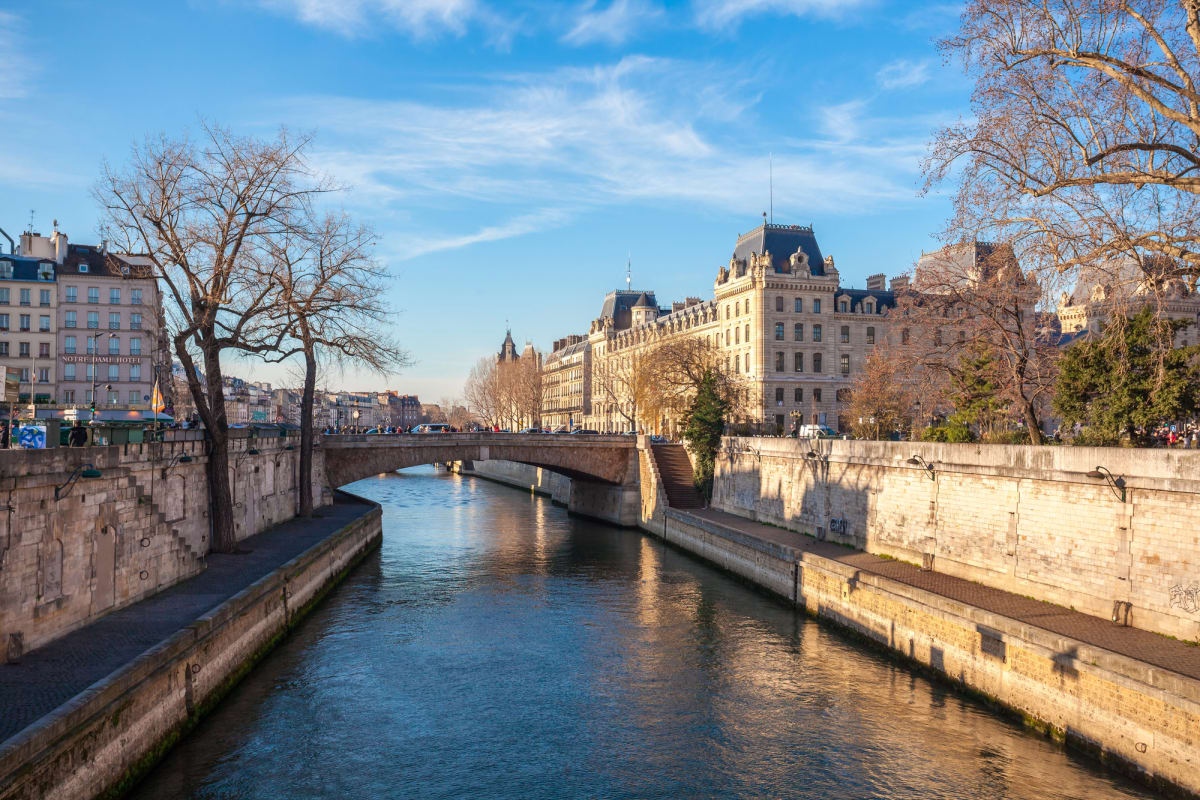
Fraîcheur de Paris operates 75 miles of underground pipes that carry cold river water alongside a second pipe filled with warm water from connected buildings. A heat exchanger transfers the warmth between the pipes without the fluids ever touching, sending cooled water back into buildings and slightly warmed water back to the river.
The Louvre, Grand Palais, hospitals, schools, and major office districts already use the system. Monitoring shows the temperature changes stay within safe limits with no measurable harm to river ecology.
Now Paris wants to triple the network's size by 2042, connecting more than 3,000 buildings across every neighborhood in the city. Hospitals, schools, daycare centers, and retirement homes top the priority list.
"The ambition is to move from a historic network focused on large tertiary buildings to a city-wide infrastructure," said Tim Guigon, a spokesperson for Fraîcheur de Paris. The city owns the network outright under a 20-year contract worth $2.6 billion.
The system cuts energy use dramatically compared to individual AC units. Traditional air conditioners pull heat from inside and dump it outside, creating a vicious cycle where millions of units running together raise street temperatures and make the next hot day worse.
District cooling breaks that loop by producing cold air at a central point and piping it out like electricity or water. "The energy consumption should be much less than if the same cooling were provided by modular systems," said Charles Simpson, a climate researcher at University College London.
The Ripple Effect
Paris isn't alone in this approach. Stockholm uses Baltic Sea water for the same purpose, while Toronto draws from Lake Ontario to cool buildings.
These systems only work where conditions align: dense demand to justify infrastructure costs and nearby water with the right temperature and flow. London's Thames doesn't qualify, and the city's underground is already packed with utility lines and subway tunnels.
Cities in the global south face bigger challenges with high upfront costs and punishing interest rates. The one exception might be cities without much buried infrastructure yet, where the math looks different.
"Actions must always be adapted to the type of city and local issues," said Emmanuel Gendreau, an ecologist at the Sorbonne. "It is crucial not to simply apply adaptations that have already worked in one city directly to another."
Every building that connects to Paris's network is one less source of waste heat on the streets and one less drain on the electrical grid during summer peaks.
Based on reporting by Optimist Daily
This story was written by BrightWire based on verified news reports.
Spread the positivity!
Share this good news with someone who needs it