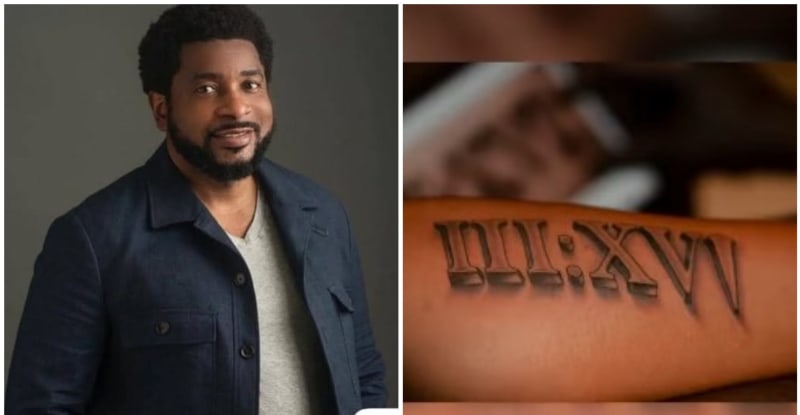
Pastor Gets Tattoo at 50, Defends Creative Faith
Nigerian Pastor Kingsley Okonkwo celebrated his 50th birthday with a John 3:16 tattoo and turned criticism into a conversation about faith, freedom, and reaching younger generations. His message: personal choices don't define your relationship with God.
A prominent Nigerian pastor just sparked a nationwide conversation about what modern faith really looks like, and his response is resonating far beyond church walls.
Kingsley Okonkwo, founder of David Christian Centre and relationship coach, marked his milestone 50th birthday with a tattoo reading "III:XVI" in Roman numerals, representing the beloved Bible verse John 3:16. When critics questioned whether a pastor should have body art, his response surprised everyone.
"I will do more tattoos," Okonkwo said during an Instagram Live session, addressing thousands of followers. "If it pains you, go and take juice, buy drugs, take Panadol."
His message went deeper than defiance. Okonkwo challenged his critics to focus on real issues facing Nigeria, including upcoming elections and national development, rather than personal appearance choices. He pointed out that many traditional practices, from henna designs at Hausa weddings to microblading and makeup, are forms of temporary or permanent body art that face no controversy.
The pastor defended his decision with a simple challenge: show him scriptural or scientific proof that tattoos harm character or faith. "Nobody can tell me why tattoos are bad," he explained in a News Central interview. "Everybody's shouting tattoos, but nobody can tell me why."
Okonkwo's approach reflects his mission to connect with younger generations. He described his young adult congregation as creative people with diverse hairstyles and personal expressions. "The young people don't care," he said. "All these young people have tattoos and dreadlocks, and those are the people I am sent to."
Why This Inspires
This story represents something bigger than one pastor's tattoo. Okonkwo is modeling how faith leaders can meet people where they are without compromising core values. He distinguished between biblical doctrine and personal preference, arguing that imposing cultural traditions on young believers pushes them away rather than drawing them closer.
His framework for decision-making in faith communities offers clarity: personal preference, personal consecration, church policy, and biblical doctrine are all different categories. Confusing them, he argues, creates unnecessary barriers.
By defending his choice while respecting others' different convictions, Okonkwo demonstrated how diverse expressions can coexist within faith communities. He noted knowing at least ten respectable pastors with tattoos, showing that outward appearance and inner character aren't connected the way critics assume.
The conversation he's started extends beyond tattoos to a larger question: How can faith communities embrace creativity and authenticity while maintaining spiritual depth? Okonkwo's answer is making space for both, refusing to let perception dictate personal choices.
His boldest statement might be his most important: leaving certain spaces to people we consider "dirty" only ensures those spaces never change, whether that's politics, creative industries, or cultural conversations.
More Images


Based on reporting by Premium Times Nigeria
This story was written by BrightWire based on verified news reports.
Spread the positivity!
Share this good news with someone who needs it