Penn Scientists Power AI With Light, Slash Energy Use
Researchers at the University of Pennsylvania have created a hybrid light-matter particle that could make AI computing dramatically faster while using far less energy. The breakthrough might finally solve one of artificial intelligence's biggest problems: its massive power consumption.
Scientists at the University of Pennsylvania just solved a problem that's been holding back artificial intelligence for years. They figured out how to make computers think using light instead of just electricity.
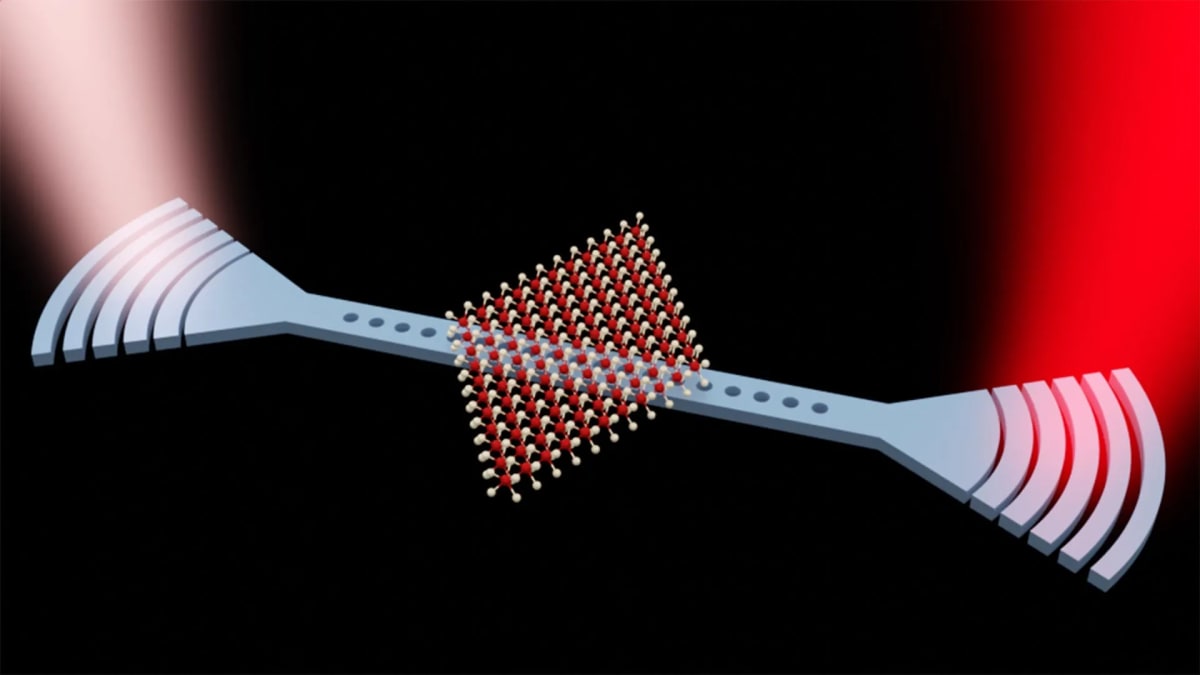
The team created something called an exciton-polariton, a special particle that combines the speed of light with matter's ability to interact and switch signals. It sounds complex, but the result is simple: AI that works faster and uses way less power.
Here's why this matters. Every computer since the 1940s has relied on electrons moving through circuits to process information. But electrons create heat and waste energy as they travel, especially in today's power-hungry AI systems. As artificial intelligence grows more demanding, those old electronic chips are struggling to keep up.
Light particles called photons seemed like the perfect solution because they're fast and efficient. But there was a catch: photons don't interact with their environment enough to do the switching operations that computers need. They're great messengers but terrible decision makers.
The Penn researchers led by physicist Bo Zhen found an elegant workaround. By combining photons with electrons inside an ultra-thin semiconductor material, they created particles that have the best of both worlds. These hybrid particles can carry information at light speed and still perform the computing tasks that photons alone can't handle.
The energy savings are remarkable. The team demonstrated all-light switching using only about 4 quadrillionths of a joule, far less than it takes to briefly power a tiny LED. That efficiency could transform AI systems that currently consume enormous amounts of electricity.
Most experimental photonic chips today hit a roadblock when they need to make decisions. They have to convert light signals back into electronic ones, which slows everything down and burns extra energy. The Penn breakthrough could eliminate those conversions entirely.
The Ripple Effect
If this technology scales successfully, it could reshape how we build AI systems. Future chips might process information directly from cameras without constantly converting between light and electricity. That means faster facial recognition, better autonomous vehicles, and smarter robots.
The environmental impact could be substantial too. Large AI systems currently require massive data centers that consume as much power as small cities. Light-based computing could dramatically reduce those energy demands, making advanced AI more sustainable and accessible.
The research even opens doors to quantum computing applications on future chips. What started as a solution to AI's energy problem might become a bridge to entirely new kinds of computing.
Eighty years after Penn researchers built ENIAC, the world's first general-purpose electronic computer, their successors are lighting the path forward.
Based on reporting by Science Daily
This story was written by BrightWire based on verified news reports.
Spread the positivity!
Share this good news with someone who needs it