Peru's 5,000-Year-Old Sky Observatory Discovered
Archaeologists just uncovered one of the Americas' oldest astronomical observatories at Peru's Áspero site, revealing how ancient coastal communities tracked the stars to survive. The stone platform helped them predict tides and seasons 5,000 years ago.
Imagine standing on a stone platform 5,000 years ago, watching the stars to predict when fish would return to your coastal village. Archaeologists in Peru just found exactly that kind of ancient sky-watching station.
Researchers discovered a specialized astronomical structure at the Áspero archaeological site, part of the Caral Civilization that thrived from 3000 to 1800 BC. This makes it one of the oldest known societies in the Americas, and now we know they were studying the heavens.
Led by Peruvian archaeologist Ruth Shady Solís, the team uncovered a stone platform built specifically for tracking the Sun, Moon, and stars. The discovery was announced by Peru's Ministry of Culture through the Caral Archaeological Zone.
The structure's location wasn't random. Positioned near the settlement's main pyramids, it offered clear views of both the coastline and the lower Supe Valley, creating the perfect vantage point for watching sky and sea patterns together.
For this fishing community, predicting tides and seasonal changes meant survival. Knowing when to fish, when to trade with neighboring agricultural communities, and when storms might arrive gave them a crucial advantage in the harsh coastal environment.
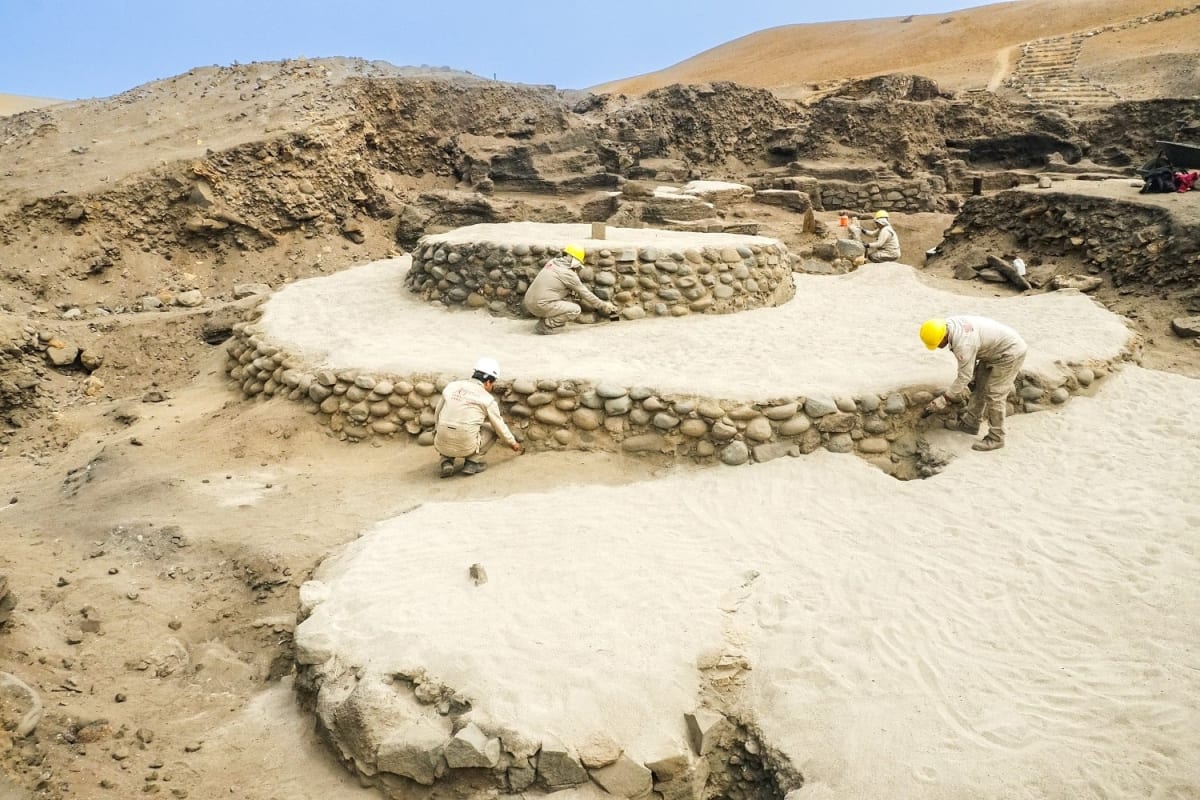
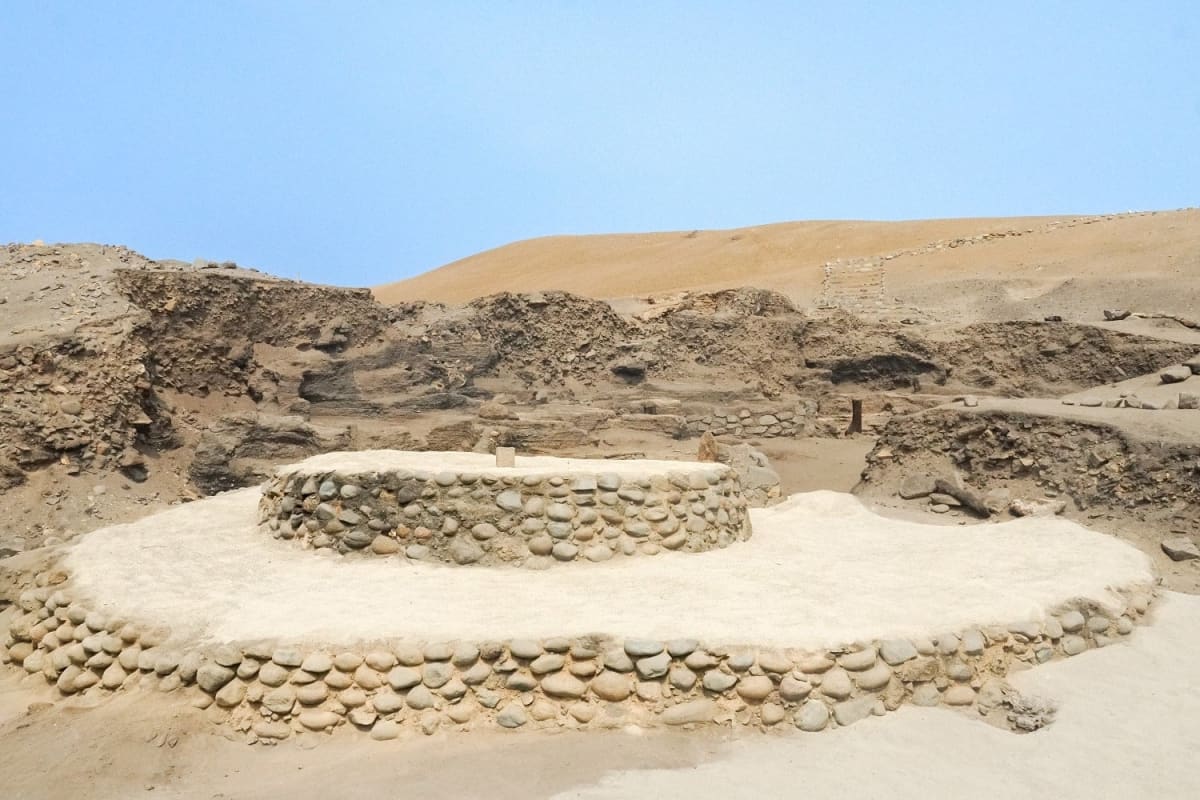
The platform itself tells a story of evolution across four construction phases. It started as a public ceremonial space, then builders added an oval platform about 10 feet across with a sacred vertical stone called a huanca at its center.
Later generations expanded it into a double-stepped platform, with the lower level stretching nearly 31 feet wide. At the heart of this version, archaeologists found a rectangular stone and ceremonial hearth, showing how ritual and scientific observation blended together.
The Ripple Effect
This discovery changes how we understand early American civilizations. While many assume ancient astronomy was limited to large empires, this coastal fishing community developed sophisticated sky-watching practices thousands of years ago.
Their knowledge didn't stay isolated either. By sharing predictions about seasons and environmental patterns, they likely strengthened trade networks with farming communities inland, creating bonds that helped multiple groups thrive.
The structure's final phase shows how societies shift over time. Eventually covered and converted to residential spaces, it reflects changing priorities as the community evolved, though its legacy of careful observation remained.
Today, this ancient observatory stands as proof that humanity has always looked to the stars for answers. These fishermen understood that watching celestial patterns could unlock the secrets of the ocean below.
More Images
Based on reporting by Google: archaeological discovery
This story was written by BrightWire based on verified news reports.
Spread the positivity!
Share this good news with someone who needs it