Photographer Captures "Flaming Star" 1,500 Light-Years Away
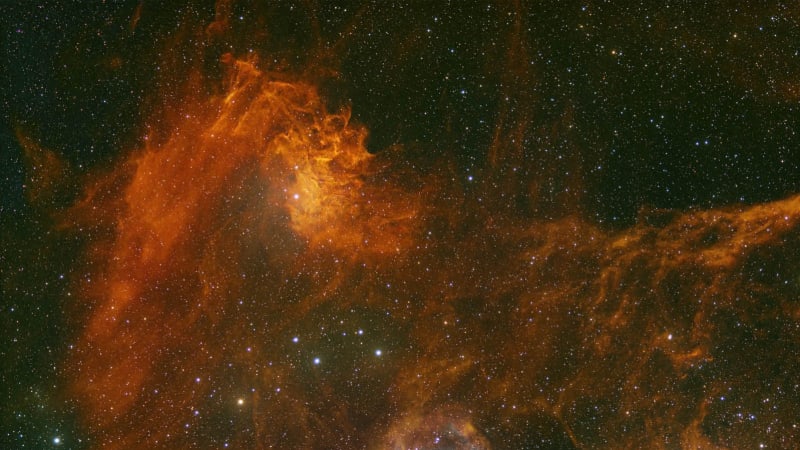
Arizona astrophotographer Greg Meyer spent 21 hours capturing a stunning view of a runaway star and the glowing nebula it left behind. The breathtaking image reveals cosmic details invisible to the naked eye.
An Arizona photographer just revealed what a star looks like when it's racing through space at breakneck speed, dragging a trail of fire behind it.
Greg Meyer captured the Flaming Star Nebula blazing 1,500 light-years from Earth in the constellation Auriga. The image shows what looks like a cosmic wildfire leaping from the massive star AE Aurigae, earning it the nickname "flaming star."
But there's no actual fire in space. The fiery glow comes from the star's intense radiation stripping electrons from surrounding hydrogen gas, causing it to light up like a celestial neon sign.
What makes AE Aurigae truly special is its backstory. Scientists believe this runaway star was born in the Trapezium cluster at the heart of the Orion Nebula before getting forcefully ejected 1.5 million years ago after colliding with a binary star system.
Meyer captured the scene in mid-January under dark Arizona skies using a 61mm telescope paired with specialized astronomy cameras and filters. He collected just under 21 hours of light data, then compiled it using Adobe Lightroom, Photoshop, and astrophotography software called PixInsight.
The bottom portion of Meyer's image reveals another wonder: the Tadpole Nebula, which looks like a blue cosmic pond in the false-color photo. Two tadpole-shaped columns of yellow dust and gas appear to swim toward the nebula's glowing center, sculpted by stellar winds and radiation from nearby young stars.
Why This Inspires
Meyer's dedication reminds us that patient observation reveals hidden beauty all around us. What appears as a simple point of light to our eyes transforms into a sprawling nebula stretching light-years across when viewed with the right tools and enough time.
His work shows how accessible space exploration has become. With consumer-grade equipment and clear skies, amateur astronomers can now capture details that professional observatories couldn't see just decades ago.
The image captures a moment in a million-year journey, a star still racing through the cosmos long after its violent ejection. Even in the vastness of space, everything has a story.
Meyer's 21-hour labor of love proves that some of the universe's most spectacular sights are waiting for anyone willing to look up and take the time to truly see.
More Images

Based on reporting by Space.com
This story was written by BrightWire based on verified news reports.
Spread the positivity!
Share this good news with someone who needs it