Photon Pairs Crack Major Quantum Computing Error Problem
Scientists in Germany discovered that pairing photons together makes quantum computers dramatically more reliable, like sending two messengers instead of one to guarantee important information arrives safely. The breakthrough could finally make practical quantum computers possible.
When physicist Vera Neef wondered what two particles could accomplish together that one couldn't do alone, she unlocked a breakthrough that might finally make quantum computers work reliably.
Researchers at the University of Rostock in Germany just solved one of quantum computing's biggest headaches: keeping photons on the right path. Even the most precise engineering can't stop individual light particles from occasionally ending up in the wrong place, which corrupts data and crashes calculations.
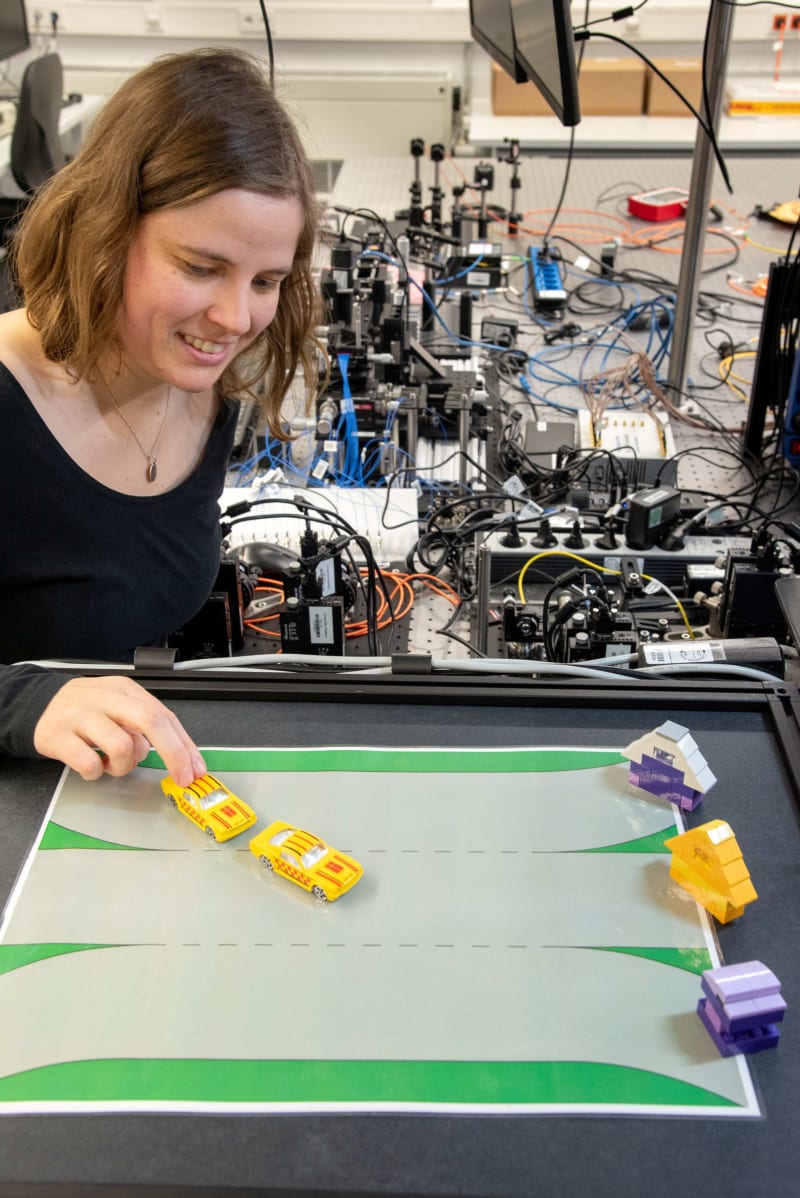
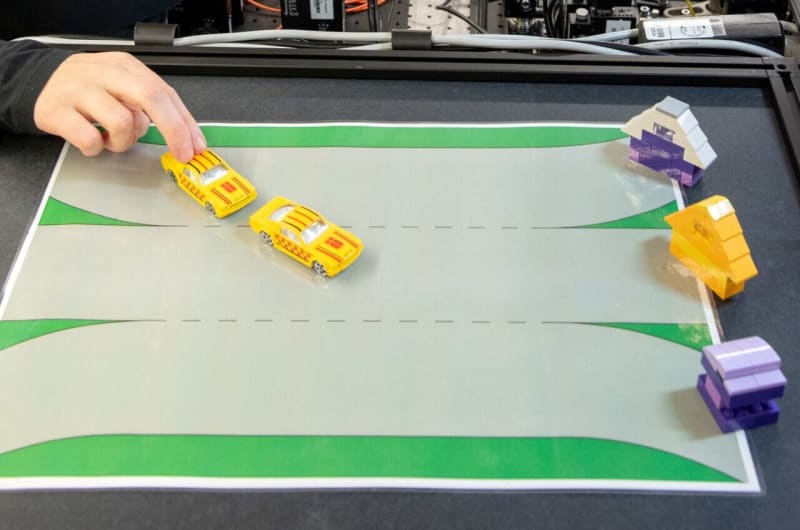
Their solution sounds almost too simple. Instead of encoding information in a single photon, they paired up photons to work as a team. Think of it like sending two cars carrying the same important message down a highway where lanes can shift unexpectedly.
"While individually, both cars still have a chance of ending up in the wrong lane, if only one car arrives at a certain destination, the message is recognizable as corrupted and can be swiftly discarded," explains Neef, who led the research published in Science Advances.
The team used high-power lasers to create tiny "highways" for light inside glass chips. These waveguides let photons jump between lanes just like cars changing position on a real highway. The shape of these light highways determines where the photons ultimately go.
What shocked the researchers was how incredibly stable their paired-photon system turned out to be. Even when they deliberately messed with the device by changing its properties by 10%, the results barely budged. The chance of both photons accidentally ending up in the same wrong lane proved remarkably small.
The Ripple Effect
This discovery extends far beyond just building better quantum computers, though that alone would revolutionize everything from drug development to climate modeling. The mathematical concept the team developed works for pairs of particles and even larger groups, opening doors scientists are only beginning to peek through.
The research might help physicists understand the fundamental particles that make up atoms themselves. "Photons have this weird property. Two photons can be in the exact same place at the exact same time. Something we really don't see in a lot of other particles," notes team member Dr. Tom Wolterink.
For years, quantum computing has promised to solve problems impossible for regular computers, but reliability issues kept practical applications frustratingly out of reach. This paired-photon approach finally offers a path forward that doesn't require impossible levels of perfection.
Some challenges really are easier when you don't go it alone, even at the smallest scales imaginable.
More Images


Based on reporting by Phys.org
This story was written by BrightWire based on verified news reports.
Spread the positivity!
Share this good news with someone who needs it