Pittsburgh Scientists Find New Way to Spot Aggressive Cancers
Researchers discovered that cancer cells mix two chromosome parts that should never touch, creating a potential early warning system for hard-to-treat tumors. The finding could help doctors identify and track aggressive cancers, especially in children.
Scientists at the University of Pittsburgh just found something they never expected to see: two parts of our chromosomes that are supposed to stay separate are mixing together in aggressive cancer cells, and this discovery could change how doctors detect and monitor these tumors.
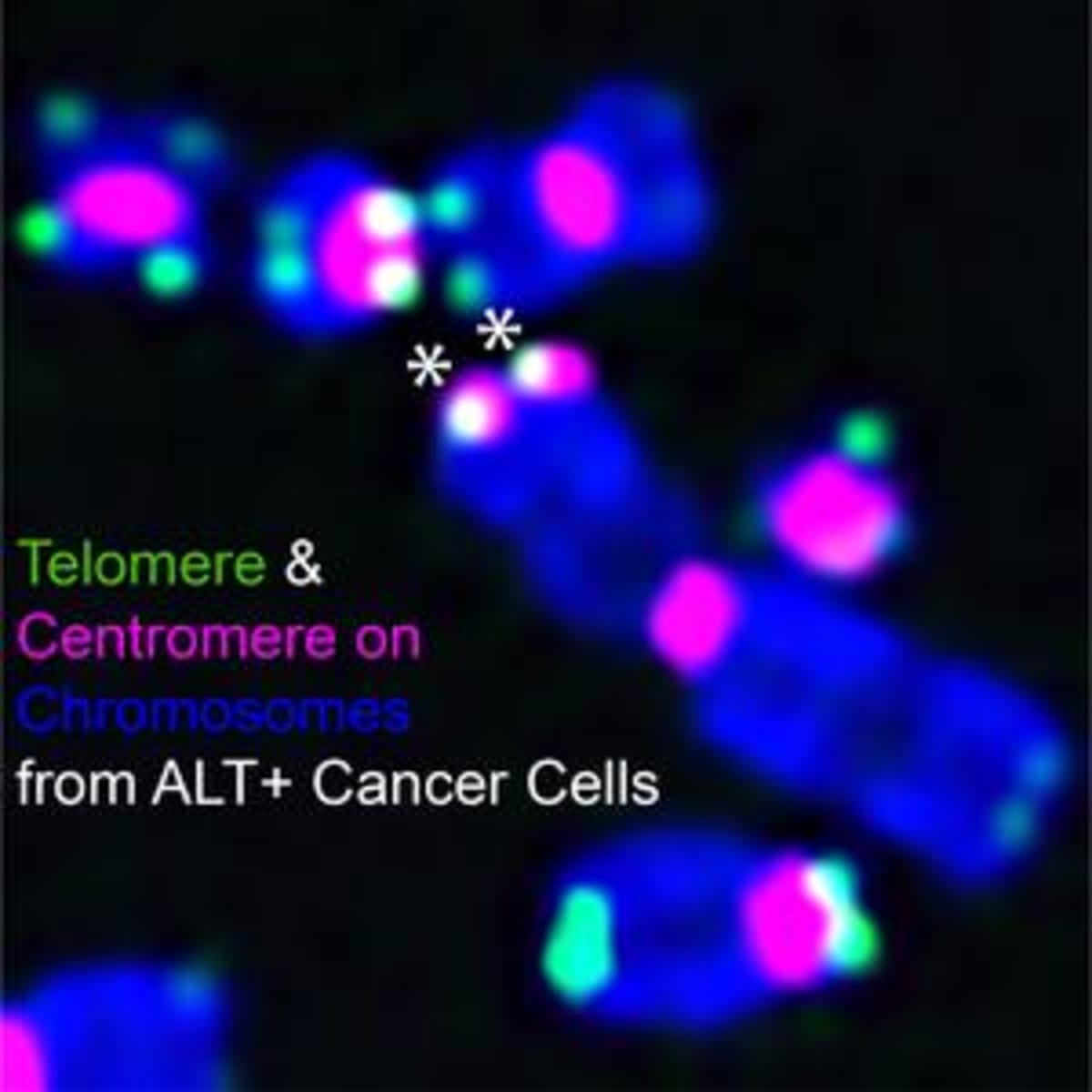
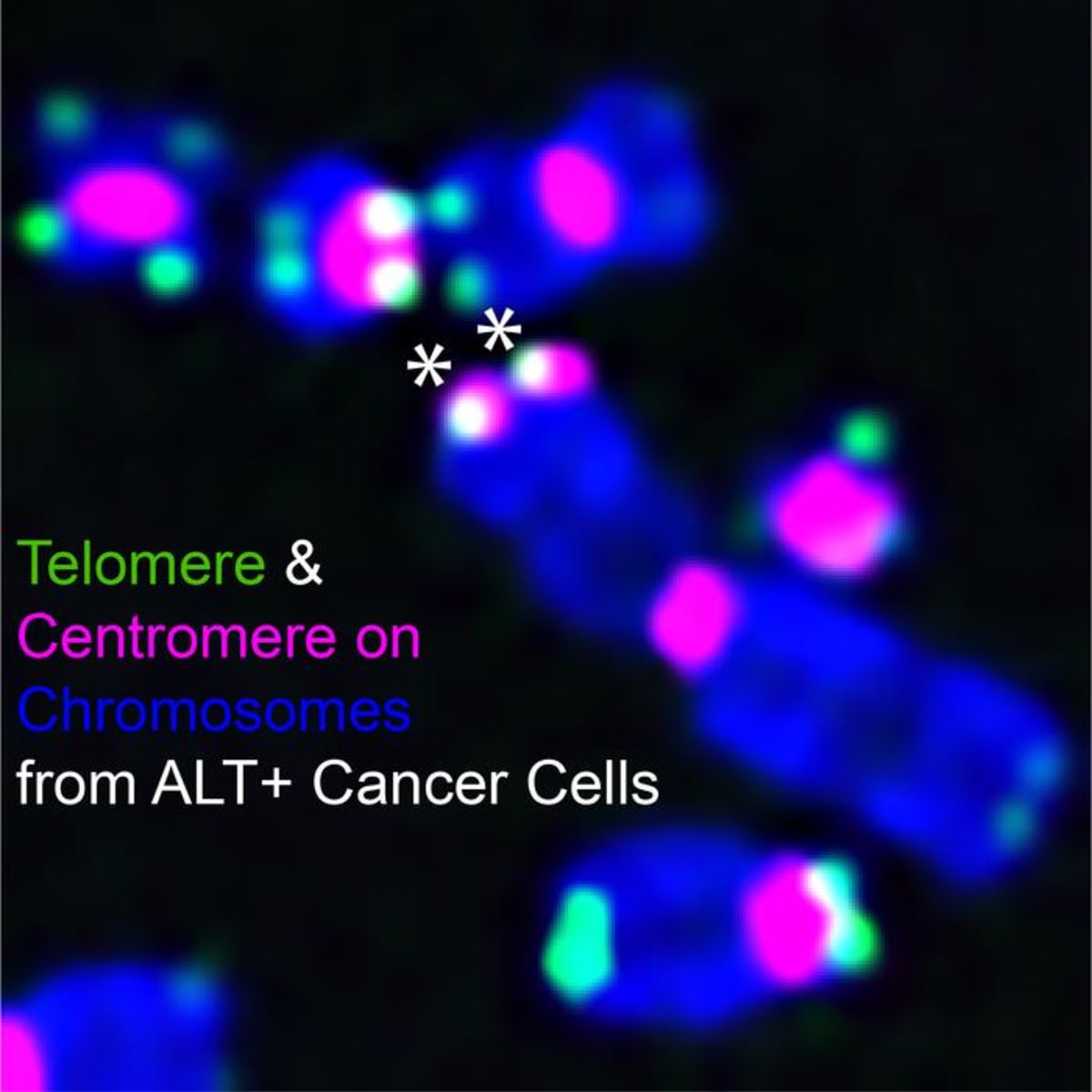
Think of chromosomes like carefully organized libraries. The telomeres at the ends protect our genetic information like bookends, while centromeres in the middle act like anchors during cell division. These two sections never interact in healthy cells, keeping everything stable and orderly.
But researchers led by Dr. Roderick O'Sullivan found that certain aggressive cancers break this fundamental rule. In what are called ALT-positive tumors, DNA from the centromere region gets inserted near the telomeres at chromosome ends. This bizarre mixing happens in about 5 to 10 percent of all cancers, including some of the most challenging pediatric brain cancers and neuroblastomas.
The discovery solves a decades-old mystery about how these tumors keep growing. Most cancer cells use an enzyme called telomerase to maintain their chromosome ends and divide endlessly. But ALT-positive cancers use a different trick called alternative lengthening of telomeres. Until now, scientists couldn't figure out exactly how this process worked at the structural level.
The team found this centromere-telomere mixing in both lab models and real patient tumors. They discovered that cancer cells with a missing chromatin regulator called ATRX are especially prone to this mixing. When the researchers blocked this process in experiments, the telomeres became unstable and the cancer cells struggled to survive.
Dr. Yael Nechemia-Arbely, who co-led the study, explains it perfectly: cancer cells are using what starts as a mistake to adapt and survive. What looks like broken biology is actually the tumor's survival strategy.
The Bright Side
This discovery offers something doctors desperately need: a new way to identify which tumors are using this alternative growth method. The centromere-telomere signature acts like a molecular fingerprint that appears unique to these cancers.
For families facing pediatric brain cancers where ALT is common, this could mean earlier detection and better monitoring of how the disease changes over time. Doctors could potentially track tumor evolution and tailor treatments based on this signature.
The breakthrough happened because two research teams studying completely different parts of chromosomes decided to work together at UPMC Hillman Cancer Center. First author Dr. Ragini Bhargava says they were initially skeptical of their own findings because the interaction seemed impossible, but repeated experiments confirmed it was real.
The study, published in Nature, used advanced techniques including DiMeLo-seq to map exactly how these structures form. This level of detail gives other researchers a roadmap for developing diagnostic tests and exploring new treatment approaches.
As Dr. O'Sullivan puts it, new biology creates new opportunities, and this unusual chromosome behavior opens doors that weren't there before.
More Images
Based on reporting by Google News - Scientists Discover
This story was written by BrightWire based on verified news reports.
Spread the positivity!
Share this good news with someone who needs it