Plants Avoid Rotting Plants Like We Avoid Spoiled Food
Scientists discovered that plant roots actively steer away from decaying plant matter by sensing acid signals in soil. This new survival skill, called saprotropism, could help farmers grow healthier crops.
Plants have developed their own version of the sniff test, and it might revolutionize how we grow food.
Researchers in China and Austria just discovered that plant roots actively avoid rotting plant material the same way animals avoid spoiled food. They named this survival skill saprotropism, and it works like an underground navigation system that keeps roots safe from harmful microbes.
Professor Yuzhou Zhang at Northwest A&F University in China led the research, working with Professor Jiří Friml at the Institute of Science and Technology Austria. The team published their findings in Science after noticing something curious: roots treated decay zones like danger zones.
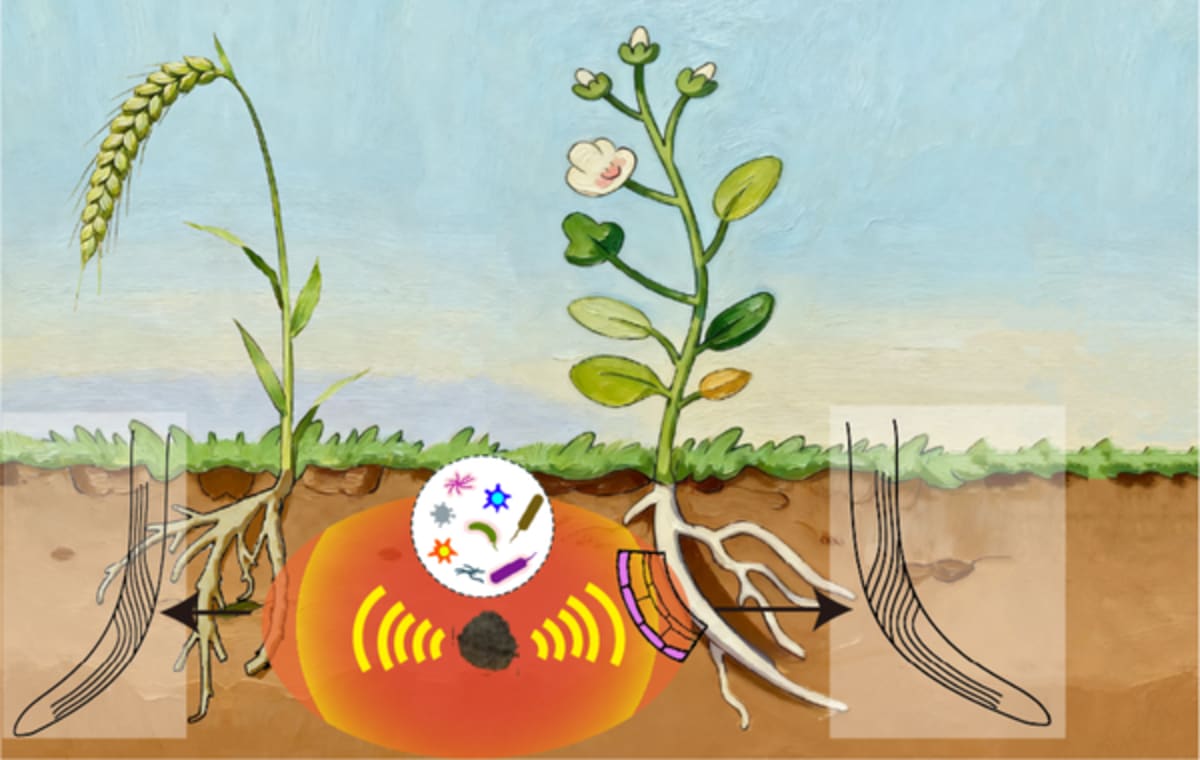
When roots encounter decomposing plants, they sense acid signals released by fungi breaking down the dead material. These acids create a chemical gradient in the soil that roots can detect even before touching the rotting matter. The roots then bend away, steering clear of potential threats.
Here's the surprising part: roots only avoid decaying plants, not dead animals. When researchers placed chicken meat near growing roots, the plants showed no reaction. This tells scientists that saprotropism is a highly specialized response to plant decay, not just a general disgust reflex.
The discovery works across multiple plant species. The team tested it in Arabidopsis (the lab favorite), plus rapeseed, tomato, and wheat. All showed the same avoidance behavior, suggesting most plants share this protective skill.
Inside the root, the process is elegant. Cells detect higher acidity on one side and trigger a redistribution of a plant hormone called abscisic acid, or ABA. This hormonal shift causes cells on opposite sides of the root to grow at different rates, creating the bend that steers the root away from danger.
The Bright Side
This discovery opens practical doors for farming. Understanding how roots navigate could help farmers design better planting strategies, especially when dealing with crop residues left in fields after harvest.
Zhang notes that excessive undecomposed crop waste can create chemical barriers that slow new root growth. Armed with knowledge about saprotropism, farmers might time their planting more strategically or manage soil composition to support healthier root development.
The research also reveals how plants actively read their underground environment. Rather than passively absorbing whatever nutrients they find, roots make complex decisions based on microbial activity and chemical signals around them.
Plants may be rooted in place, but they're far from helpless navigators of their world.
Based on reporting by Google News - Scientists Discover
This story was written by BrightWire based on verified news reports.
Spread the positivity!
Share this good news with someone who needs it