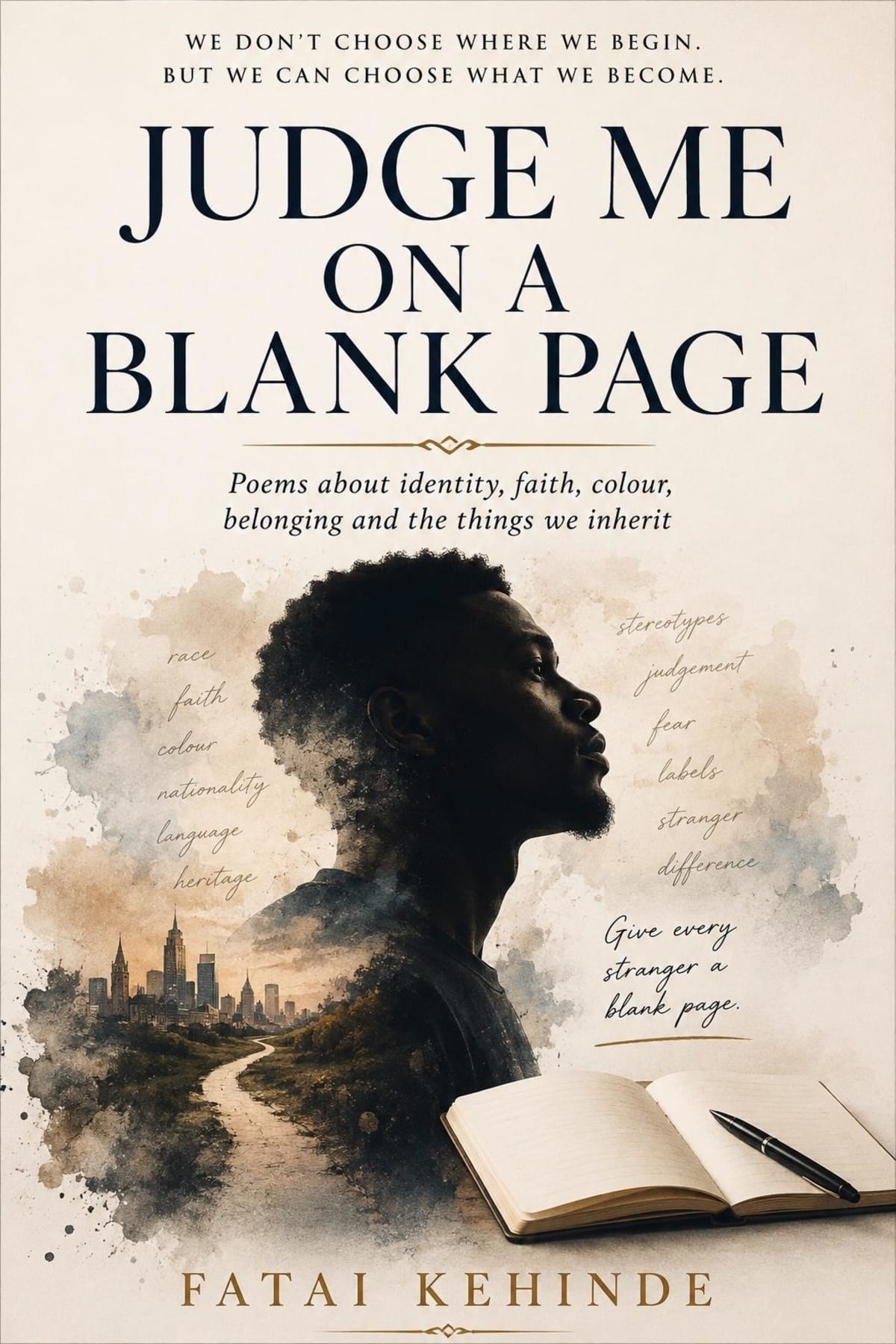
Poet Breaks Rules to Fight Prejudice in New Collection
A Nigerian poet is challenging both literary conventions and social bias with a collection that reads more like courtroom testimony than traditional verse. "Judge Me on a Blank Page" argues that no one chooses their birthplace or skin color.
Fatai Kehinde's new poetry collection doesn't sound like most poetry, and that's exactly the point.
"Judge Me on a Blank Page" throws out lyrical conventions in favor of short, direct lines that read like a lawyer making a closing argument. The Nigerian poet, who has lived in three countries and carried three passports, uses his verse to demand something simple yet revolutionary: judge people as individuals, not by the categories they're born into.
His style is stripped down and powerful. In "Hate Is an Inheritance," Kehinde compares prejudice to furniture passed down through generations, polished and displayed in living rooms. The image works because it's both ordinary and uncomfortably familiar.
The collection returns again and again to one foundation: nobody chooses where they're born or what they look like. From that premise, Kehinde builds poems about migration, identity, and what happens when one person's actions get attributed to an entire group.
"One Person Is Not a People" reads like someone thinking their way out of bias in real time. The plainness of the language makes the argument hit harder, like testimony rather than decoration.
Kehinde favors repetition over metaphor, using phrases like "I never chose" and "before I" as rhythmic devices. It's unconventional, but it gives the collection the feel of both poetry and persuasion.
Why This Inspires
In a world of algorithmic sorting and social media shorthand, Kehinde's insistence on individual identity pushes against the current. His work arrives at a moment when people are constantly judged by category before being known as individuals, whether through profiling, viral clips, or demographic data.
This isn't a naive plea for everyone to be nice. It's a demand that judgment be earned through evidence, not inherited from a stranger's actions.
The book won't satisfy readers looking for ornamental language or traditional poetic structure. But for those seeking poetry as an instrument of change, reviewer Betty Zainab writes, this collection delivers in "generous supply."
Kehinde proves that breaking the rules can be an act of justice.
More Images


Based on reporting by Premium Times Nigeria
This story was written by BrightWire based on verified news reports.
Spread the positivity!
Share this good news with someone who needs it