Poland and Germany: 35 Years of Friendship After Decades Apart
Two countries once divided by war and mistrust now share one of Europe's strongest partnerships. Thirty-five years after signing a friendship treaty, Poland and Germany prove former enemies can become closest allies.
After centuries of conflict, two neighboring countries chose friendship over fear, and it changed everything.
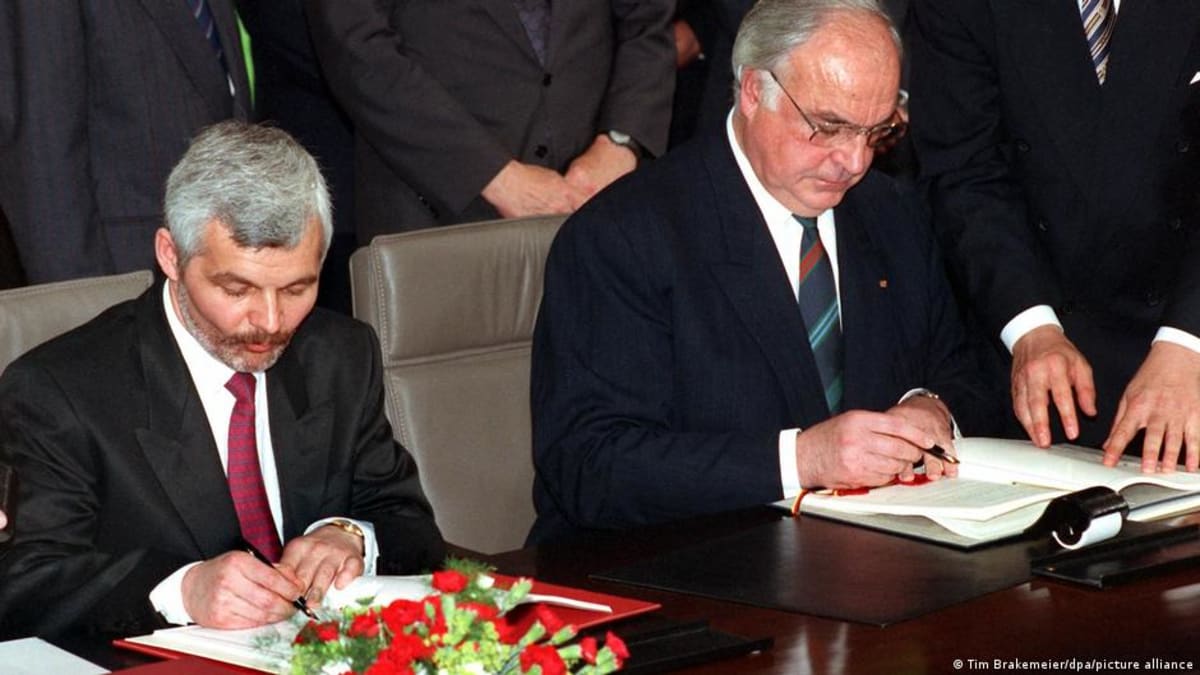
On June 17, 1991, Polish Prime Minister Jan Krzysztof Bielecki and German Chancellor Helmut Kohl signed a treaty that would transform their nations from bitter enemies into best friends. This week marks 35 years since that handshake in Bonn launched one of Europe's most remarkable reconciliation stories.
The road to friendship wasn't easy. After World War II, Poland and Germany remained hostile for decades. Border disputes fueled by Cold War propaganda kept old wounds fresh, and mistrust ran deep on both sides.
Everything changed when communism collapsed in 1989. Poland embraced democracy, Germany reunified, and suddenly a new beginning became possible. Within two years, both countries signed agreements that settled their shared border and committed to building a genuine partnership.
The results speak for themselves. Today, over three million young people have participated in German-Polish exchange programs. Hundreds of cities, schools, sports clubs, and even fire departments have formed sister partnerships across the border.
Trade between the nations topped $209 billion last year, making Poland Germany's fifth largest trading partner. That's more commerce than Germany conducts with most of the world's major economies. German support also proved crucial when Poland joined NATO in 1999 and the European Union in 2004.
The Ripple Effect
This friendship transformed an entire region of Europe. The open border between Germany and Poland on the Baltic island of Usedom symbolizes how cooperation replaced conflict. What started as a political treaty grew into millions of personal connections.
Polish lawmaker Marek Krzakala, who chairs his country's German-Polish parliamentary group, describes it as drawing a line under the past to build the future. Germany's Polish minority and Polish expats in Germany both found new opportunities to thrive as the relationship deepened.
The partnership faced tests along the way. Political rhetoric occasionally revived old tensions, and unresolved questions about wartime losses resurfaced. But polls consistently show most Polish citizens value the friendship despite periodic political friction.
Both parliaments recently celebrated the anniversary, with Germany's Bundestag holding a special debate on 35 years of renewed relations. Poland's Senate praised the treaty as the foundation for Europe's new order after the Iron Curtain fell.
When former enemies can build this kind of trust, it offers hope for conflicts everywhere.
More Images
Based on reporting by DW News
This story was written by BrightWire based on verified news reports.
Spread the positivity!
Share this good news with someone who needs it
)
%3Amax_bytes(150000)%3Astrip_icc()%3Afocal(726x293%3A728x295)%2FAaron-Rodgers-Publicly-Reunited-Family-072726-DN--9a074ccced47435f8560f6c7602ec5ba.jpg)