Rare Bird Thrives in West Africa's Last Intact Rainforest
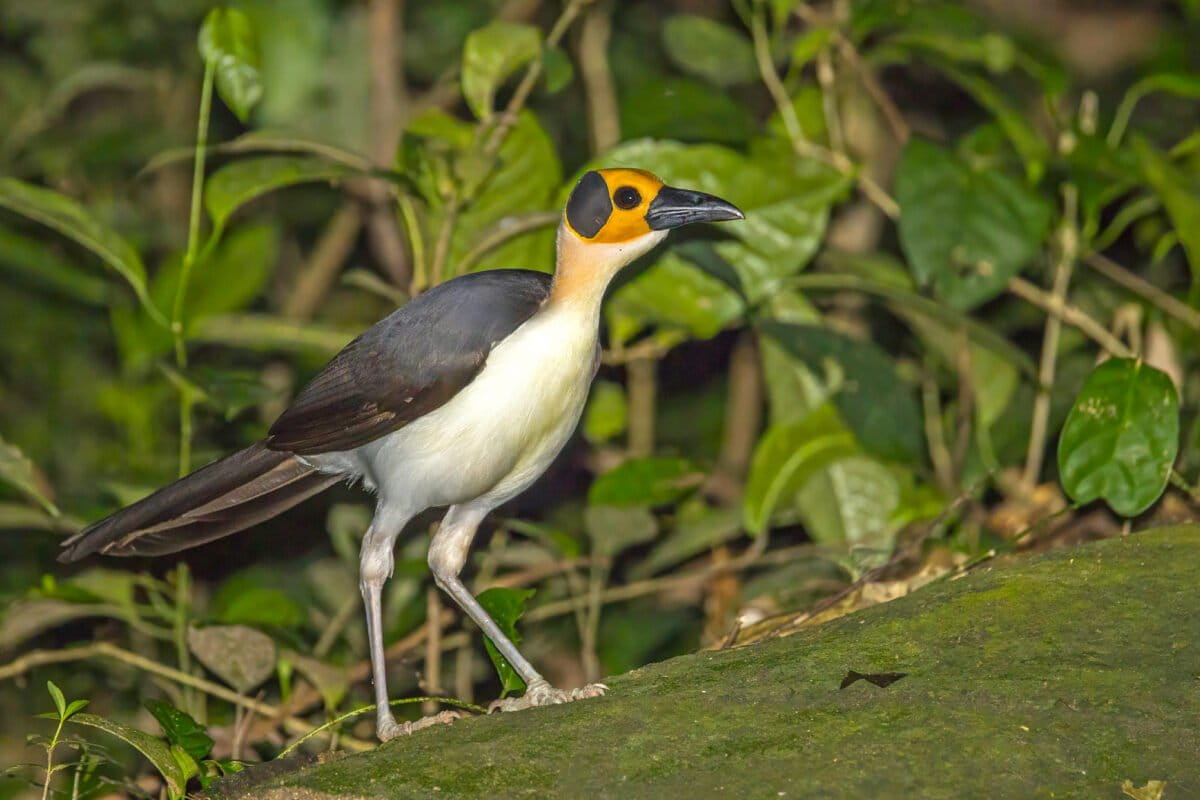
The elusive white-necked picathartes, one of West Africa's rarest birds, continues to nest in Côte d'Ivoire's Taï National Park. Its survival signals that one of the region's most important forests is still healthy enough to support endangered species.
Deep in southwestern Côte d'Ivoire, a bird with a bare yellow head and long legs appears for just seconds before vanishing into the trees. The white-necked picathartes is so rare and quick that even trained rangers consider each sighting a gift.
But the fact that this elusive bird still nests in Taï National Park tells a bigger story. It means the forest is working the way it should.
Taï is the largest surviving piece of Upper Guinean rainforest, a habitat that once covered much of West Africa. The park's rocky overhangs provide perfect nesting sites where the picathartes shapes mud cups against stone walls. The surrounding old-growth forest, filled with giant mahogany trees and populated by hornbills, monkeys, and river hogs, maintains the complexity the bird needs to survive.
What makes Taï special goes beyond any single rare species. Hornbills and primates move seeds through the canopy. Mammals carry them across the forest floor. These relationships help trees and plants regenerate far from where they started, keeping the entire ecosystem alive.
Conservation success often gets measured in patrol numbers and protected boundaries. But the real test is whether the forest's natural relationships continue. Do animals still use their ancient routes? Do seed dispersers still move between fruiting trees? Do birds still return to the same nesting walls year after year?
The Ripple Effect
Keeping these connections intact requires simple but essential work. Rangers in Taï receive training and equipment to safely access remote parts of the forest. Local organizations monitor species whose decline might go unnoticed until it's too late. Conservation groups treat ranger knowledge and repeated field observations as valuable scientific evidence.
When asked what the white-necked picathartes means to Ivorians, ranger Gliman Hyacinthe gave a straightforward answer. "It's rare. It's beautiful."
In Taï, the bird represents something more: proof that the conditions rare species need are still present. Every fleeting glimpse confirms that this remarkable forest continues to support the web of life it has sustained for thousands of years.
More Images


Based on reporting by Mongabay
This story was written by BrightWire based on verified news reports.
Spread the positivity!
Share this good news with someone who needs it