Brazil's "Desert" Fills With Lagoons Every Year
A coastal park in Brazil looks like a desert but transforms into a mosaic of sparkling freshwater lagoons each rainy season. UNESCO just recognized this natural wonder as a World Heritage site.
Imagine hundreds of crystal-blue lagoons nestled between towering white sand dunes, appearing and disappearing like clockwork each year.
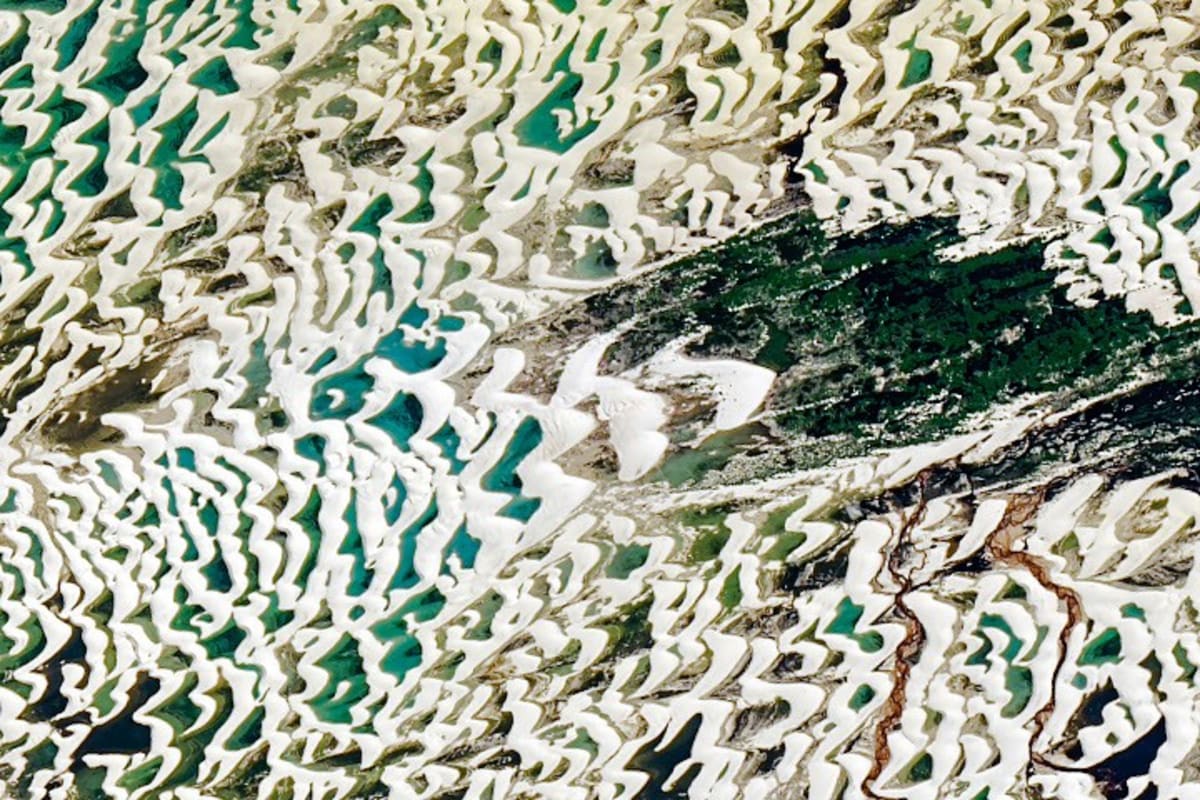
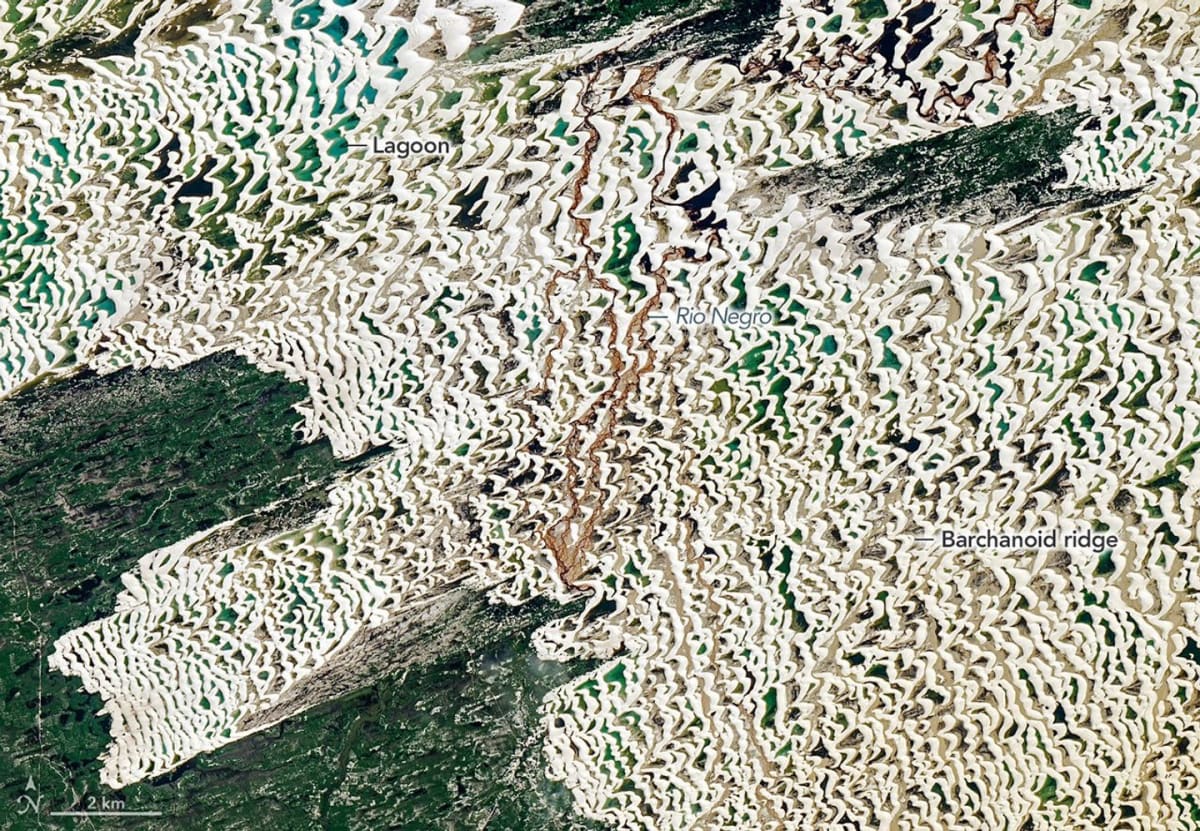
That's the reality at Lençóis Maranhenses National Park in northeastern Brazil, where nature creates one of Earth's most beautiful paradoxes. The park looks like a desert with its massive quartz dunes rising up to 100 feet high, but it receives 50 inches of rain annually—more than Seattle.
The result is magical. From January through June, rainwater collects in the troughs between dunes, creating a mosaic of lagoons that shimmer in shades of turquoise, emerald, and sapphire. The colors shift based on depth and what's living in the water, from microscopic algae to suspended sediment.
By December, most lagoons dry up completely as the wet season ends. But the park's creatures have adapted remarkably—predatory trahira fish burrow deep into damp sand and enter a dormant state, waiting for the rains to return before emerging to hunt again.
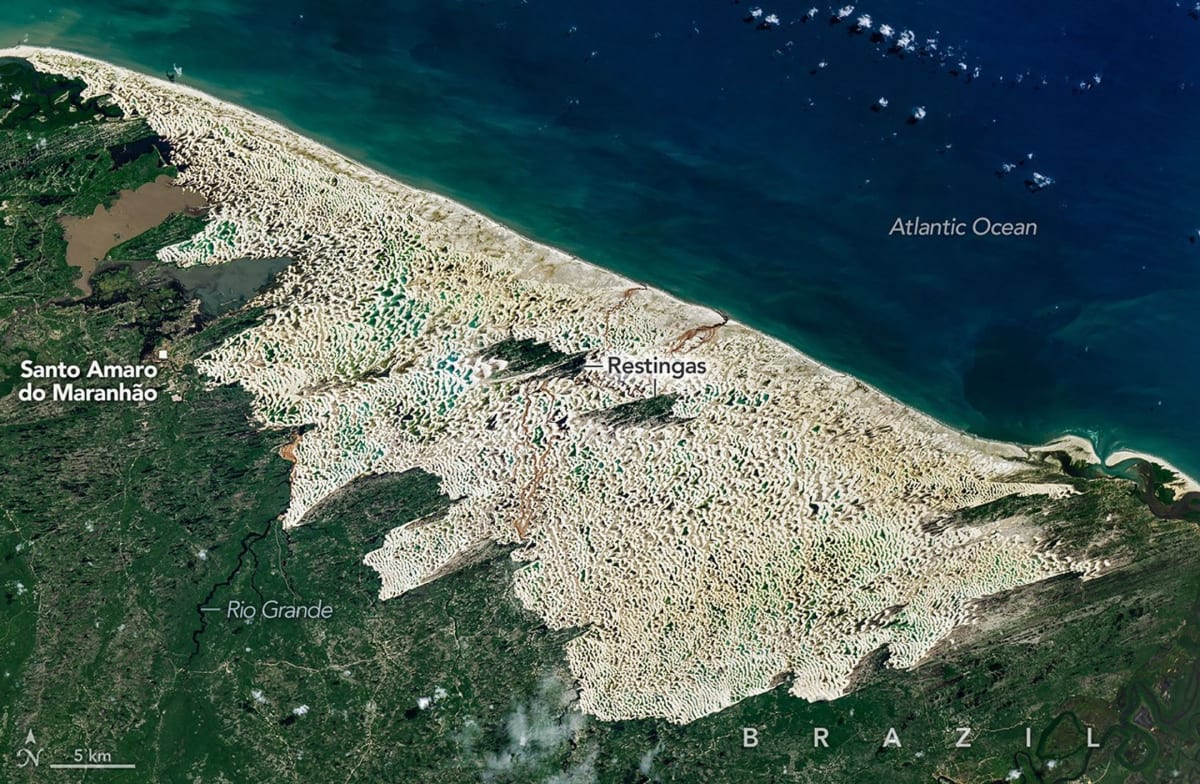
The dune field spans 350 square miles, roughly the size of New York City. Strong winds push the dunes westward at speeds up to 80 feet per year, preventing vegetation from taking root across most of the landscape. Satellite images show the entire dune field has crept half a kilometer westward since 1986.
The park sits where three major ecosystems meet: the Amazon rainforest, tropical savannas, and dry shrublands. This convergence creates incredible biodiversity, with more than 850 documented species calling the park home.
Why This Inspires
In 2024, UNESCO declared Lençóis Maranhenses a World Heritage site, recognizing both its stunning geology and rich wildlife. Four endangered species survive here, including neotropical otters, West Indian manatees, scarlet ibis, and the oncilla wild cat. The designation helps protect this rare landscape where the right combination of rivers, sand, wind, and rain creates something that shouldn't exist—a desert that blooms with water.
This otherworldly park proves nature still holds surprises worth protecting.
More Images

Based on reporting by NASA
This story was written by BrightWire based on verified news reports.
Spread the positivity!
Share this good news with someone who needs it