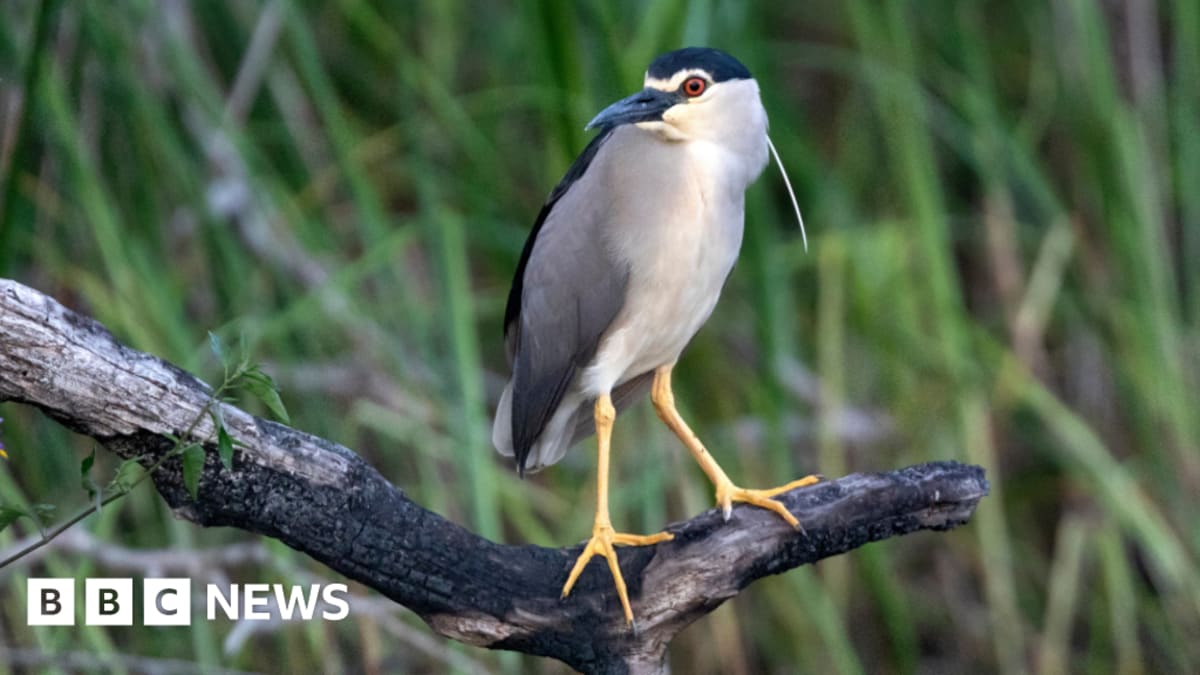
Rare Night Heron Spotted at Restored UK Wetland
A black-crowned night heron, rarely seen in the UK, appeared at a Somerset estate where conservationists are bringing back lost wetlands. The sighting suggests habitat restoration efforts are working faster than expected.
A rare visitor just confirmed what conservationists in Somerset hoped to prove: if you rebuild lost habitats, wildlife will find its way back.
Wildlife cameras at the National Trust's Holnicote Estate near Minehead captured a black-crowned night heron, a wetland species that almost never visits the UK. The bird's appearance comes just as the estate completes new freshwater habitat projects designed to attract exactly these kinds of endangered wetland species.
"It's rare to see this wetland species in the UK and so exciting that we have observed one on our estate cameras," said Ben Eardley, project manager for Somerset Coast and Countryside. The timing feels like nature's seal of approval on their restoration work.
The UK has lost over 97% of its wetlands through drainage and changes in land management over the past century. That staggering loss wiped out critical habitats for water voles, otters, and rare birds like the night heron, which was first confirmed breeding in the UK only in 2017, coincidentally also in Somerset.
Now Holnicote Estate is actively reversing that damage. The team is creating new wetland areas while also working with beavers, nature's best wetland engineers, to reshape the landscape at scale.
The Ripple Effect
The night heron isn't arriving alone. The restored wetlands at Holnicote are already providing refuge for water voles, otters, pine martens, and white-tailed eagles. Each new habitat creates a domino effect, supporting entire ecosystems rather than single species.
Jack Siviter, the estate's beaver and wetlands project officer, sees the night heron as proof their approach works. "If we can do this successfully, we are likely to see more wetland specialists arrive at Holnicote, and who knows, night herons might continue to appear," he said.
The benefits extend beyond wildlife. Restored wetlands improve water quality, reduce flood risk for nearby communities, and create more resilient landscapes that can handle climate challenges. One habitat restoration project solves multiple problems at once.
The black-crowned night heron gets its name from being mainly active after dark, making sightings doubly rare for casual observers. But the estate's camera traps caught clear footage of the visitor, offering hope that what thrives in darkness can still find light.
A century of wetland loss is being reversed one restored habitat at a time, and rare birds are already noticing.
More Images

Based on reporting by BBC Science
This story was written by BrightWire based on verified news reports.
Spread the positivity!
Share this good news with someone who needs it