Rare Plant Found in Sri Lanka After 170 Years Missing
Scientists just rediscovered a rare flowering plant in Sri Lanka that hadn't been seen in the wild there since 1855. The finding proves that even tiny forest fragments can protect species we thought were lost forever.
After 170 years of silence, a rare white-flowered plant has reappeared in a small patch of Sri Lankan forest, giving conservationists new hope for protecting threatened species in unexpected places.
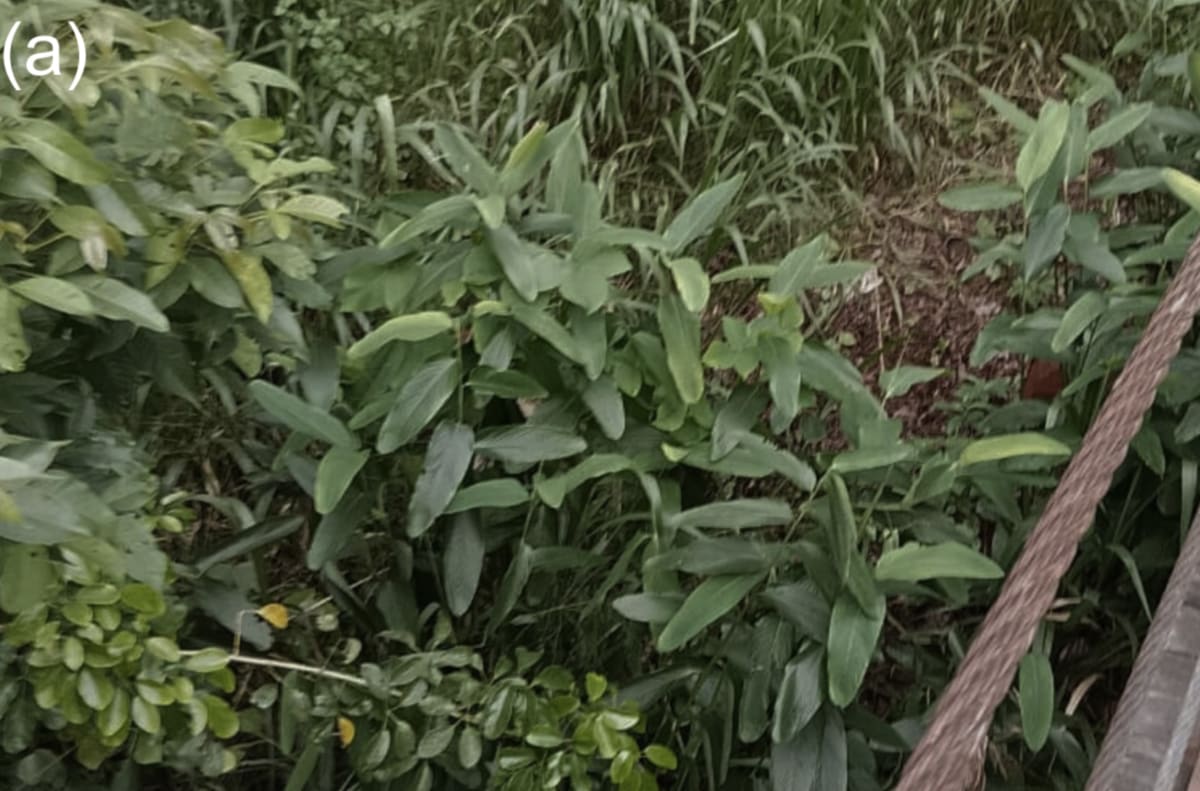
Researchers found a thriving population of Indianthus virgatus growing along the Sitawaka Ganga River in January 2025. The plant, listed as critically endangered, was presumed extinct in Sri Lanka since its last sighting in 1855.
The team used historical records and computer modeling to predict where the plant might survive. Their search focused on southwestern Sri Lanka's Sabaragamuwa Province, targeting small forest remnants that might provide the right conditions.
The strategy worked. Scientists discovered 70 to 100 individual plants growing exactly where their models suggested, in the shaded understory near streams and sheltered slopes.
Vivek Pandi, a coauthor of the study from Manipal Academy of Higher Education in India, explained that these small forest pockets maintain stable conditions despite destruction in surrounding areas. The plant likely survived undetected in these protected microclimates for nearly two centuries.
The rediscovery raises fascinating questions about the plant's history. Indianthus virgatus grows in about 150 locations across India but has this single known population in Sri Lanka, separated by a huge geographical gap.
Scientists wonder whether an ancient geological event split one continuous population into two groups, or whether the plant reached Sri Lanka later through long-distance seed dispersal. Either answer could reveal important clues about how species migrate and survive across the Indian subcontinent.
The Bright Side
This finding proves that even fragments of forest too small to seem important can harbor incredible biodiversity. While tea and rubber plantations have destroyed most suitable habitat for Indianthus virgatus in Sri Lanka, these tiny remnants kept the species alive when larger protected areas failed.
The discovery also shows how modern technology can guide conservation efforts. By combining historical knowledge with predictive modeling, researchers found a needle in a haystack, locating a small population that survived unnoticed for generations.
Protecting this newly found population will require immediate local habitat protection and establishing backup collections in national botanical gardens, researchers say. They're also working to update the plant's conservation status so it can be integrated into national biodiversity action plans.
Sometimes the smallest patches of nature hold the biggest surprises, reminding us that hope can grow in unexpected places.
More Images


Based on reporting by Mongabay
This story was written by BrightWire based on verified news reports.
Spread the positivity!
Share this good news with someone who needs it