Rare Redshank Spotted in Cairns After 39 Years
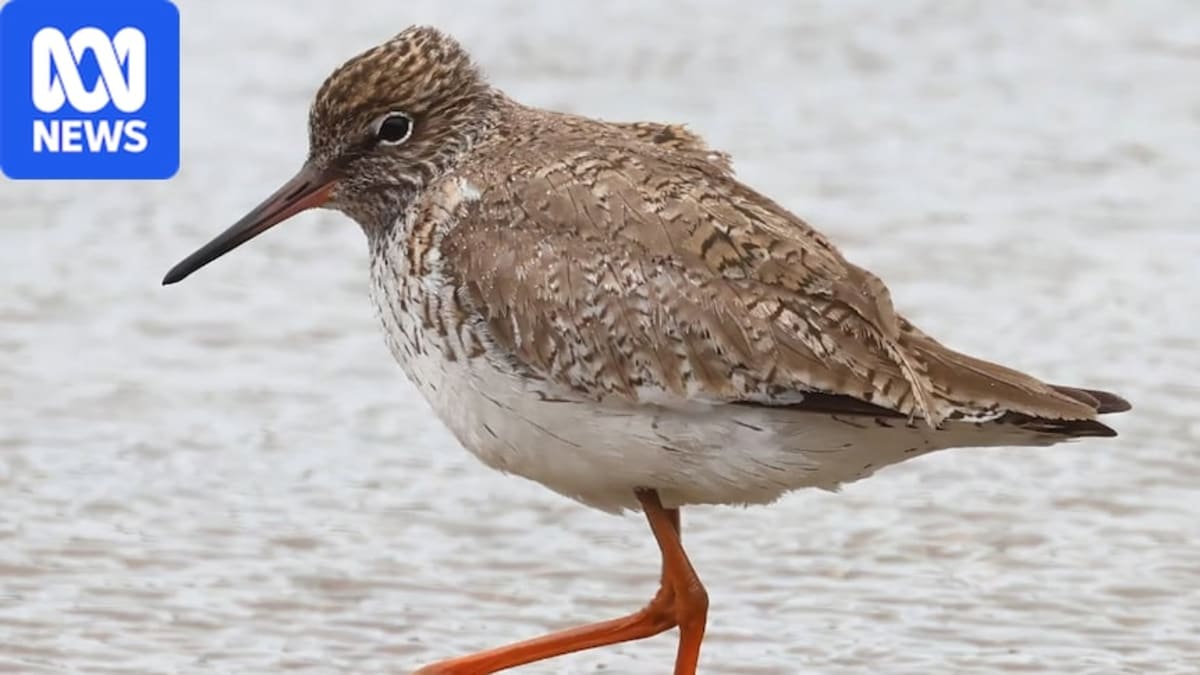
A common redshank, spotted only once before in Queensland nearly four decades ago, has delighted birdwatchers on the Cairns mudflats. The rare migratory shorebird traveled thousands of miles beyond its normal route, sparking excitement across Australia's birdwatching community. #
Two birdwatchers scanning the Cairns Esplanade mudflats on Sunday morning got the surprise of a lifetime when they spotted a common redshank, a bird not seen in Queensland since 1987.
Sally Sheldon from BirdLife Australia and Martin Cachard were conducting routine surveys when they noticed the distinctive orange-red legs of the rare visitor. The species normally migrates only as far as Southeast Asia after breeding, making this sighting thousands of miles off course.
"You don't like to see a bird looking slightly confused," Sheldon said, explaining that researchers aren't sure whether the redshank will stay in Cairns or continue south for summer.
About 37 species of migratory shorebirds visit Australia annually to feed and rest during warmer months after breeding in the northern hemisphere. The common redshank isn't typically among them, though small numbers occasionally reach northern Western Australia and the Northern Territory.
Richard Fuller from the University of Queensland confirmed the sighting's rarity. "From a birdwatching point of view, this is highly significant," he said, noting the bird will be studied carefully to understand whether more redshanks might follow this new pattern.
The discovery spread instantly through social media, drawing birdwatchers with long lenses to the mudflats. By Monday, at least five enthusiasts were documenting the lone visitor as it fed along the shoreline.
Why This Inspires
This unexpected arrival shows how migratory birds adapt and explore beyond familiar territories in a changing world. While many shorebird species face severe population declines due to coastal habitat loss, the common redshank population remains relatively stable, giving hope that some species can still thrive despite environmental pressures.
Fuller noted that sometimes displaced birds establish new migration patterns, potentially expanding their range. "It's part of how they can adapt to a changing world," he explained.
For Sheldon, the encounter highlights why she loves birdwatching. "I'm not much good at meditation," she said. "I can't stay quiet and still enough, but it forces you to get outside yourself and see the world through a natural being's eyes."
The adult redshank, still wearing much of its breeding plumage, continues feeding peacefully on the Cairns mudflats while excited observers watch from a respectful distance.
#
More Images


Based on reporting by ABC Australia
This story was written by BrightWire based on verified news reports.
Spread the positivity!
Share this good news with someone who needs it